Genoa vs Como: A Tactical Showdown in Serie A
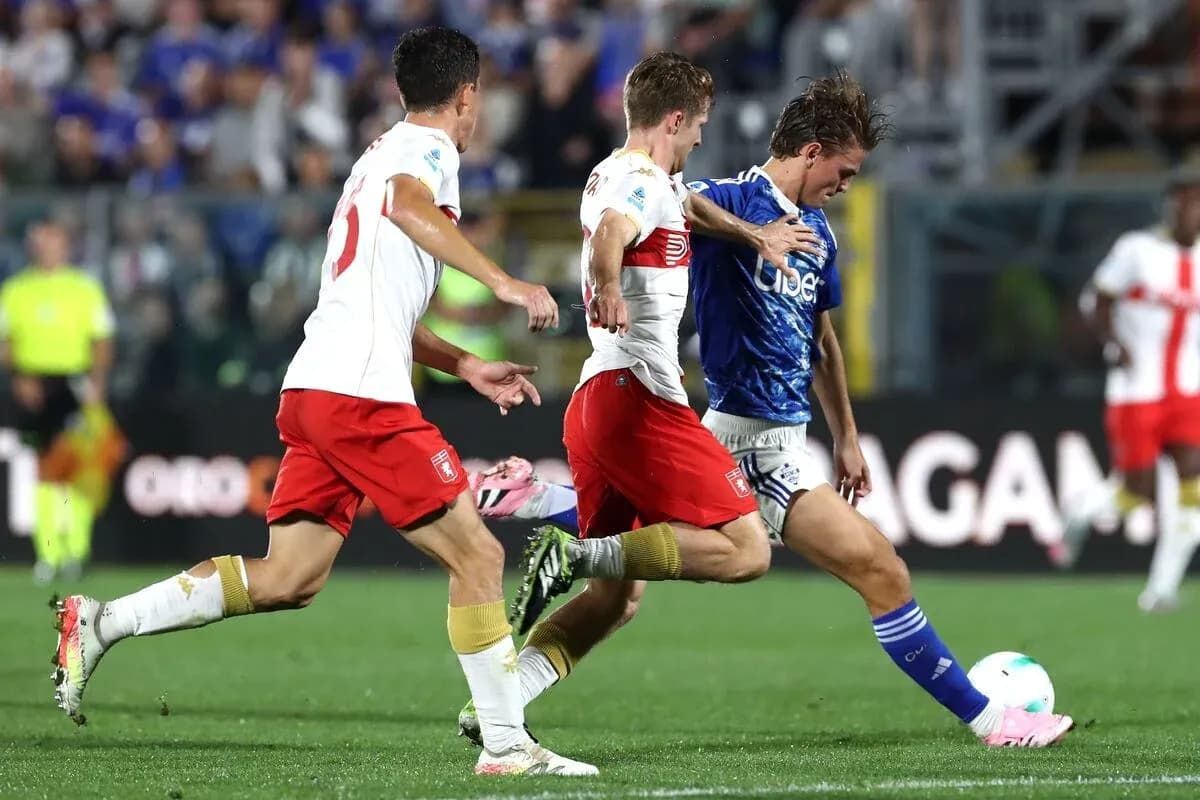
Stadio Luigi Ferraris has seen its share of tactical duels, but this late‑season Serie A meeting between Genoa and Como carried a particular edge. Following this result, a 0–2 home defeat for Genoa in Round 34, the table tells a stark story: Genoa sit 14th with 39 points, their overall goal difference at -8 (40 scored, 48 conceded), while Como consolidate a powerful push from 5th place on 61 points, boasting a formidable overall goal difference of +31 (59 for, 28 against).
I. The Big Picture – Identities in Contrast
The ninety minutes in Genoa distilled the season’s identities. Daniele De Rossi stayed loyal to Genoa’s structural comfort zone, rolling out a 3‑5‑2: J. Bijlow behind a back three of S. Otoa, L. Ostigard and A. Marcandalli, with S. Sabelli and J. Vasquez tasked with stretching the pitch from the flanks. In central areas, M. Frendrup, Amorim and M. E. Ellertsson were asked to stitch transitions and protect the back line, while J. Ekhator and Vitinha led the line.
Across from them, Cesc Fabregas’ Como arrived as one of Serie A’s most coherent projects. Their 4‑2‑3‑1, used in 30 league matches overall, was again the reference: J. Butez in goal, a back four of A. Valle, Diego Carlos, J. Ramon and I. Smolcic, double pivot M. Perrone and L. Da Cunha, and a fluid attacking band of A. Diao, N. Paz and M. Baturina behind lone forward A. Douvikas.
The season numbers framed the clash clearly. Heading into this game, Genoa had played 34 league matches overall, scoring 40 and conceding 48. At home they averaged 1.2 goals for and 1.3 against, with a worrying tendency to open up late: 21.43% of their overall goals scored came between 61‑75 minutes, and an even higher 28.57% between 76‑90, but defensively they were fragile in the early and middle phases, with 17.39% of their overall goals conceded in both the 16‑30 and 46‑60 ranges. Como, by contrast, travelled with the profile of a near‑elite unit: on their travels they averaged 1.5 goals scored and just 0.8 conceded, underpinned by 8 away clean sheets and a total of 16 clean sheets overall.
II. Tactical Voids – The Missing Pieces
Both squads arrived with notable absentees that subtly reshaped the chessboard. Genoa were without T. Baldanzi and C. Ekuban, both listed as “Inactive”, and B. Norton‑Cuffy, sidelined by a thigh injury. For a team whose overall attacking average is only 1.2 goals per match, losing creative and rotational depth in the final third tightened De Rossi’s options. It pushed more responsibility onto Vitinha and J. Ekhator to stretch Como’s line, and onto the wing‑backs and interiors to provide final‑third entries.
Como’s absentees were clustered in wide and defensive zones: J. Addai (Achilles tendon injury), S. Roberto and M. Vojvoda (both muscle injuries). Yet Fabregas could still field a strong defensive core, with Diego Carlos and J. Ramon anchoring the back line and M. Perrone shielding in front. That continuity helped preserve the defensive standards of a side that had conceded only 28 overall heading into this game, just 13 of those on their travels.
Discipline also shaped the risk profiles. Genoa’s season card map shows a spiky aggression late in halves: 25.00% of their overall yellow cards arrive between 61‑75 minutes, and 11.67% in 91‑105, a pattern of emotional surges as games tighten. Como, meanwhile, are serial competitors in duels but walk a finer line: M. Perrone has collected 8 yellows overall, I. Smolcic 8, and Diego Carlos 8, while J. Ramon and Jesús Rodríguez have both seen red overall. Como’s team yellow distribution peaks at 18.67% in the 46‑60 range and 20.00% in 76‑90, underlining how their intensity rarely drops as matches progress.
III. Key Matchups – Hunter vs Shield, Engine Room vs Enforcer
The “Hunter vs Shield” narrative centred on Como’s multi‑headed attacking threat against Genoa’s vulnerable defensive phases. Overall, Genoa concede 1.4 goals per match, with 15.22% of those in the opening 0‑15 minutes and another 17.39% in the 46‑60 window. Como’s away average of 1.5 goals scored, coupled with their comfort in a 4‑2‑3‑1, meant that any early territorial concession by Genoa risked being punished by the vertical runs of A. Diao and M. Baturina and the penalty‑box instincts of A. Douvikas.
But the true tactical axis was the “Engine Room” duel: Genoa’s midfield trio versus Como’s double pivot and creative ten. M. Frendrup and Amorim had to contend with M. Perrone’s metronomic presence and N. Paz’s all‑court influence. Paz is one of Serie A’s standout profiles this season: 12 goals and 6 assists overall, 48 key passes, and 116 attempted dribbles with 64 successes. He is both Como’s top scorer and one of their top creators, but he also carries scars—2 penalties missed overall, a reminder that even his brilliance has edges.
On paper, Genoa’s best creative outlet is often from deeper and wider zones. Aarón Martín, though on the bench here, has 5 assists overall this season and has blocked 11 shots, a rare blend of defensive reliability and final‑third delivery. Without him from the start, Genoa’s left side lost some of its usual crossing and overlap threat, placing more onus on J. Vasquez as a wide midfielder to balance progression and protection.
In the defensive duels, Como’s centre‑backs had the edge. Diego Carlos has blocked 14 shots overall, J. Ramon 15, and both pass with over 90% accuracy, allowing Como to resist pressure and then play through the first line. That composure under Genoa’s press meant Vitinha and J. Ekhator were often chasing shadows rather than isolating defenders in foot races.
IV. Statistical Prognosis – Why Como’s Structure Prevailed
Following this result, the underlying trends feel brutally logical. Genoa’s overall profile is that of a side living on tight margins: only 7 clean sheets overall, and 12 matches overall where they failed to score. At home, 8 failures to score from 18 fixtures underlined the risk of a low‑margin game plan against a side as defensively robust as Como.
Como’s statistical armour is thicker. Overall they concede just 0.8 goals per match, and on their travels only 0.8, backed by 8 away clean sheets. Their offensive spread—59 goals overall, split between a creative midfielder like Paz (12 goals, 6 assists) and a penalty‑box forward like Douvikas (12 goals overall, 1 from the spot)—means they do not rely on a single pattern to break opponents down.
Even without explicit xG data, the expected pattern was clear: Como’s controlled possession and vertical surges against a Genoa side that tends to concede in the very periods Como’s intensity spikes. Genoa’s late‑game scoring surge (28.57% of overall goals between 76‑90) never materialised here, smothered by a Como defence comfortable defending their box and clearing their lines.
In narrative terms, this was the story of a mid‑table side whose structure frays under sustained pressure against a team whose tactical identity and statistical backbone now resemble a Europa League regular. Como left the Ferraris with three points and another clean sheet on their travels; Genoa were left staring at the numbers that have defined their season—1.2 scored, 1.4 conceded overall—and wondering how to bend that equation before the campaign runs out of road.