The Future of Football: How AI is Transforming Recruitment and Player Analysis
The future of football isn’t arriving in a lab or a boardroom. It’s sneaking in through inboxes, MRI scanners and four hurried photos on a coach’s phone.
Clubs are chasing edges everywhere. Money is vast, margins are tiny, and if a machine can shift those margins a fraction, someone will pay for it.
From Arsenal blog to global data fixer
Before he was selling AI to clubs, Bracha was just another Arsenal obsessive with a blog and a day job in tech. He watched games, trusted his eye, leaned on numbers and started tipping players he thought big clubs should sign. The posts caught on. Scouts started reading.
Then the day job got too heavy.
So he built himself a shortcut: an AI model that could spit out the skeleton of a blog post. He’d dress it up, add his insight, hit publish. And something strange happened.
“I started to get inbox requests from professional scouts and at clubs asking me, 'How do I know about that on a player?’ I was like, ‘I don't know any of that about the player. Like, it's just ChatGPT’,” he recalled, laughing. “And then I thought, ‘if that impresses them, what are they using today?’”
The answer: a lot of numbers, not a lot of order.
Wyscout helped kickstart the data revolution from Genoa two decades ago. Since then, rival platforms have piled in. Every action, every sprint, every duel is logged somewhere. Clubs are drowning.
“In the past 10 years, this industry has moved from complete scarcity to data overload, and then it creates a different type of issue because there are so many different data providers,” Bracha said.
His company, Marquee, exists to cut through the mess. It plugs into that chaos of spreadsheets, dashboards and siloed platforms and tries to give clubs something they can actually use.
“If we automate a lot of these, so to speak, glorified spreadsheet processes, and the different platforms that are scattered and cannot be consolidated into one place. We do it for them. So, in a sense, Marquee is an analytical department for this that works for the club,” he explained.
This is not Football Manager with a slick UI, he insists. Marquee builds tailored profiles, at a price, designed to flag potential signings who fit not just a club’s budget and level, but its style of play and tactical model.
Clubs can ignore it. Many do. But a handful of Premier League sides lean on it. Barcelona and MLS outfit Chicago Fire have publicly backed it. Whether Marquee has already helped land the next superstar is unknown. What’s clear is that this kind of AI is now part of the recruitment landscape, whether traditional scouts like it or not.
When the machine spots fatigue before the player does
AI is creeping into the treatment room too.
In an MLS clash between FC Cincinnati and Nashville SC last year, center-back Matt Miazga began to fade. Five minutes before he asked to come off, the club’s system had already noticed “an irregular movement pattern.”
The data isn’t live. No one could have run down to the touchline and yanked him off before anything happened. But the flag was there. The machine knew something was wrong.
Working out when he could return, fully fit, is where another company steps in.
Springbok Analytics has a standing request to every client: send us your most complicated injury. Almost every time, that means the hamstring.
Football still hasn’t solved it. A 2020 NIH study found hamstrings made up 12 percent of all professional soccer injuries, with re-injury rates lurching anywhere between four and 68 percent. Clubs throw tech, tests and rehab protocols at the problem. The numbers don’t move.
“We’ve got all the new technology that exists every which way, all the new ways of testing people… how much force can you produce? What does running look like? Hamstring injuries have not gone down. They've gone up,” Springbok’s Analytics Director, Matt Brown, told GOAL.
His argument is blunt: the industry still doesn’t really understand the underlying data. Muscle strength, imbalances, atrophy – all of it is measurable, but gathering and interpreting it is slow and messy.
“You want to scan a player at the time of injury, two months later, six months later, to track atrophy and see if you're getting the stimulus and the changes that you're going after with muscle,” Brown said.
Springbok’s technology was born at the University of Virginia, where researchers developed hyper-specific MRI tools to help children with cerebral palsy. They built 3D models so surgeons could calculate tendon lengthening with precision. It worked. Then the sports world came calling.
The NBA signed up in 2023. MLS picked Springbok for its Innovation Lab this year.
Brown describes a traditional MRI as “thousands and thousands of slices of [two-dimensional gray images].” Doctors stack them, mentally stitch them together and build a 3D picture through experience and time.
Springbok uses AI to do that grunt work.
“We can now pre-process those images using AI… we can get all the crazy MRI images and the 3D space and time and all the stuff that exists there. We process through them, create the muscle boundaries, and we can give a very finalized, beautiful 3D digital twin,” Brown said.
They don’t treat the injury. They don’t promise to prevent it. What they offer is speed and clarity. What once took a week can be turned around in hours.
“We are the support system in that we can make imaging from an MRI way more impactful and actionable. We are not the ones that actually actualize it for you. We are providing you the measurements. But you're trained in this. You've done 10 years of this. You have your own thesis,” Brown said.
Four photos, 10 seconds, and a glimpse of the future
While Springbok peers inside muscles, another group is trying to map the future of teenage bodies from the outside.
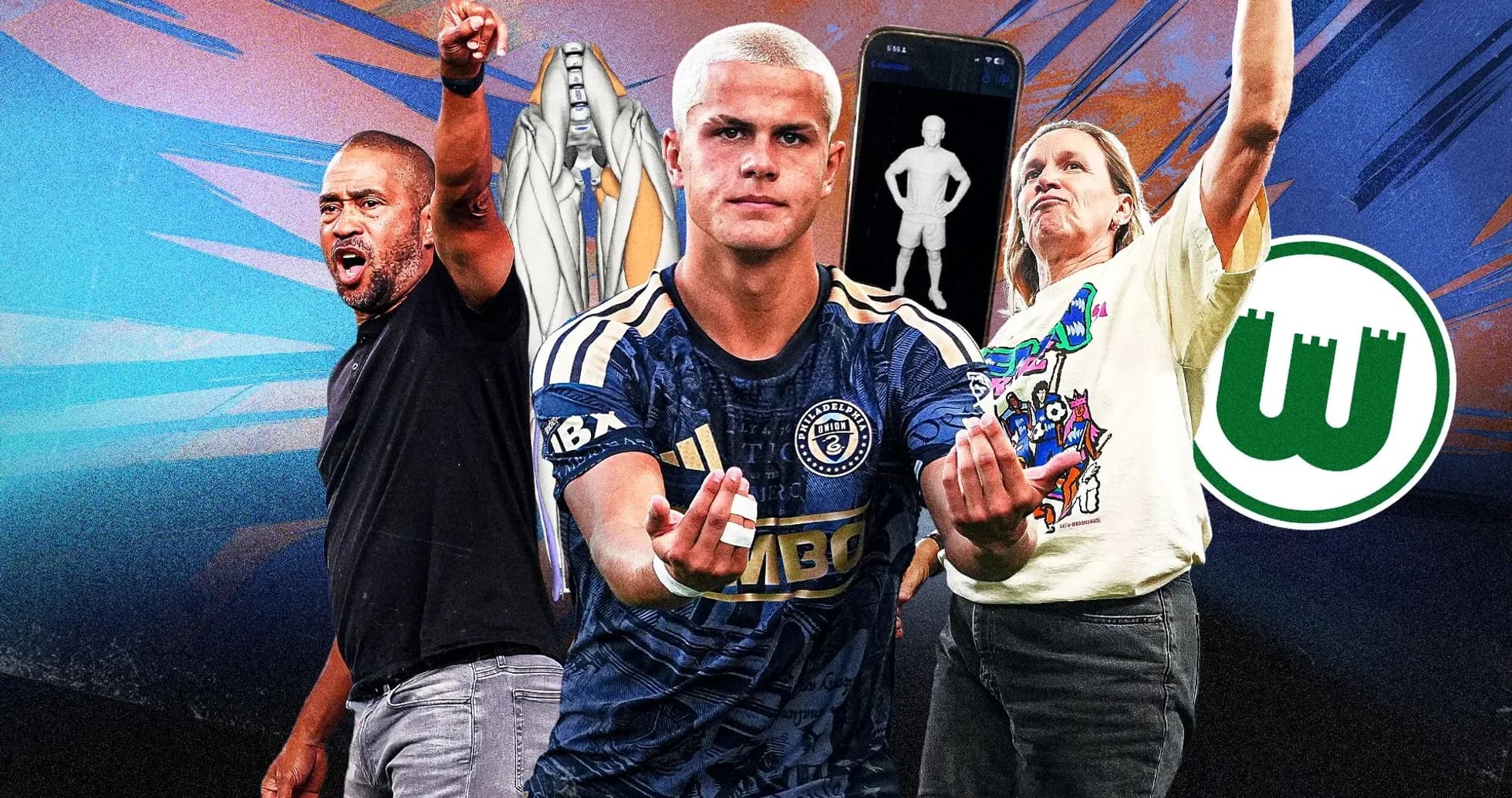
At Philadelphia Union’s academy, staff wrestle with the same questions every day. How much can a 14-year-old handle? When is a prodigy like Cavan Sullivan ready for first-team minutes? Will his body cope, or will they break him?
MLS clubs run battery after battery of tests on strength, size, projected height and peak performance. It eats time. It still involves guesswork.
Fit:Match claims it can change that with a smartphone and 10 seconds.
The process is simple. Four photos from different angles. The phone does the rest: height, mass, wingspan, countless body measurements. Then it projects forwards – likely height, growth patterns, a basic picture of what full physical maturity could look like – and packages it for the user in under half a minute.
Founder Haniff Brown jokingly calls it “ChatGPT for soccer.” A process that usually demands tape measures, forms and follow-up is compressed into a few taps.
His background isn’t in sport at all. Brown started in fashion, using instant body scans to fix the headache of online sizing.
“How can we allow [a user] to upload a body profile of himself so that he doesn't have to buy four shirts and return the three that don't fit? You'll just buy one and boom,” he said.
Hospitals and healthcare firms soon took notice. Then, in 2024, an unnamed European club asked him to scan its academy players. The penny dropped. This could be much bigger.
One condition, though: it had to be quick.
“I was very clear from the start that it had to take no more than 15 seconds, and the reason I was clear on that is that I realized that coaches don't like assessments that take too long. They want the kids going back, doing their drills,” Brown said. “The longer and more complicated the assessment is, the less likely they are to use it.”
The club bought in. Others followed. Another problem surfaced.
Basic measurements were inconsistent. The same player, the same test, two different coaches – two different results.
“What we saw was one coach would, for the same player, measure and get one result, and from the same team, another coach would measure that same player and come up with a different result,” Brown said.
Fit:Match wipes that human variance out. Four photos, 30 seconds, and the system spits out a standardized profile. Clubs use it. So do families.
“When parents register their children to go into an academy, they can actually upload their photos. It generates their digital twin, and then on the back end, we tell MLS all these stats on that player,” Brown said.
That data shapes pathways. Youth football still rewards size. Early developers dominate, late bloomers fall away.
“A player who is a 14-year-old but an early developer is far different from a player who's 14 and a late developer, and now MLS can scientifically tell that, and then make better pathways for those late developers so that they don't drop out of the ecosystem,” Brown said.
Ethics, egos and the build-or-buy dilemma
All of this sounds seductive: faster scans, smarter recruitment, fairer pathways. But it collides with the human side of the sport.
Teenagers being profiled by machines. Long-standing staff seeing algorithms edge into their territory. Clubs weighing salaries against software subscriptions.
“The first step was getting people comfortable,” Brown admitted.
Marquee learned the same lesson. The platform cannot arrive as a replacement for a scouting department. It has to feel like a partner.
“It's more about them, to be fair, to kind of feel comfortable with everything that we do together. And then once we create some successful stories together, we will definitely publish it,” Bracha said.
Then comes the blunt economics.
“From an ROI perspective, it will always be faster, quicker, righter to go to us because we've already built something, and we're investing a lot to improve it. It's your only expense. One of the largest expenses in football clubs today is salaries. So do they want to hire more to build such a thing or just buy externally? It's like the AI’s most common question nowadays: build or buy? In this case, I think buy,” he added.
There is no guarantee that “buy” wins.
Wolfsburg were early adopters, loudly trumpeting that AI tools were saving them around €1 million a year on admin and injury-prevention work. On the pitch, results dipped. The backlash was swift. Slick PR about algorithms jarred with poor performances.
They haven’t backed away. Sevilla now use IBM WatsonX to wrestle their own data into shape. The arms race continues.
When ChatGPT helps pick a back five
Not every use case is so grand.
Some coaches just tinker. Fraser, one of the sport’s more open-minded figures, has admitted he played around with ChatGPT to explore matchups and formations.
Others went further.
Seattle Reign head coach Laura Harvey caused a stir in October 2025 when she revealed on the Soccerish podcast with Lori Lindsey and Christina Unkel that she had asked ChatGPT a simple question: “What formation should you play to beat NWSL teams?”
For two of the league’s then-14 sides, the answer came back clear: play a back five.
Harvey didn’t blindly obey. She took the idea to her staff, they weighed it up, and the Reign eventually rolled out a five-defender system. They finished fifth – eight places better than the season before.
Did ChatGPT transform Seattle? Of course not. But it did drop a tactical seed that ended up on the pitch. For those pushing AI’s role in the game, that’s a tangible win.
There are plenty of dead ends too. Models that don’t quite work. Insights that coaches ignore. Data that ends up in the bin. Maybe that’s the point. This isn’t a magic wand. It’s another tool in a sport obsessed with tiny gains.
As Fraser put it, stripping away the jargon and the hype: “We’re all looking for any advantage we can get.”