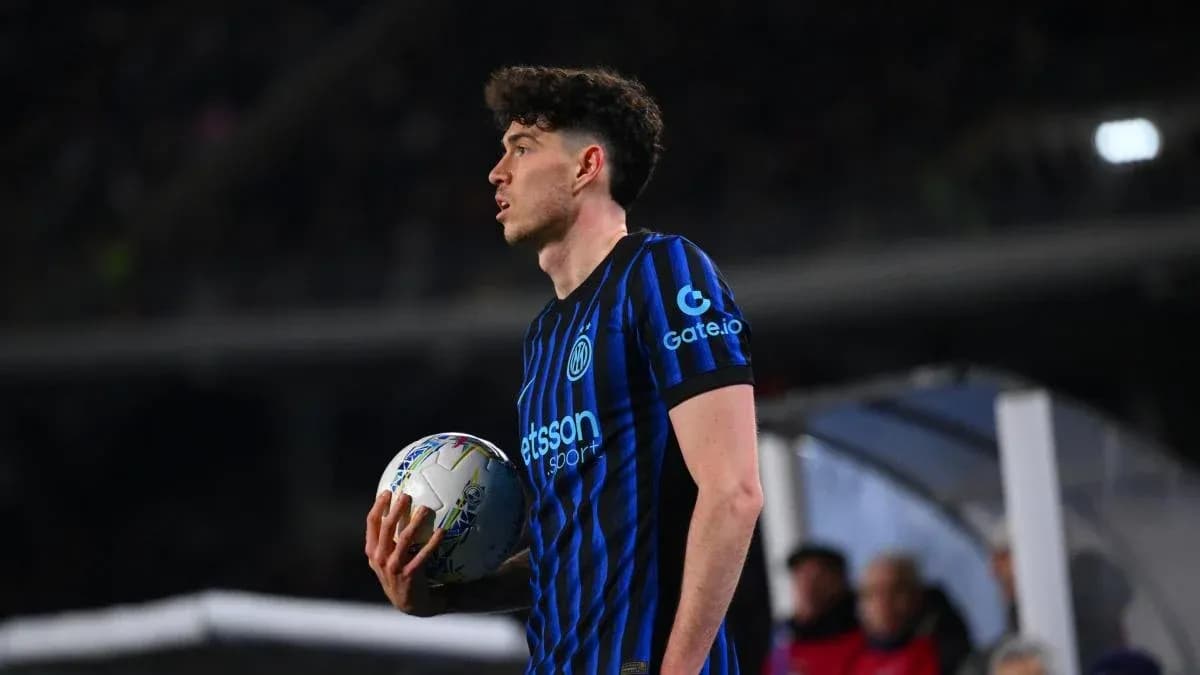
Alessandro Bastoni: Barcelona's Next Defensive Star?
Alessandro Bastoni stands at a crossroads. One path leads out of Milan and into the heart of FC Barcelona’s next defensive rebuild. The other keeps him where he is, still carrying the weight of a bruised reputation with Italy.
Barcelona have moved first. An opening bid of around €45 million has gone in for the Inter Milan centre-back, only to be pushed back. Inter want more – between €50 million and €60 million – and they know they can ask for it. Left-footed, calm under pressure, and just 26, Bastoni is exactly the profile Europe’s elite clubs rarely let slip.
The negotiations have not broken. Far from it. Talks are understood to be ongoing, and one factor could tilt the balance: Bastoni wants Barcelona. That desire matters. When a player of his status pushes for a move, it tends to drag the deal with him.
For Barcelona, the attraction is obvious. Bastoni is built for their football. He steps out from the back, breaks lines with his passing, and can start attacks as comfortably as he ends them. In a side that still sees possession as its core identity, a defender who can act as a playmaker from deep is gold.
At 26, he is entering what should be his prime. Barcelona see that window and are looking long-term. The plan is simple: drop him into a back line with experienced figures around him, let him grow, and turn a good defender into a complete one. They believe his game can be refined, his decision-making sharpened, his leadership shaped.
Yet Bastoni does not arrive without baggage.
A defining moment in his international career still lingers. In a crucial World Cup qualifying playoff, he saw red. Italy’s campaign collapsed, and that dismissal became a symbol of a wider failure. The Azzurri crashed out, and the criticism came quickly. It did not stop at the team; it landed squarely on Bastoni as well.
Since that night, his performances for Italy have lived under a harsher light. Questions have followed him: Can he lead under pressure? Can he be the calming presence at the back when everything around him is on fire? So far, many feel he has not answered those questions convincingly.
Italy’s defensive struggles throughout the qualification campaign only sharpened that scrutiny. Bastoni was expected to anchor the back line, to bring stability and authority. He did not manage it often enough. He was not the sole reason for Italy’s failure, but he played a significant part in a unit that underperformed badly.
Barcelona are choosing to look past that. Or rather, through it. They are betting that the version of Bastoni they see at club level – the composed distributor, the defender comfortable defending high, the player who can dictate the tempo from the back – is the one they can build around. They see a talent that can be elevated in the right environment, not a liability defined by one brutal international setback.
For a club still reshaping itself after years of financial strain and defensive instability, this is a calculated gamble. A signing like Bastoni would not just plug a gap; it would reshape how Barcelona build from the back. It would give them a reliable outlet under pressure, a defender who invites the ball rather than hides from it.
The stakes, though, are just as high for the player as for the club.
If the deal goes through, Bastoni will not simply be another signing. He will arrive with a point to prove – to Italy, to his critics, and to himself. Can he turn the page and write a new chapter in one of football’s most demanding shirts? Or will the doubts that followed him with the Azzurri resurface under the spotlight of Camp Nou?
The transfer talks will answer the first question. His performances, if he gets his move, will answer the rest.