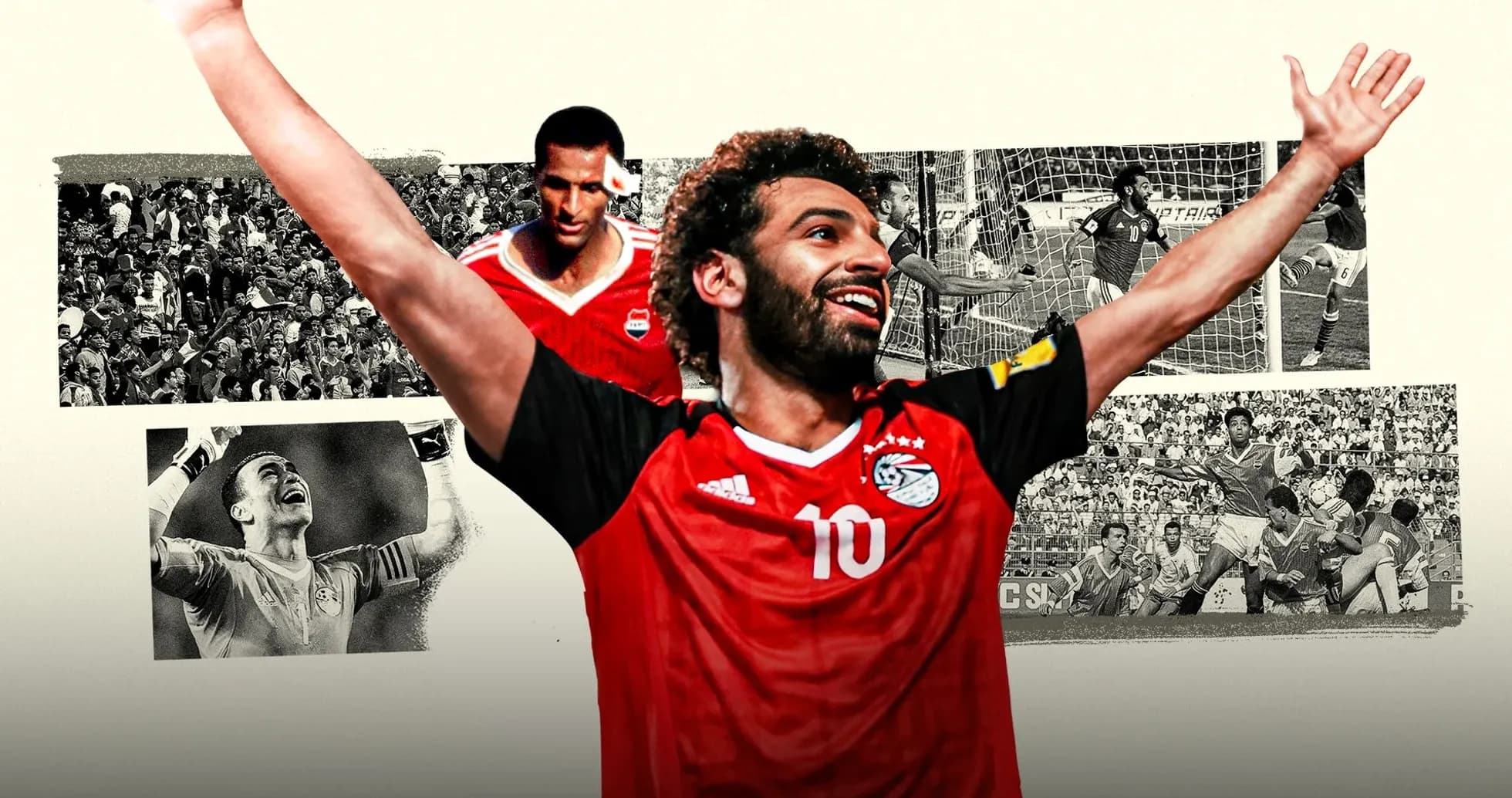
Egypt's World Cup Journey: From 1934 to 2026
In 1934, Egypt’s World Cup dream began not with a television spectacle, but with a crackling radio signal and 11 men on an old ship bound for Italy.
No cameras. No social media. Just static-filled commentary drifting into Cairo’s alleys, and a small, stubborn belief that an African and Arab team could stand on football’s biggest stage.
The first footsteps
Egypt had earned their ticket by beating Palestine, then sailed for weeks to reach Europe. When they finally lined up in Rome, Hungary stood in their way – one of the most feared teams in Europe.
The scoreline said 4-2 to Hungary. History said something else.
Abdelrahman Fawzi struck twice and became the first African to score at a World Cup. In cramped Cairo streets, people huddled around radios, clapping and cheering at every mention of Egypt’s name. Pride arrived in waves, stronger than the Mediterranean the team had just crossed.
Then, silence.
War swallowed football. Guns replaced whistles. For decades, Egyptians followed World Cups through newspaper ink and grainy photos, not through their own players.
Generations came and went. Saleh Selim, Taha Ismail, Hassan Shehata, Mahmoud El Khatib – giants of the African game. Egypt ruled their continent, lifting trophies and building legends. But the World Cup stayed distant, a bright star just out of reach.
The long-awaited return
Fifty-six years after Fawzi’s goals, the door finally opened again.
In 1990, under the steely gaze of coach Mahmoud El Gohary, Egypt clawed their way through brutal qualifiers. The breakthrough came with Hossam Hassan’s decisive strike against Algeria – a goal that shattered the glass ceiling and sent millions into the streets.
That November night, Cairo was unrecognisable. Flags from every balcony. Chants rolling over rooftops. Cars jammed in celebration, not frustration. Egypt were going back to the World Cup.
Italy again. This time Palermo, and a date with the reigning European champions: the Netherlands.
Egypt dug in. The first half ended goalless, the Dutch frustrated. In the 58th minute, Marco van Basten delivered a cross, Wim Jonk finished, and the champions finally broke through.
Egypt did not fold.
In the 83rd minute, Hossam Hassan burst into the box and went down under pressure. The referee pointed to the spot. Time slowed.
Magdy Abdelghany stepped up, inhaled, and hammered the ball home. “Goal for Egypt!” the commentator roared. A single kick connected Fawzi’s generation to a new one. The match finished 1-1, but in Egyptian homes it felt like a famous victory.
Next came Ireland. Ninety minutes of tension and tackles, of sweat and shouting. Ahmed Shobeir turned into a wall, saving everything, bending time to his will with deliberate, maddening delays.
That performance, and his time-wasting, became notorious. Many fans around the world later linked his antics to FIFA’s introduction of the back-pass rule. The game ended 0-0, another draw that felt like a triumph.
The world took notice. “Who are these Africans fighting like lions?” people asked. The media answered: “The solid Egyptian team.”
England finally edged them 1-0 in a tight, bruising contest. On paper, it was a defeat. El Gohary saw something else. “We’ve planted the seed today… Someone will harvest it tomorrow,” he said.
He was right. The boy who would harvest it was still a child in a Nile Delta village.
From Nagrig to the world
Mohamed Salah grew up in Nagrig with the same dream that had travelled by ship in 1934 and by radio in 1990. From Al Mokawloon to Basel, Chelsea to Fiorentina, Roma to Liverpool, every step carried Egypt’s hopes a little further.
He became the “Egyptian King” in England, but at home he was something simpler: the kid who might finally drag the Pharaohs back to the World Cup.
In the 2018 qualifiers, Salah did more than that. He became the story.
His goals revived belief across a country that had waited nearly three decades for another appearance on the biggest stage. The decisive night came at Borg El Arab Stadium against Congo.
The score was 1-1 heading into stoppage time. The clock mocked Egypt. Commentator Medhat Shalaby’s voice climbed with every attack: “Give us something, ya akhi!” Then, in the 94th minute, Trezeguet went down. Penalty. Shalaby’s cry – “Allahu Akbar!” – cut through the noise.
Salah picked up the ball. Placed it. A faint smile. Then the strike.
The net rippled and Alexandria shook. The stadium exploded. Across Egypt, streets filled instantly. Grown men wept. Children screamed with joy. After 28 years, the Pharaohs were going back to the World Cup.
The night everything stopped
One month before Russia 2018, another stage awaited Salah: the Champions League final in Kyiv. Real Madrid vs Liverpool, the football world watching. The “Egyptian King” chant echoed around the city. Cameras followed his every step. This was his coronation night.
Until it wasn’t.
Midway through the first half, Salah tangled with Sergio Ramos and crashed to the turf, clutching his shoulder. He tried to rise, then crumpled. The pain on his face turned to tears as he walked off.
In Cairo, the noise died. Cafes fell silent. Screens stayed on but everything else stopped. Children who had danced to his goals stared in disbelief. It felt as if a nation had fallen with him.
Weeks later, Salah returned. Still injured, but unbroken. “Bodies may fall… But dreams never do,” he told the world.
Russia waited.
Russia 2018: hope and heartbreak
Egypt’s return to the World Cup should have been a celebration. Instead, it began with a grim calculation: Salah’s shoulder could not withstand 90 minutes in the opener against Uruguay.
He started on the bench. His teammates fought like men possessed, defending bravely and threatening on the break. For 89 minutes, they stood toe-to-toe with the South Americans. Then came the dagger – an 89th-minute goal that broke their resistance.
Yet the performance hinted at something better to come. “When Salah returns, everything will change,” people said.
Against hosts Russia in Saint Petersburg, Salah did return. He smiled on the pitch, but his body still betrayed him. By the time he converted from the penalty spot, Egypt were already 3-0 down. The goal felt like a consolation, not a turning point. Their tournament effectively ended that night.
He scored again in the final group game against Saudi Arabia. It did not matter. Another defeat. Three games, three losses. The Pharaohs went home without a single point.
The dream had finally come true, but the reality hurt.
A golden generation under strain
Russia marked the start of a harder chapter.
The same core of players came home to host AFCON 2019. Expectations soared. The script seemed obvious: Egypt, on home soil, led by Salah, reclaiming their African crown.
Football tore it up.
In the last 16, South Africa stunned the hosts. The stadium fell into a stunned hush. An entire country had expected a coronation; instead, it got an abrupt exit.
Two years later in Cameroon, at AFCON 2021, Egypt looked different. Not always fluent, rarely spectacular, but stubborn. They lost their opening match to Nigeria, then dug in.
They knocked out Ivory Coast. Then Morocco. Then hosts Cameroon. Each game demanded more, pushed them deeper into extra time, then penalties. Each time, they survived.
The final against Senegal went to a shootout again. This time, Salah never reached the spot. Senegal settled it before Egypt’s captain could take his kick.
Weeks later, the same script, even higher stakes. Egypt vs Senegal again, this time for a place at the 2022 World Cup. Again, penalties.
Salah stepped forward this time, lasers from the stands flashing across his face. He looked calm. Composed. The ball left his foot and sailed over the bar, disappearing into the night.
Egypt froze. One miss, one heartbeat, and the World Cup dream vanished again. Yet the belief did not die. Dreams built over a century do not collapse in a single evening.
A new Pharaohs’ era
Then came the 2026 qualifiers. Same star, different story.
Salah was no longer the lone saviour. Around him stood a new generation that had grown up watching his rise, his injuries, his tears, his comebacks. They did not see a distant icon. They saw an older brother.
From the first game against Djibouti, something felt altered. Egypt were sharper, more organised, more ruthless. Salah kept scoring, but now he had Omar Marmoush and Ahmed Sayed “Zizo” buzzing around him, adding pace, trickery and goals of their own.
On the touchline, Hossam Hassan prowled like a man still playing. He barked orders. “Press! Don’t back down!” He kicked every ball in his mind, lived every tackle in his body. He did not just select a team; he restored an identity.
Fear drained away. Young players who once watched Salah on television were now trading passes with him in World Cup qualifiers. The dynamic had shifted.
Egypt did not just qualify. They imposed themselves. Ten games, eight wins, two draws. Unbeaten. They topped their group with a calm assurance that felt new, almost unfamiliar for a team so used to drama.
When the final qualifier ended, there were no wild laps of honour. Hossam Hassan allowed himself a quiet smile on the sideline. The players celebrated, but with restraint. Their message was clear: this was only the beginning.
Now the gaze lifts again to the World Cup.
Hassan is already plotting. Salah, older but still burning, has made his promise: “This time, it won’t just be about taking part.”
From a crackling radio in 1934 to high-definition dreams in 2026, Egypt’s World Cup story has never been simple. The question now is no longer whether they belong.
It’s whether this generation can finally turn a century of longing into something that lasts.