Dortmund vs Atalanta: A Tactical Match Analysis
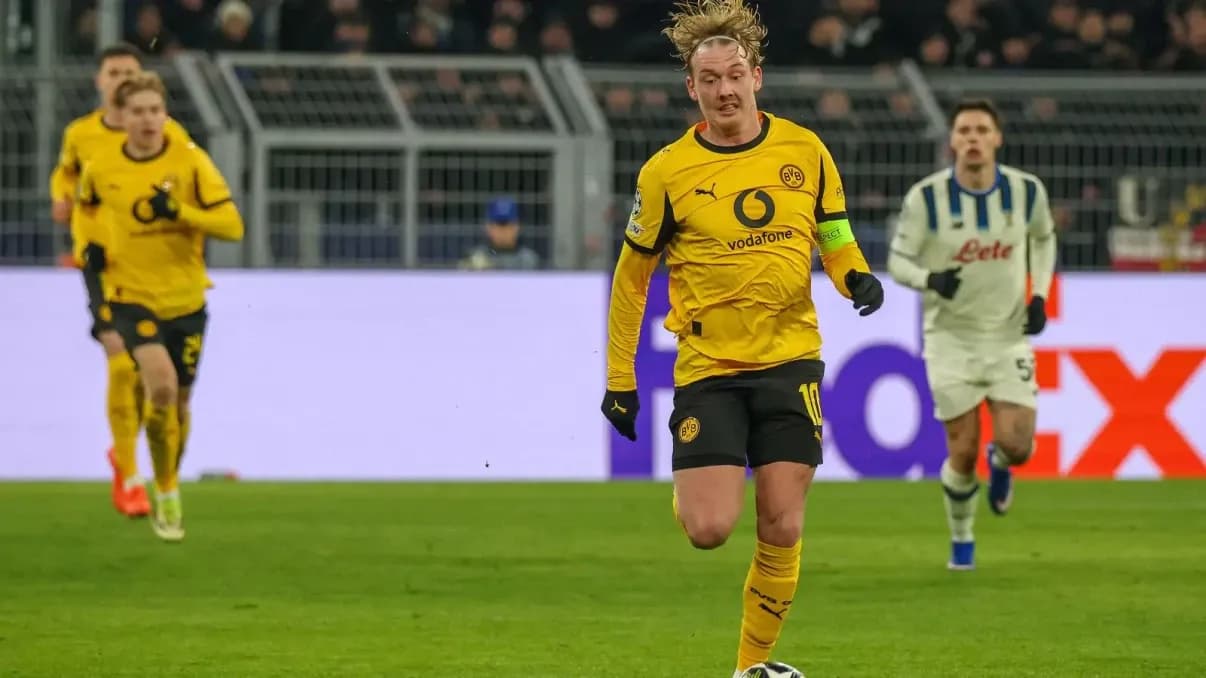
This was a classic case of possession without penetration versus compact, vertical efficiency. Atalanta controlled the ball with 56% possession, completing 452 of 521 passes at an 87% accuracy rate, but struggled to turn this into real threat. Dortmund, in a mirrored 3-4-2-1, were content with 44% possession and 419 passes (83% accuracy), focusing on controlling space rather than the ball. The early lead allowed Dortmund to drop into a stable mid-block, compressing central zones and inviting Atalanta to circulate harmlessly in front of them. Atalanta dictated tempo, but Dortmund dictated where the game was played and where pressure was triggered.
Offensive Efficiency
The shot profile underlines the different game plans. Despite less of the ball, Dortmund produced 9 total shots to Atalanta’s 7, and crucially generated far higher quality: an expected_goals figure of 2.09 versus Atalanta’s 0.46. Dortmund’s 6 shots inside the box (from 9 total) show a clear intent to attack quickly into high-value zones once possession was regained, often through direct links into S. Guirassy and the two supporting forwards. Their 3 corner kicks also reflect selective but effective territorial pressure.
Atalanta, with 5 shots inside the box and only 2 from distance, did reach advanced areas but not with enough frequency or clarity. Their 3 shots on goal, compared to Dortmund’s 2, suggest parity in pure attempts on target, yet the underlying xG gap highlights how much more dangerous Dortmund’s situations were. Atalanta’s 2 blocked shots and Dortmund’s 3 blocked efforts show both sides were able to get bodies in the way, but the home side’s ruthlessness in turning limited possession into high-quality chances was decisive. The 2–0 scoreline from just 2 shots on target illustrates Dortmund’s clinical edge rather than volume-based attacking.
Defensive Discipline & Intensity
Without the ball more often, Dortmund’s defensive plan hinged on controlled aggression. They committed 11 fouls and picked up 2 yellow cards, numbers that indicate a firm but not reckless approach to disrupting Atalanta’s rhythm. G. Kobel made 3 saves, matching Atalanta’s shots on goal and confirming that, while Dortmund were largely in control, their goalkeeper still had to manage a few meaningful interventions.
Atalanta, chasing the game, were slightly more disruptive with 13 fouls and 3 yellow cards. This higher foul count and card tally point to increased frustration and a need to halt Dortmund’s transitions once the home side broke the first line of pressure. Notably, Atalanta’s goalkeeper registered 0 saves, underlining how Dortmund’s few clear chances were finished cleanly rather than forcing repeated stops.
Dortmund’s compact defensive block and high-quality chance creation (2.09 xG from 9 shots) trumped Atalanta’s superior possession and pass accuracy. Atalanta’s 56% of the ball translated into only 0.46 xG, encapsulating a night of sterile domination against a home side built on structure, transitions, and clinical finishing.