De Zerbi's Silent Fury After Spurs Collapse
Silence said more than any dressing-room rant could at the Tottenham Hotspur Stadium.
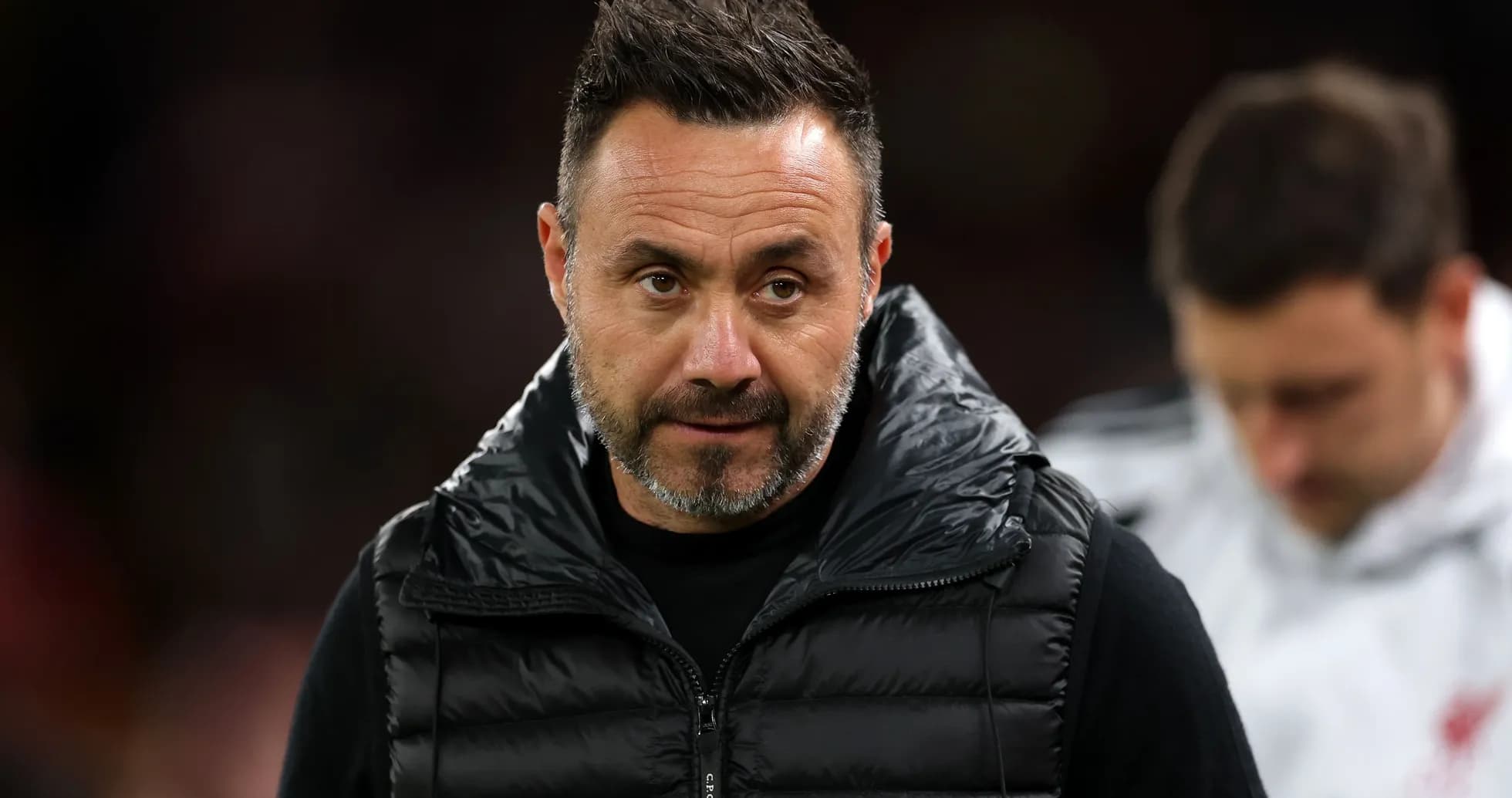
Roberto De Zerbi walked away from his players after their latest collapse, choosing not to utter a word in the immediate aftermath. No grand speech. No hairdryer. Just a manager seething, but determined not to lash out.
“Maybe it is better. I didn't speak with the players today because I didn't want to say nothing. No, I have nothing with them,” he explained later, making it clear the silence was about control, not conflict.
He needed it. The manner of the defeat cut deep.
Tottenham conceded while down to ten men after Micky van de Ven suffered a facial injury, then crumbled again to a straight, route-one ball from a goal kick. For a coach who obsesses over detail and structure, it was exactly the kind of soft underbelly he has been trying to rip out of this team.
“We conceded an unacceptable goal from a long kick with a long ball and we knew before the game, because this season Aston Villa are playing 86 per cent more long balls than last season and we spoke in many, many meetings,” De Zerbi said, his frustration obvious.
They knew it was coming. They still didn’t deal with it.
Leaders Missing When It Mattered
This wasn’t just about tactics for De Zerbi. It was about nerve.
He pointed the finger, gently but firmly, at the senior figures in his starting XI, insisting they must manage the chaos better when the game turns and the pattern breaks.
“It's my responsibility, I take my responsibility,” he said. “But in that moment of the game, when the game is different than ball possession than playing in the last third, because we can't play 90 minutes in the last third like the first half, because there is an opponent, Aston Villa is not a so bad team, it's a good team.
“And the moment when we have to defend and we have to defend compact the leaders have to be leaders and to lead the team.”
The message was blunt: when Spurs can’t dictate, they can’t disappear. Not again.
Solanke Struggling in the Spotlight
One of the players caught in this difficult start is Dominic Solanke. Signed to be the focal point of the attack, he has so far looked short of sharpness and short of belief.
De Zerbi didn’t hide from that reality, but he didn’t hang his striker out to dry either.
“We need more from him for sure, but he's one of my players, I like Dom as a player and I stay with him until the end,” he said.
“He needs to stay, to feel better, his physical condition is not good enough for sure, but it's normal for him. Maybe he's not good enough in the confidence of himself in this moment because he's much better than this Dom Solanke.”
The verdict was clear: this is not the Solanke De Zerbi thought he was getting. Not yet. But the manager is backing him to emerge from it.
International Break Becomes a Reset Button
Now comes a three-week international break, often a disruption for club managers, but De Zerbi is treating it as an opportunity.
A large chunk of his squad will scatter across the globe on national duty, keeping their rhythm elsewhere. Those left behind will not be easing off.
“The players who go with the national team they have to play, they have to work,” he said. “And the other players like [Conor] Gallagher, Solanke, Tosin [Adarabioyo], [Marcos] Senesi, Savio for sure we have to work more because of the physical condition I didn't like in this game.”
No public outburst in the dressing room, no instant fireworks. Instead, a quieter kind of anger and a clear warning: when this team comes back from the break, excuses about fitness, focus and leadership will no longer wash.