Cristiano Ronaldo and Portugal's Struggle to Adapt
Cristiano Ronaldo walked out in Houston chasing ghosts as much as goals. Sixth World Cup. Forty-one years old. Armband on. Eyes fixed. The old theatre, the old rivalry, the old expectations.
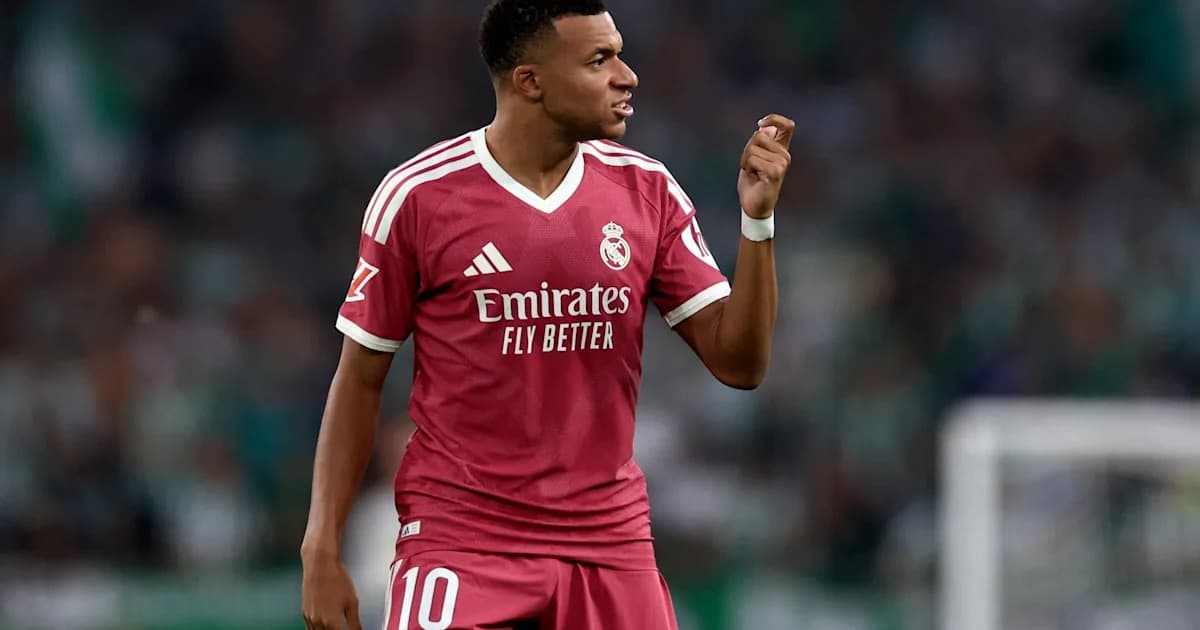
By the time he kicked a ball against DR Congo, the scoreboard in his head was already running. Kylian Mbappe had struck twice the night before. Erling Haaland too. Lionel Messi, the eternal measuring stick, had gone one better with a hat-trick.
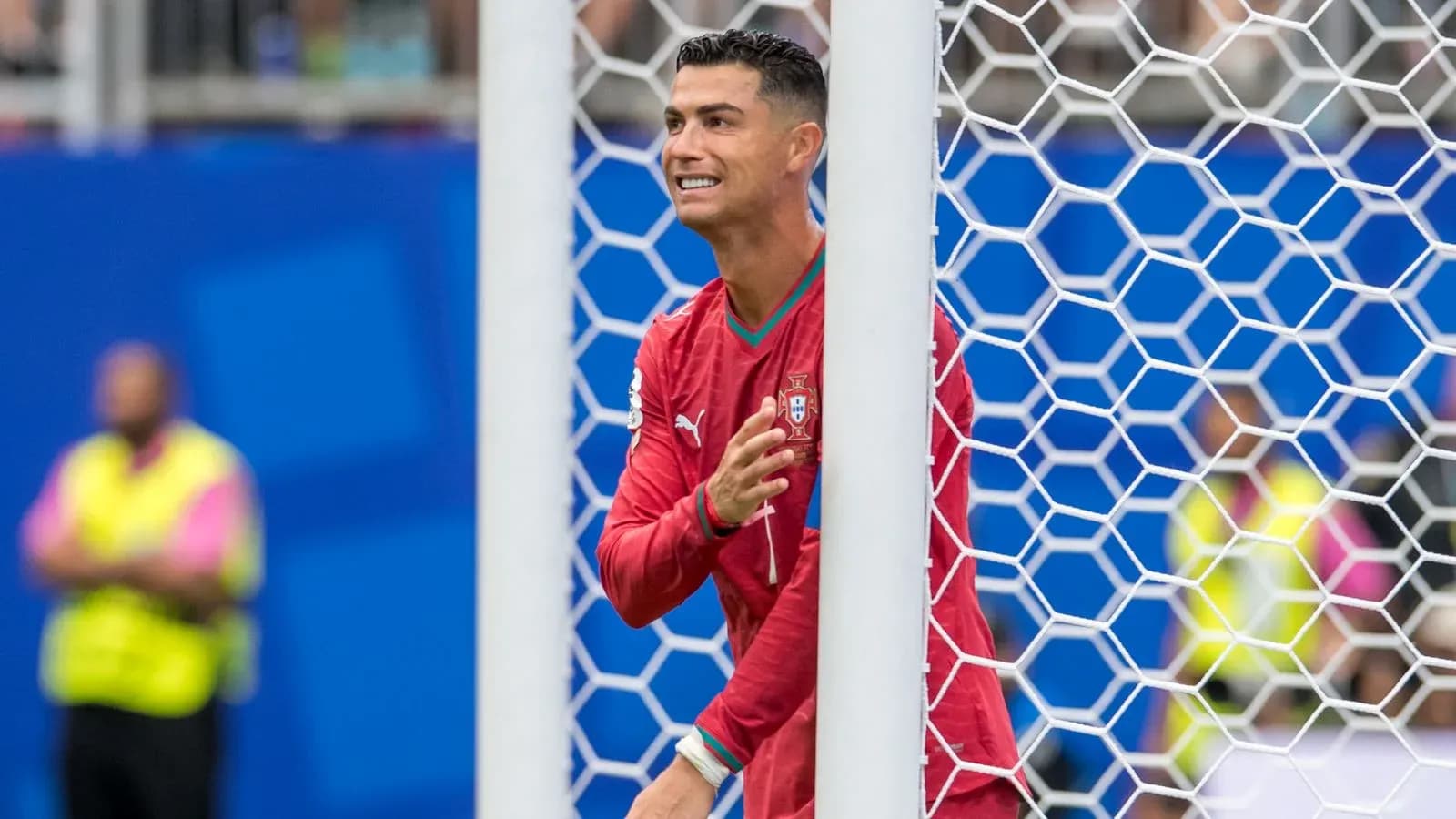
Ronaldo’s answer? Twenty-nine touches. Three shots. No goals. A scowl that said plenty as Portugal laboured to a draw that felt smaller than the talent on the pitch.
The numbers are now impossible to ignore. Ten consecutive games at major international tournaments without a goal. Messi, across his last 10, has nine. The contrast is brutal.
In Houston, only Bernardo Silva – withdrawn at half-time – had fewer touches among Portugal’s starters. For a man once able to bend entire games to his will with movement alone, Ronaldo drifted on the fringes. Present in name, peripheral in impact.
Martinez stands by his man
Roberto Martinez did not hesitate when the questions came. The Portugal head coach pushed the spotlight away from his captain and onto the collective.
"It makes no sense to get the best goalscorer in world football out in a game that you need goals," he said. For Martinez, Ronaldo’s mere presence in the box still matters. The gravity he exerts on defenders. The spaces that open for others when eyes are drawn to the No 7.
"And every player has a responsibility or a piece of quality on the pitch. And clearly when you look for goals, you need to have Cristiano."
It is a bold stance when you scan the names around him. Bernardo Silva, Bruno Fernandes, Pedro Neto, Vitinha, Joao Neves, Joao Cancelo, Nuno Mendes. A creative unit that, on paper, belongs among the most gifted in international football.
To suggest they are the problem and Ronaldo the victim is a serious accusation. But the data does offer Martinez some cover.
Are Portugal failing Ronaldo – or is it the other way round?
Strip away the emotion and the montage reels, and the numbers paint a colder picture.
Across their last 10 competitive international games, Ronaldo has had fewer shots than Messi and Mbappe, and only slightly more than Harry Kane. Kane sits on 30 efforts in that span; Ronaldo is close, but the quality of chances tells a different story.
Ronaldo’s expected goals (xG) in those 10 matches stands at 5.36. Kane’s is 7.15. Mbappe’s is 8.76. Messi’s exact xG isn’t available, but the Frenchman and the England captain are clearly operating in richer territory.
Look at the team totals with their star forwards on the pitch. Portugal’s combined xG with Ronaldo: 12.76. England with Kane: 16.39. France with Mbappe: 21.99.
Per 90 minutes, that’s 1.32 for Portugal, 1.34 for England, 1.72 for France. The gap to France is stark. Mbappe plays in a side that lives in the final third. Ronaldo operates in one that, by comparison, merely visits.
Go deeper still. Ronaldo’s xG from chances assisted by team-mates during this goalless run is just 2.55. Kane’s is 3.2. Mbappe’s is a huge 5.78.
For all the creative talent behind him, Ronaldo is not being fed with the same volume or quality of service as his contemporaries. In that sense, the idea that he is living off scraps is not entirely myth.
But that is only half the story.
The finishing touch that isn’t there anymore
Once, any half-chance in the penalty area felt like a prelude. Ronaldo didn’t just score; he punished. Now, the most damning metric is what happens after he pulls the trigger.
Post-shot xG – which measures the quality of the shot itself rather than just the position it was taken from – exposes the drop.
Kane and Mbappe are outperforming their expected numbers. Kane sits at +2.05. Mbappe at +2.25. They are adding goals through sheer finishing quality, elevating the chances they are given.
Ronaldo, across this barren run, is at -2.8. Almost three goals fewer than expected after the ball leaves his boot or head. The instincts are still there. The leap, the timing, the aura. The execution is not.
For a player whose reputation was built on ruthless efficiency, that is more than a blip. It is a sign of a sharp decline in the one area where he always seemed untouchable.
A striker who no longer bends the game
There is another problem. Messi, Kane, Mbappe – all three shape matches in more than one zone.
Kane drops deep, dictates play, drags centre-backs into midfield and creates channels for runners. Messi roams into pockets, stitches moves together, appears on the ball in every phase. Mbappe stretches defences, attacks space, pulls entire back lines apart with his movement.
Ronaldo does not. Not anymore.
His touch map and heatmap against DR Congo show how narrow his influence has become. Limited involvement, clustered actions, and much of it in isolated positions on the left – areas where Neto and Mendes should have been the ones doing damage.
He does not come short to knit play. He does not drift centrally to overload. He does not press with the intensity modern systems demand. He stays high, stays wide, and waits.
Portugal know this. They have built their structure around the idea that Ronaldo is the finisher, not the architect. But when the finisher stops finishing, the compromise becomes harder to justify.
A golden generation stuck in limbo
This is the dilemma Martinez cannot escape. He cannot rip up his creative core – Fernandes, Silva, Vitinha, Neves – to accommodate one man’s diminishing returns. Yet he also refuses to take that man out.
So the team bends. Full-backs adjust their runs. Midfielders tailor their passes. Wingers shift their zones. Everything is tilted towards supplying Ronaldo, even when the numbers say the payoff is shrinking.
If he had buried just a couple of those chances over this 10-game drought, the debate would be quieter. The faith easier to defend. Instead, every goalless outing adds weight to the argument that Portugal are playing yesterday’s game with today’s talent.
This is not about legacy. Ronaldo’s place in football history is immovable. It is about the present. About a squad stacked with peak-age creators being asked to orbit a striker who no longer guarantees the one thing that once excused everything else.
At some point, Portugal will have to decide whether their future is still best served by their past. The question is not whether Cristiano Ronaldo can still play. It is whether this team, in this moment, can afford to keep playing for him.