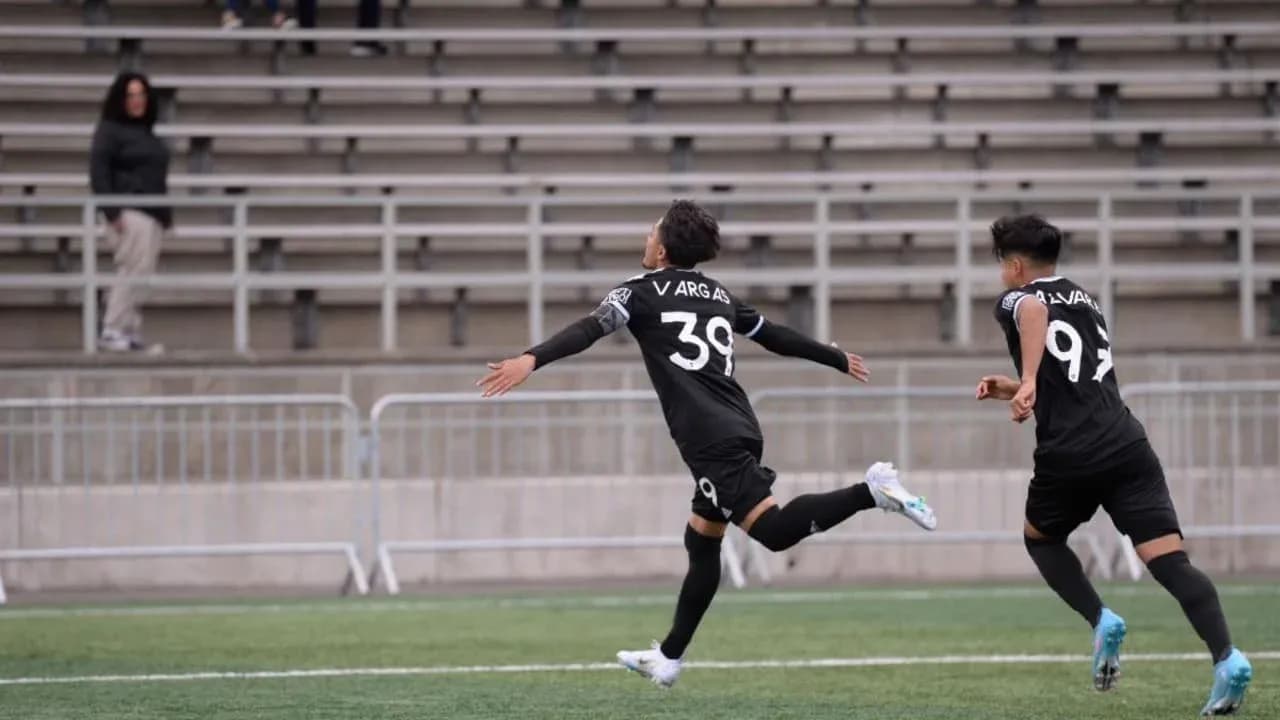
Connecticut FC vs Toronto II: Tactical Analysis of a 0-2 Defeat
Under the lights at Morrone Stadium, this MLS Next Pro group-stage meeting felt less like a mid-season fixture and more like a stress test of two projects heading in opposite emotional directions. Connecticut FC, rooted in the Northeast Division basement at rank 8 in their group and 14 in the Eastern Conference, came in carrying a goal difference of -7 overall (10 scored, 17 conceded) and a form line that read like a warning label: WLWLLLLWL. Toronto II, 5th in the Northeast Division and 10th in the conference with a goal difference of 1 overall (16 scored, 15 conceded), arrived with a sharper recent edge, having stitched together WLLWW in their last five.
Following this result, a 0-2 away win for Toronto II, the numbers and the narrative converged. Connecticut’s season-long fragility at home — 1 win and 3 defeats in 4, with only 2 goals for and 7 against — again set the tone. On their travels, Toronto II had been inconsistent (2 wins, 4 defeats, 9 scored, 9 conceded), but their attacking DNA of 1.5 away goals on average and a late-game scoring surge (33.33% of their goals between 76-90 minutes overall) translated into a controlled, professional road performance.
I. The Big Picture – Seasonal DNA Under the Microscope
Connecticut’s season profile is that of a side permanently on the brink. Overall they average 1.2 goals for and 1.9 against, a structural imbalance that rarely allows them to win on control alone. Their goals come in waves rather than steady streams: 30.00% of their total output arrives between 31-45 minutes and another 30.00% between 76-90 minutes. It is a team that can flicker into life, but not one that sustains pressure.
Defensively, the pattern is more troubling. Connecticut concede heavily just before half-time, with 29.41% of goals against coming in the 31-45 window, and then again in a steady drip from 46-90 minutes. The absence of any goals conceded in the opening 15 minutes this season hints at early concentration, but as legs tire and structure loosens, the back line frays.
Toronto II’s season arc is different. Overall they score 1.6 goals per match and concede 1.7, a slim negative defensive tilt that is mitigated by their capacity to finish games with force. Their goals are backloaded: 26.67% between 61-75 minutes and 33.33% between 76-90. Defensively, their most vulnerable period is also late, with 31.25% of goals conceded coming in the 76-90 window, and a dangerous wobble just after half-time (25.00% conceded from 46-60).
In a knockout or 1/8 final context this would feel like a classic “who blinks last” scenario; in the group stage, it became a test of which side could impose its preferred rhythm. Toronto II did, and Connecticut never found theirs.
II. Tactical Voids – Discipline, Nerves, and the Missing Edge
The raw data offers no explicit absentees, but the tactical voids were conceptual rather than individual. Connecticut’s season-long tendency to lose shape after the half-hour mark resurfaced. Their card profile tells of a team that grows increasingly frantic: 22.22% of their yellow cards arrive between 31-45 minutes, 18.52% between 46-60, and a peak 25.93% from 76-90. Add a red card history that shows 100.00% of their dismissals in that same 76-90 window, and you see a group that often finishes matches on the emotional edge.
Toronto II, by contrast, have a more measured disciplinary curve. Their yellows cluster before the interval (27.78% between 31-45) and early in the second half (22.22% between 46-60), but they taper off late. No reds all season underscores a side that, while aggressive, rarely crosses the line.
In this fixture, that psychological gap mattered. Connecticut, already carrying a season of strain, needed calm possession and clear structures; instead, the game tilted toward the open, transitional rhythms that suit Toronto II’s late-running forwards and mobile midfield.
III. Key Matchups – Hunter vs Shield, Engine Room vs Enforcer
Without individual goal or assist tallies, the “Hunter vs Shield” duel is better understood as unit versus unit. Toronto II’s attacking unit — which overall has produced 16 goals, with a pronounced spike from 61 minutes onward — ran directly into a Connecticut defense that concedes 29.41% of its goals just before the break and then 17.65% in each of the 46-60, 61-75, and 76-90 intervals. The intersection is stark: a side built to surge late against one that repeatedly fades.
Within that, the roles from the lineups matter. For Toronto II, the spine of M. Chisholm, B. Boneau, and T. Fortier formed the functional core. Boneau, operating as a pivot, gave them the capacity to reset attacks and protect transitions, while Fortier’s presence between the lines offered vertical passing lanes into D. Dixon and J. Nolan. Z. Nakhly at the back provided the platform, anchoring a line that, on this night, never allowed Connecticut’s forwards to pin them deep for long spells.
Connecticut’s response revolved around the technical axis of S. Sserwadda, E. Gomez, and A. Monis. Sserwadda’s role as the connector between defense and attack was crucial; when he received under pressure and turned, Connecticut could threaten. When Toronto II’s midfield squeezed his space, the home side’s build-up became predictable: long, hopeful passes toward I. Kasule or L. Goddard, easily read by Toronto’s back line.
The “Engine Room” battle thus tilted toward Toronto II. Boneau and Fortier dictated the tempo, while Connecticut’s midfield was forced into reactive rather than proactive work, chasing rather than setting the rhythm.
IV. Statistical Prognosis – xG Shape and Defensive Solidity
We do not have explicit xG values, but the season-long shot and goal patterns allow an inferred shape. Toronto II’s ability to create and convert late, combined with a clean-sheet record of 3 overall (including 2 away), suggests a side that can both generate quality chances in transition and then close the door once ahead. Their penalty record — 1 taken, 1 scored, 0 missed — further underlines a clinical edge in key moments.
Connecticut, with only 1 clean sheet overall and having failed to score in 2 matches, simply lack the margin for error. Their under/over profile shows that in total they have gone over 1.5 goals in only 3 of 9 fixtures, and over 2.5 in just 1. It is a low-scoring, low-control environment in which any defensive lapse is magnified.
Following this result, the tactical verdict is clear: Toronto II’s structural advantages — a more balanced goal difference, sharper late-game offense, and steadier discipline — translated into a controlled 0-2 away win. Connecticut’s squad has technical pieces in Sserwadda, Gomez, and Monis, and defensive workers like R. Van Hees and L. Kamrath, but until their collective structure matches their individual qualities, matches like this will continue to slip away in the same familiar patterns: tight early, fraying around the half-hour, and decided in the final third of the game, where Toronto II thrive and Connecticut FC too often unravel.