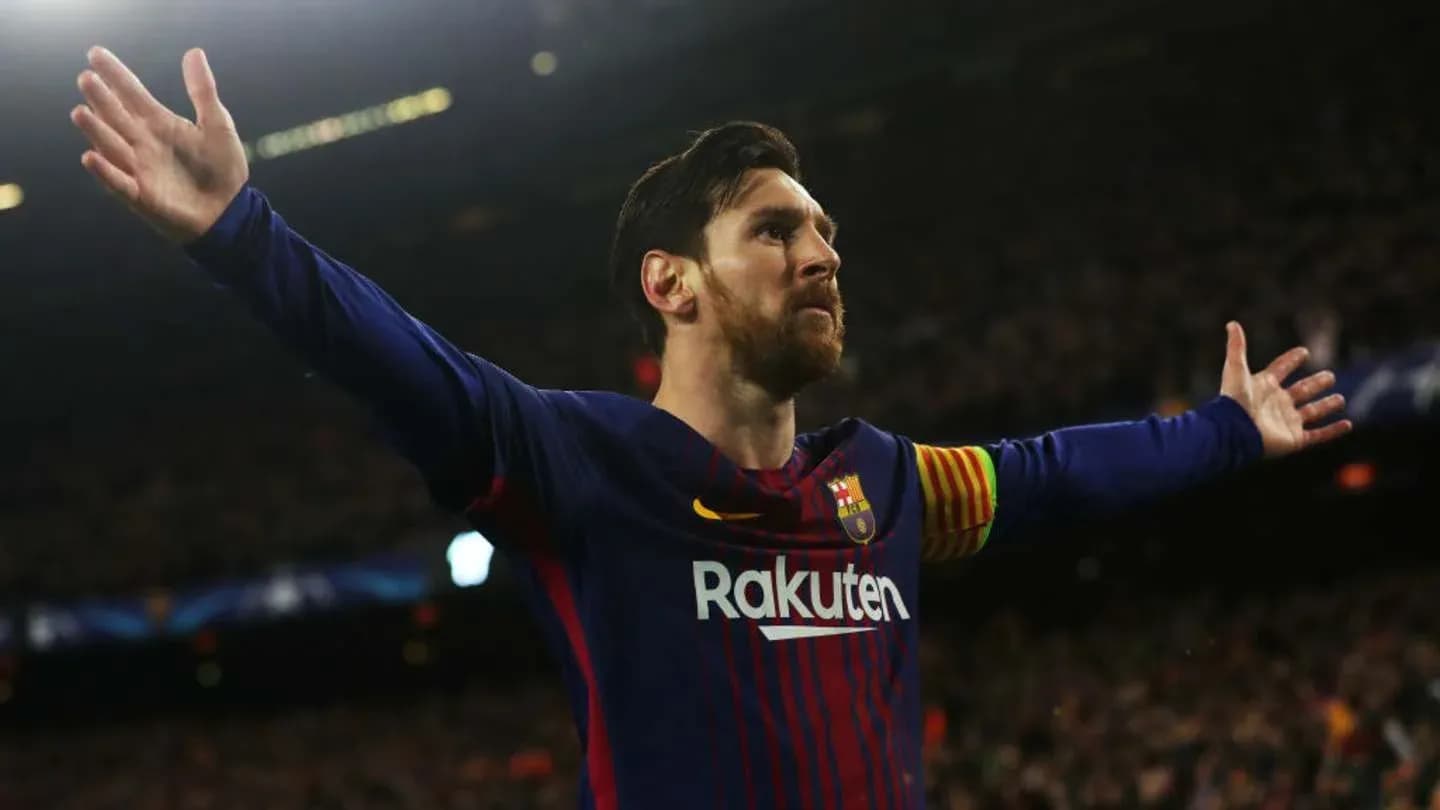
Xavi Reveals Ambitious Plans for Messi, Neymar, and Pedro Reunion at Barcelona
Xavi Hernández has pulled back the curtain on just how ambitious his Barcelona rebuild really was. The former coach says he tried to engineer a blockbuster return for Neymar and Pedro to join Lionel Messi in a sweeping homecoming that never got off the ground.
Speaking in an interview with Brazilian legend Romário, Xavi laid out the scale of his plans.
“I managed to bring back Dani Alves and tried to bring back Neymar, Pedro and Messi when I was coach,” he said, before explaining why the dream collapsed.
According to Xavi, Barcelona’s battered finances and internal resistance at the top of the club killed the idea.
“Pedro and Neymar couldn’t be brought back because of the financial situation, and Messi because the current Barça president didn’t want him,” he claimed. “There was an opportunity with Neymar, but it didn’t happen either. It didn’t happen because of our very difficult financial situation. Financial Fair Play was severely limiting us, and then there were the infamous salaries.”
Barcelona were still reeling from their trophyless 2019–20 season and a financial crisis that forced drastic cuts. Xavi, who took charge in November 2021, has repeatedly described that period as one of the darkest in the club’s history, and he again underlined how deep the problems ran, calling Barça “at its lowest point in history.”
The romantic image is easy to picture: Messi back at Camp Nou, Neymar returning to the scene of his rise, Pedro closing the circle on his Barcelona story. Xavi wanted that emotional reset. The club simply could not afford it, on the balance sheet or, in Messi’s case, politically.
Instead, Barcelona pivoted. The institution that once relied on the glow of its old stars began to lean on the legs of its youngest.
Xavi’s fingerprints on Flick’s Barcelona
Hansi Flick is now the man collecting the trophies. The German has delivered a domestic treble in his first season and is driving a strong La Liga title defense. The narrative naturally tilts toward the coach in the dugout.
But Xavi is not shy about reminding people who helped build the squad Flick is thriving with.
“We left a legacy of young players who are now the backbone of this team,” he said. “We laid a good foundation that Flick, with his excellent work, is now building on.”
He points directly to some of the current protagonists. Raphinha, Pedri, Lamine Yamal – all players who either arrived or exploded during his spell.
“I signed Raphinha. I told the club to sign him. I already wanted him when I was in Portugal. I gave him a lot of confidence. If he didn’t perform, I would have let him go,” Xavi recalled.
The Brazilian needed time. He needed backing. Xavi says he gave him both.
“I had a conversation with him because he was frustrated. I told him to stay calm, that he was five years old, and now he’s really blossomed. He’s a leader.”
The slip of the tongue in that line doesn’t change the message: Xavi sees Raphinha as a player he nurtured, not just inherited.
When the conversation turns to Lamine Yamal, the tone shifts again. Xavi’s admiration for the teenager is absolute.
“Yamal can be compared to Messi. He is one of the chosen ones; everything depends on him, his mentality, and his desire to make history. He can be the best in the world. He is already among them.”
For all the talk of the past, this is where Xavi’s legacy might ultimately be measured – in how far this new generation can go.
The Messi saga and Xavi’s clash with Laporta
The most contentious chapter, though, remains Messi’s failed return. Xavi has already accused president Joan Laporta of blowing up what he described as a “done deal.” He has not softened that stance.
“Messi was the best. There will never be anyone better than him,” Xavi said. “He is a very humble and hardworking person. I saw it when I was 16; he was completely different.
“I have a very good relationship with him. I tried to sign him for Barça. I spoke with him for five months; everything was ready, but the current president of Barça said no.”
That line lands like a direct hit at Laporta. Xavi’s version is clear: the green light from La Liga was there, the talks with Messi’s camp were advanced, and the president pulled the plug.
His comments echo his earlier allegation: “The president started negotiating the contract with Leo’s father, and we had La Liga’s approval, but it was the president who threw everything out.”
Laporta has denied that account. The dispute has turned into a public tug-of-war over who carries the blame for one of the great “what ifs” in modern football.
What is not in doubt is the outcome. Messi left Paris Saint-Germain as a free agent and chose Inter Miami, taking his legend to MLS instead of closing the circle in Catalonia. The Camp Nou return that so many imagined – and that Xavi tried to engineer – never happened.
Barcelona moved on with a new coach, a new core, and a different kind of project. Xavi, now on the outside, watches a team shaped in part by his decisions but steered by another man.
The reunion he wanted with Messi, Neymar and Pedro will stay a story of phone calls, blocked deals and financial walls. The question now is whether the generation he did leave behind can write something just as unforgettable.