Columbus Crew II Dominates Inter Miami II in 3–1 Victory
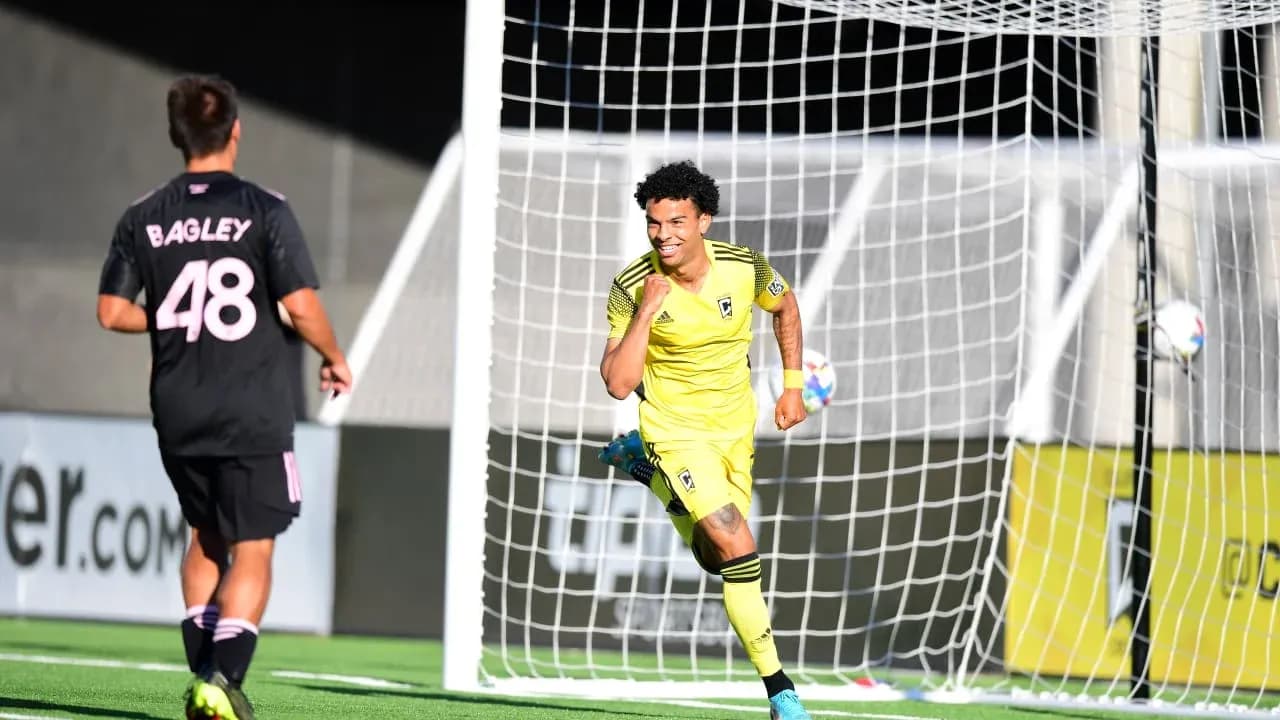
Under the lights at Historic Crew Stadium, Columbus Crew II’s 3–1 win over Inter Miami II felt less like a routine group-stage outing and more like a statement of hierarchy in the MLS Next Pro Eastern Conference. Following this result, the league table snapshots tell a clear story: Columbus entrenched near the top of the Northeast Division and third in the Eastern Conference with 17 points and a goal difference of 1 (16 goals for, 15 against overall), while Inter Miami II remain marooned at the foot of the conference in 16th, on 4 points and a goal difference of -12 (9 for, 21 against overall).
Columbus arrived with a perfect home record in the league: 5 wins from 5, 10 goals scored and 4 conceded at Historic Crew Stadium. Their season-long attacking profile already hinted at what was to come. At home they average 2.2 goals per game, and overall they sit at 1.9, driven by a pronounced mid-game surge: 31.25% of their goals arrive between 31–45 minutes and another 31.25% between 46–60. Inter Miami II, by contrast, came in fragile. On their travels they concede an average of 3.0 goals per match (15 conceded in 5 away games, 23 in total), with a defensive collapse concentrated in the 46–60 window, where they ship 38.10% of their goals. This was the critical intersection: Columbus’s peak attacking phase meeting Miami’s softest underbelly.
Federico Higuain’s lineup underlined that intent. L. Pruter anchored the side, with O. Presthus, C. Ruvalcaba, R. Aoki and C. Rogers forming the core of a back line that has kept 2 home clean sheets this season and concedes just 0.8 goals per game at home. Ahead of them, T. Brown and O. Taylor provided the legs and passing angles in midfield, while J. Chirinos, N. Rincon, I. Ewing and Z. Zengue gave Columbus a fluid, rotating front line capable of attacking from different channels and, crucially, sustaining pressure around the half-time break where their numbers spike.
Raul Ledesma Cristian’s Inter Miami II, meanwhile, arrived with a group that has known more adversity than rhythm. M. Marin, R. White, T. Hall, N. Almeida and S. Basabe formed the defensive unit tasked with withstanding Columbus’s waves. The midfield and front line of T. Vorenkamp, I. Urkidi, J. Convers, A. Flores, M. Saja and I. Zeltzer-Zubida had to walk a tightrope: provide enough threat to exploit Columbus’s early-game vulnerability (13.33% of Crew II’s goals conceded come in the first 15 minutes, 20.00% between 16–30) while not overcommitting and exposing that brittle 46–60 segment.
Tactically, the “Hunter vs Shield” duel was always going to be about Columbus’s multi-phase attack against Miami’s porous structure. Columbus’s season data shows they are relentless around the interval, with 10 of their 17 goals (58.82%) coming between 31–60 minutes. Inter Miami II’s defensive map is almost a mirror image of weakness: 8 of their 23 goals conceded (34.78%) arrive in the 46–60 window alone, with another 19.05% between 61–75. Once Columbus pushed the tempo out of half-time, Miami’s shield was always likely to crack.
In the “Engine Room,” the contest hinged on whether Miami’s central operators like I. Urkidi and T. Vorenkamp could slow the game and break Columbus’s rhythm. Columbus’s overall defensive record – 1.7 goals conceded per match, but only 0.8 at home – is built on controlling transitions rather than sitting deep. Their goals-against distribution shows they are most vulnerable before the break, conceding 26.67% of their goals between 31–45 minutes, suggesting that if Miami were to land a punch it needed to be before Higuain’s side hit their stride around half-time and immediately after.
Discipline and game management also played into the tactical picture. Columbus’s yellow-card spread is relatively even, with spikes at 31–45 and 61–75 (25.00% each), suggesting a side that knows when to foul to disrupt momentum but generally stays within control. They have seen one red card this season, and it came in the 0–15 window, an early-game flashpoint they avoided here. Inter Miami II’s card profile is more volatile: 23.81% of their yellows come between 46–60 and another 23.81% between 76–90, with a red card already recorded in the 76–90 range this season. That late-game indiscipline, layered on top of physical fatigue from constant defending, was always likely to tilt the closing stages toward Columbus, especially with Higuain able to turn to a deep bench featuring A. Zochowski, G. De Libera, C. Adams, M. Nyeman and B. Adu-Gyamfi to refresh the press.
From a statistical prognosis standpoint, this match unfolded almost exactly along the pre-game contours. Columbus, unbeaten at home and averaging 2.2 home goals, ended with 3 on the night. Inter Miami II, conceding 3.0 per away game, again allowed 3. Columbus’s under/over profile – over 1.5 goals in 6 of 9 matches, but under 3.5 in 9 of 9 – framed this as a likely multi-goal home win without turning into a rout, which is precisely how a 3–1 feels.
Even without explicit xG figures, the underlying numbers and minute-by-minute goal tendencies point to a match where Columbus’s structure, depth, and timing of their attacks simply overwhelmed an Inter Miami II side still searching for defensive cohesion and composure. Following this result, Crew II look every inch a side built for the MLS Next Pro play-off grind, while Inter Miami II leave Historic Crew Stadium with familiar questions about how to protect that fragile middle third of the game.