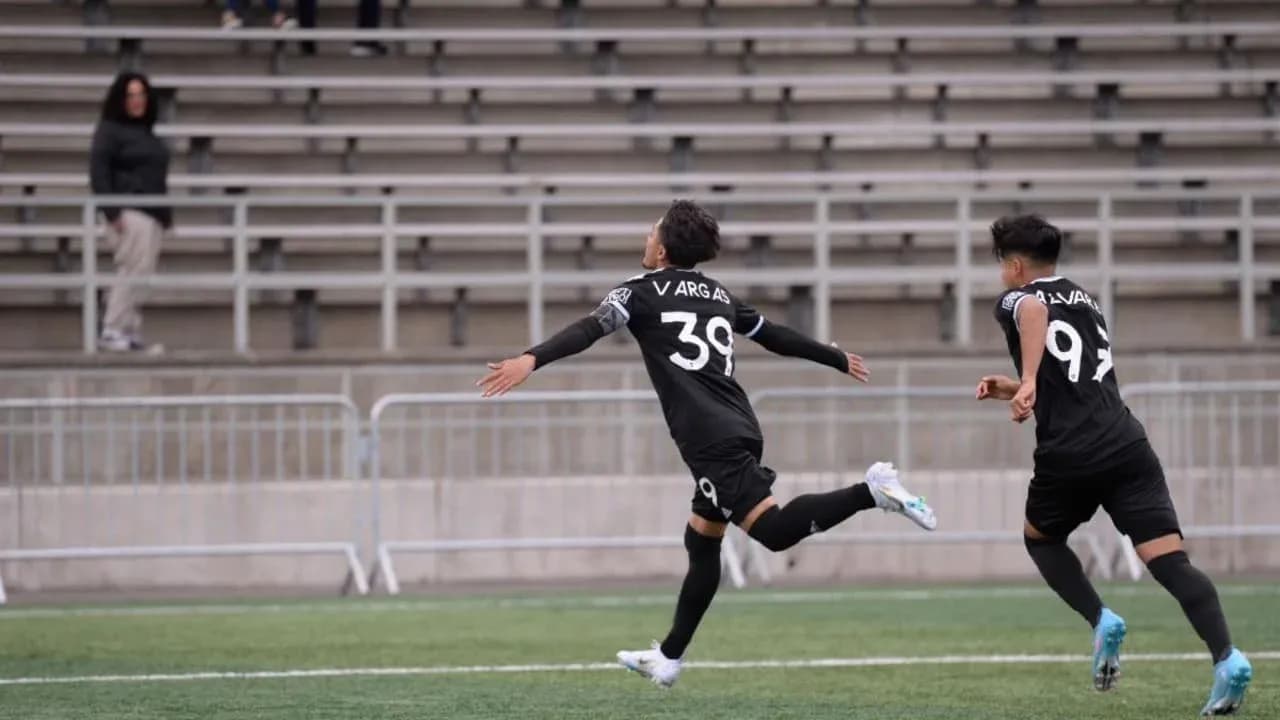
Colorado Rapids II vs Houston Dynamo FC II: A Clash of Extremes
Under the lights at CIBER Field, this MLS Next Pro group-stage clash felt less like a routine fixture and more like a study in extremes. Colorado Rapids II, bottom of the Frontier Division and still searching for their first point of the season, hosted a Houston Dynamo FC II side that arrived as the division’s perfect machine: eight wins from eight, top of both the Frontier Division and the wider Eastern Conference.
The 3–1 final scoreline in favor of Houston confirmed what the standings had been hinting at. Heading into this game, Colorado sat 7th in the Frontier Division with 3 points only by virtue of the conference’s structure, but with a brutal overall record: 0 wins, 0 draws, 8 defeats, and a goal difference of -10, built from 9 goals scored and 19 conceded. On their travels, Houston were flawless: 4 away wins from 4, with 7 goals for and 3 against, part of an overall 20–3 goal record and a towering +17 goal difference.
Yet this was not just first versus last. It was a collision between a side whose defensive structure has repeatedly crumbled and one whose attacking rhythm and defensive control have been relentless.
I. The Big Picture: Styles and Seasonal DNA
Colorado’s season has been defined by fragility. Overall, they concede an average of 2.8 goals per game, and at home that figure rises to 3.0. Their goals-against minute distribution paints a stark picture: the 46–60' window is their soft underbelly, with 27.78% of all goals conceded arriving just after half-time, followed by a late-game surge of concessions between 76–90' (22.22%). This is a team that struggles to reset after the break and then fades again in the closing stretch.
Offensively, there is more nuance. Overall, Colorado average 1.1 goals per match, with 1.3 at home. Their scoring is front-loaded: 40.00% of their goals arrive between 31–45', with another 20.00% between 16–30' and 20.00% between 46–60'. They can build pressure in the middle of each half, but they lack a late punch; they have yet to score in the 76–90' range.
Houston, by contrast, have been ruthless in their balance. Overall, they score 2.6 goals per match (3.3 at home, 2.0 on their travels) and concede just 0.4 per game, with an away average of 0.8. Five clean sheets in eight fixtures underline a defensive unit that does not give away cheap chances, and they have yet to fail to score in any match.
In that context, Colorado’s 3–1 home defeat is almost a compressed version of their season: flashes of attacking life, undone by repeated defensive collapses against a side that rarely wastes an advantage.
II. Tactical Voids and Discipline
With no explicit injury or suspension list provided, the tactical voids here are structural rather than personnel-based. Colorado’s coach Erik Bushey named a young, developmental XI: Z. Campagnolo in goal, shielded by the likes of N. Strellnauer, K. Thomas, C. Harper and J. Cameron, with A. Harris and N. Tchoumba among those tasked with knitting together midfield and attack. The bench, populated by players such as K. Starks, B. Jamison and J. Chan Tack, offered energy but little in the way of proven defensive stability.
On the season, Colorado’s disciplinary profile hints at a side constantly under stress. Their yellow cards peak in the 31–45' window (35.00%), suggesting that as opponents ramp up pressure before the interval, Colorado respond with late tackles and emergency defending. Red cards are evenly spread across 31–45', 46–60' and 61–75' (33.33% each), again underlining how often they are chasing games and forced into last-ditch interventions.
Houston’s card profile is different. Yellow cards are concentrated late: 22.73% between 61–75' and another 22.73% between 76–90'. That pattern suggests a team that often leads and then manages the game with tactical fouls, rather than desperate defending. Crucially, they have no red cards recorded, reinforcing the picture of control rather than chaos.
III. Key Matchups: Hunter vs Shield, Engine Room Battles
Even without explicit individual scoring charts, the collective identity of each side frames the key battles.
Hunter vs Shield
Houston’s attack, led by starters like J. Bell, A. Brummett and S. Mohammad, is the “hunter” in this matchup. On their travels they average 2.0 goals per game and have already recorded a biggest away win of 1–3, a template they essentially reproduced here with the 1–3 scoreline. Against that, Colorado’s “shield” has been porous: 3.0 goals conceded per home match, and a season-high single-game concession of 4 at home.
The critical intersection lies in the second half. Colorado’s defensive weakness between 46–60' and 76–90' aligns perfectly with a Houston side that rarely drops intensity after the break and has the depth to refresh its front line. Substitutes such as Arthur Sousa, D. Gonzalez or Gustavo Dohmann give Marcelo Santos the option to maintain pressing and vertical threat into the final quarter-hour, exactly where Colorado are most vulnerable.
Engine Room: Control vs Resistance
In midfield, players like G. Rivera and M. Arana shape Houston’s tempo. They operate in front of a defensive group that, collectively, has produced 5 clean sheets and allowed just 3 goals all season. Their task is to suffocate Colorado’s most productive window: the 31–45' spell where 40.00% of Rapids II’s goals have come.
On the other side, Colorado’s engine room—anchored by A. Harris, N. Tchoumba and A. Fadal—must perform dual roles: protect a fragile back line and still feed forwards like M. Diop and S. Wathuta. The risk is obvious: push too high and they expose a defense already leaking 2.8 goals per game overall; sit too deep and they surrender the zones where they’ve been most effective in attack.
IV. Statistical Prognosis and xG Logic
Even without explicit xG numbers, the season data points to a clear expected-goals narrative. Houston’s combination of high scoring volume (21 goals overall) and ultra-low concessions (3 overall) implies that, heading into this game, any xG model would heavily favor them both in chance creation and chance suppression.
Colorado’s profile—0 wins, 8 losses, over 2.5 goals conceded in 5 of 8 matches, no clean sheets—suggests that they routinely allow opponents to generate high-quality opportunities, especially in the early second half and late game. Their own attacking numbers (1.1 goals per game overall, 1.3 at home) indicate they can create enough to get on the scoresheet but rarely enough to outgun a disciplined opponent.
Following this result, nothing about the underlying story changes. Houston Dynamo FC II remain a side whose statistical backbone justifies their perfect record: efficient, controlled, and ruthless when opponents wobble. Colorado Rapids II, despite the occasional bright spell and the ability to score, are still searching for a defensive structure and emotional resilience that can turn those flashes into points. Until that shield is reforged, fixtures like this—against the division’s most complete unit—will continue to end with the same, inevitable tilt of the balance.