Chelsea’s Midfield Dilemma: Right-Backs in the Center
Chelsea walked out of the Emirates with a 2-1 defeat and something far more troubling than a single loss: a glaring, unavoidable question about what on earth is happening in their midfield.
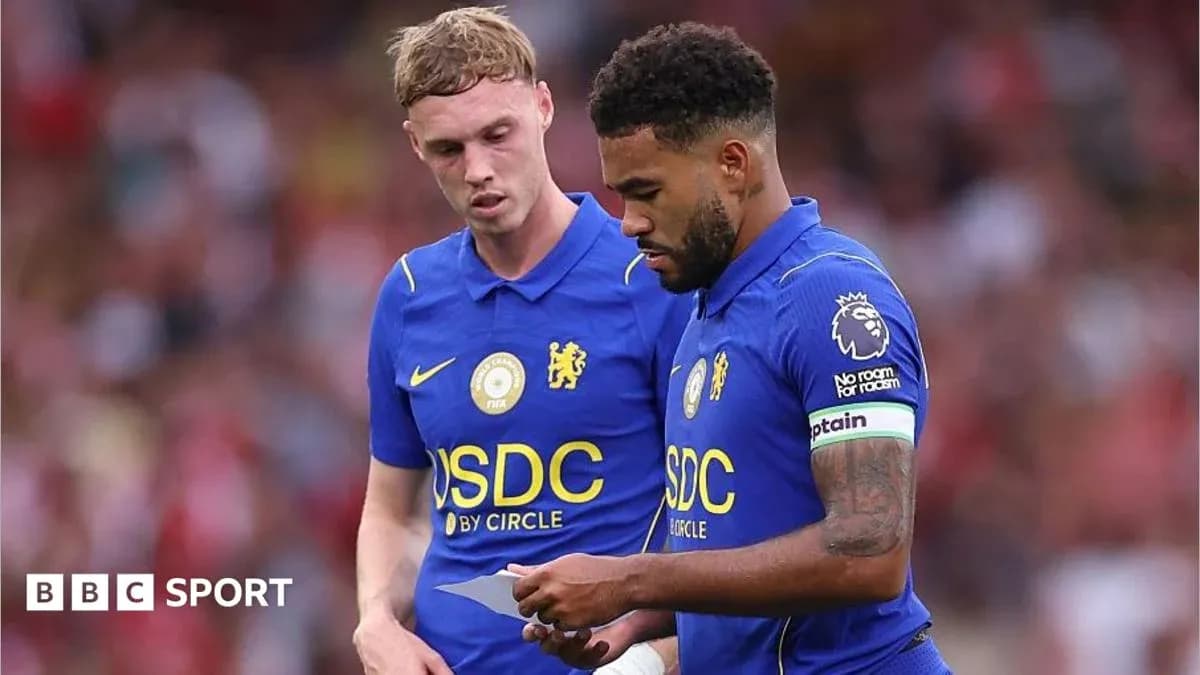
By the end, Reece James and Malo Gusto – two players who came through as right-backs – were standing side by side in the middle of the pitch, trying to wrestle control from the Premier League champions. This, from a club that spent £349m in the summer. This, from a squad that was supposed to be rebuilt, rebalanced, reborn.
Instead, it looked lopsided and exposed.
James v Odegaard: The Gamble That Failed at the Key Moment
Xabi Alonso didn’t hide his admiration for Reece James before kick-off. He talked him up as a potential world-class midfielder, backing the England international to handle one of the league’s most intelligent playmakers, Martin Odegaard.
For long spells, James justified the faith. He has spent almost half of last season in midfield, and his comfort on the ball and physicality helped Chelsea stay compact and competitive.
But the decisive moment went Odegaard’s way.
When the Arsenal captain drifted into space and struck the winner, James lost him. The marking was slack, the punishment ruthless. The man tasked with shutting down Arsenal’s conductor gave him just enough room to finish the game.
That single lapse fed straight into the bigger story of the night: Chelsea’s lack of true midfield options, laid bare in the most unforgiving environment.
Alonso’s decision to turn to Malo Gusto instead of Romeo Lavia in the second half only underlined it. A second right-back came on while a natural midfielder stayed on the bench. For a club of Chelsea’s resources, that choice spoke loudly.
Arteta’s Bench Bites, Chelsea’s Bench Blinks
The contrast between the two dugouts could not have been clearer.
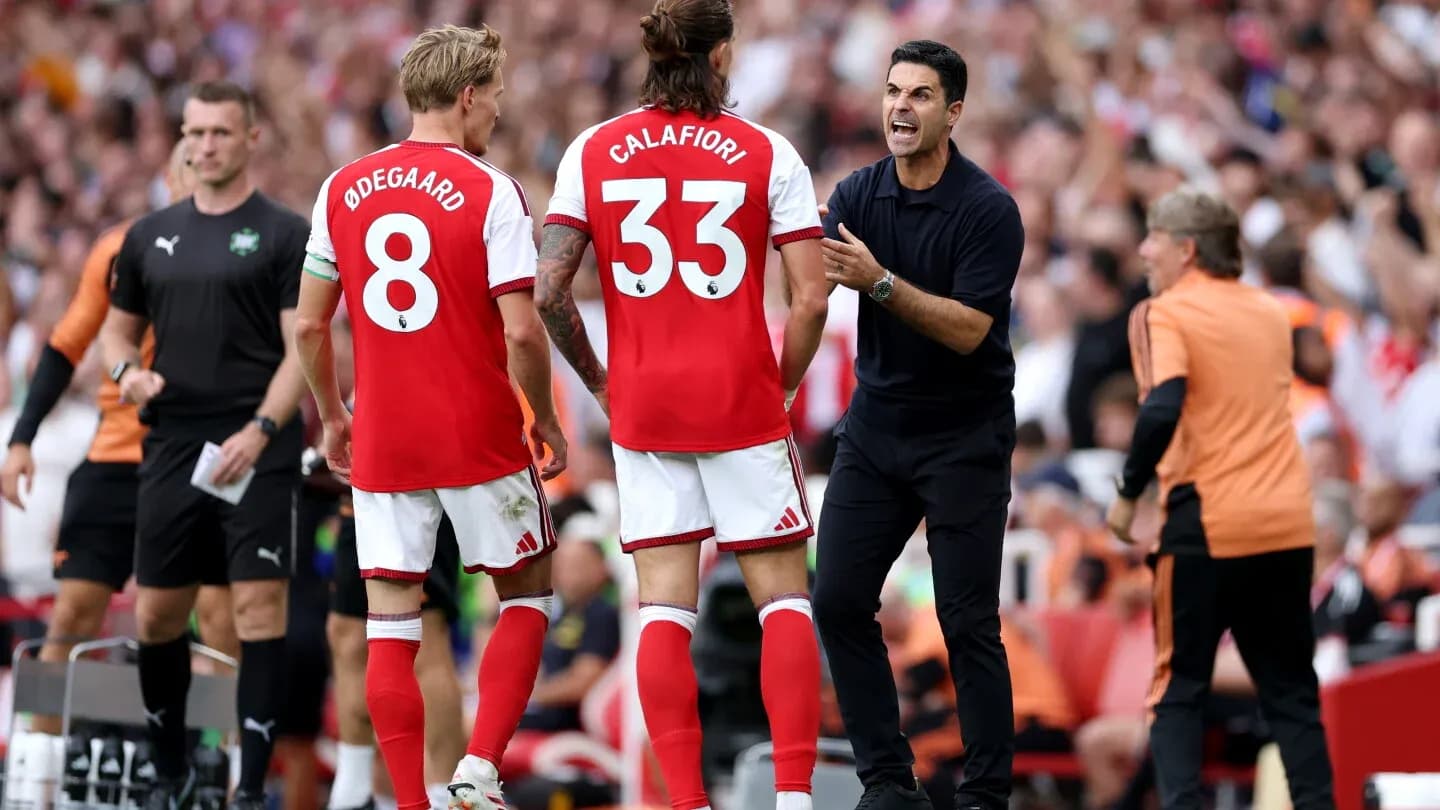
Arsenal had players ready to reshape the game. Mikel Arteta used them. His substitutions tilted the contest, added energy and craft, and eventually helped his side close it out.
Chelsea, chasing the match, looked short of ideas.
Ashley Young summed it up on BBC Sport: Chelsea, without European football, have fewer games and more time to prepare. They should be fresher. They should be sharper. Yet they finished against the champions with two right-backs in midfield.
Young pointed at Lavia’s struggles with injuries last season, then at the imbalance behind Chelsea’s dangerous front line.
The attack, he said, will scare plenty of teams. But the midfield? Two right-backs plugging gaps, spaces opening between the lines, and Arsenal coolly exploiting them.
Young also highlighted Chelsea’s reliance on ceding possession and breaking on the counter. On this occasion, he felt they created just one real moment of threat in transition – Pedro Neto bursting down the right. One clear counter-attack in a game set up to invite them.
That is not a sustainable plan against the best.
Caicedo’s Absence and a Risk Chelsea Couldn’t Cover
Strip everything back and one problem stands above the rest: Moises Caicedo is missing.
Nobody at Chelsea has publicly detailed the exact nature of his injury, nor given a return date. All that is known is that he picked up the issue after an 11-minute cameo against Brighton and has not been seen since.
For Alonso, it is an unfamiliar headache. Across the last three seasons, Caicedo has only missed two games through a minor injury and illness. He is almost always available. Almost always the anchor.
This time, Alonso chose caution.
“It is not about a long-term absence, but about risk assessment,” he said when asked about the Ecuadorian. He admitted they may have rushed Caicedo back too quickly last week and insisted he would not repeat that mistake.
Did that injury push Chelsea into a late scramble for another midfielder on deadline day? The club have not said. But their actions spoke loudly.
Deals That Died and a Market That Wouldn’t Bend
Chelsea tried to fix the problem on the final day. They failed.
A move for Lamine Camara collapsed at the last minute when Monaco pulled the plug on a £47m deal, leaving Chelsea furious at how it unravelled.
Earlier in the summer, Bournemouth had already rebuffed offers rising to £64m for Alex Scott. Another target gone.
A third pursuit, for Manu Kone, stalled when Roma manager Gian Piero Gasperini blocked the Frenchman’s departure. Another door slammed shut.
Chelsea’s explanation was that the Camara chase was opportunistic, not a sign of panic. They insisted they were satisfied with their summer business and confident in the group already assembled.
But those reassurances sit awkwardly next to the sight of two full-backs finishing a top-of-the-table test in central midfield.
Enzo Out, Questions In
If there was one move that sharpened the scrutiny, it was the sale of Enzo Fernandez.
On the final day of the window, Chelsea agreed to send the Argentina international to Manchester City for £125m – matching the British transfer record – and did so without bringing in a direct replacement.
The timing was brutal. The optics, worse.
Right now, Caicedo is on the treatment table alongside Jordan Henderson, who is still recovering from a broken arm suffered when he fell into an advertising board while on World Cup duty for England, without even playing.
Valentin Barco, signed from Strasbourg and naturally suited to midfield, has not featured. Alonso has preferred Gusto in all three Premier League games instead.
The outcome? A midfield patched together and exposed to the most intense scrutiny.
A Possession Low That Tells Its Own Story
The warning signs were there even before Arsenal.
Against Brighton, Gusto started in midfield and Chelsea had just 25.6% of the ball in a 4-3 win. That is not a typo. It is the lowest possession figure recorded by the club since data collection began in the 2003-04 season.
They escaped with three points that day. History will remember the result, not the pattern. But inside the club, that number will have set alarms ringing.
If Caicedo returns quickly, if Henderson heals on schedule, if Barco earns Alonso’s trust, Chelsea might just have enough bodies to get through a season without European football. Fewer midweek fixtures reduce the load, and Alonso has already argued his midfield group is big enough.
That is the theory. The reality at the Emirates looked different.
Attack Firing, Defence Leaking
Up front, Chelsea are already living off their firepower.
Morgan Rogers has exploded into the season. The record signing struck again inside two minutes at the Emirates, becoming the first Chelsea player since Eden Hazard in 2018-19 to score or assist in each of the club’s first three league matches of a campaign.
Cole Palmer has rediscovered his spark. Joao Pedro is delivering in front of goal. Across three games, Chelsea’s attacking play has been bright, aggressive, and often ruthless.
But the other number matters just as much: seven goals conceded in those same three matches.
Alonso did not sugar-coat it. “We want to be more cohesive and solid defensively,” he said, knowing that an open game suits his forwards but exposes a midfield still searching for balance.
Against Arsenal, Chelsea produced one of their best performances in this fixture for some time, even in defeat. It came in the middle of a run that now stretches to 10 matches without a win over their London rivals, but this felt closer, more competitive.
The gap, though, is still there. Thirty-three points separated the sides last season, Chelsea slumping to 10th while Arsenal chased the title. That is not bridged in one summer, no matter how much money is spent.
Alonso admitted the pain.
“We came to win. We knew we were not far off them in terms of level, but the match went their way, it is painful, and we certainly feel disappointed,” he said. Then he looked forward: “This is the first defeat, the journey is still long, and it will not greatly affect our morale or our mentality.”
Arsenal Set the Bar. Can Chelsea Catch Up With a Hole in the Middle?
Arsenal remain the measuring stick. Chelsea might have beaten them to the signing of Rogers, but on the pitch the champions still look like the club that sets the standard in London and across the league.
Sunday’s game underlined a simple truth: spending heavily does not automatically close every gap. Ten first-team signings came through the door in a frantic summer, yet the failure to land a midfielder on deadline day has left a clear fault line running through Alonso’s squad.
The Spaniard called this window “the first stage” of his Chelsea project. The experiment is under way. The ideas are visible. The energy is real.
Now comes the hard part.
If Caicedo’s return does not calm the storm in midfield, the club will have to answer an uncomfortable question in January: why did a team so determined to move on Enzo Fernandez not insist on a ready-made replacement before letting him go?
And how long can a project built on such lavish spending afford to keep finishing big games with two right-backs in the middle of the pitch?