Chamari Athapaththu's Cricket Future: A New Beginning
Chamari Athapaththu is not done yet. Not even close.
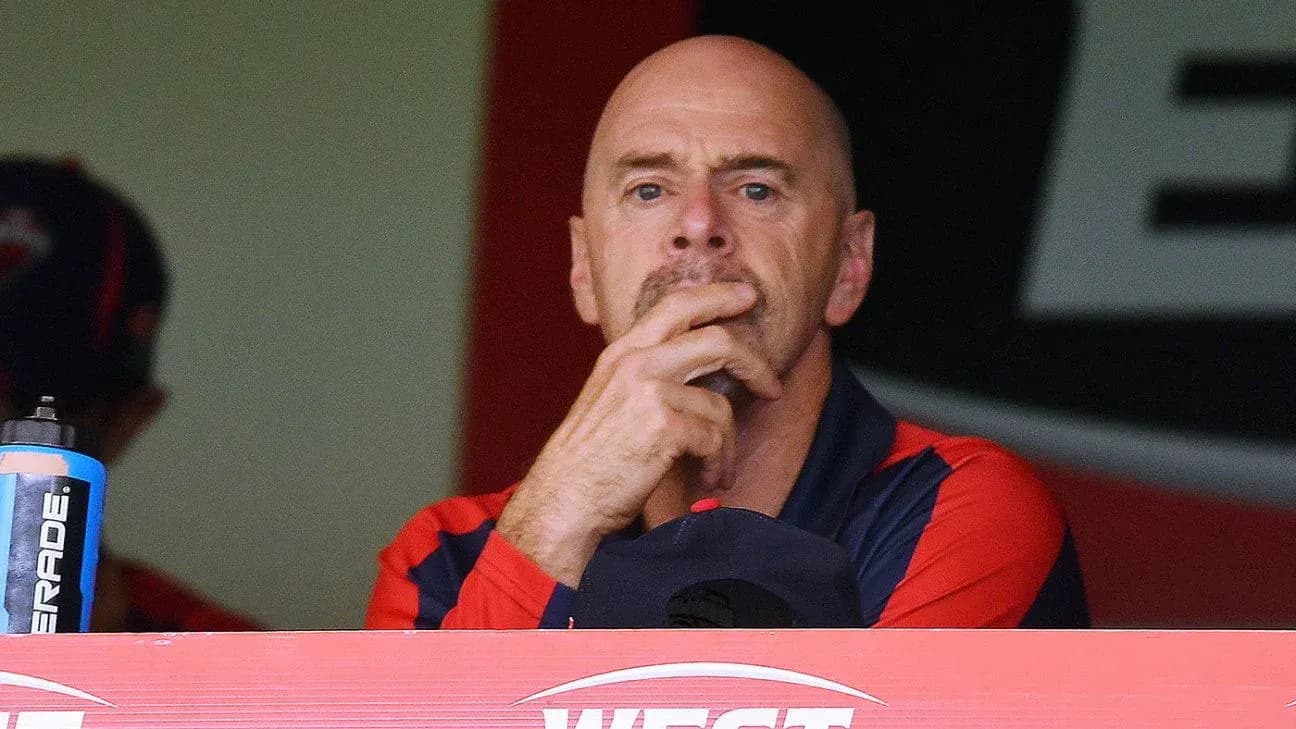
That is the clear message from Sri Lanka’s new head coach Jamie Siddons, who has moved quickly to shut down any suggestion that his captain is winding towards the finish line.
“In her 16th year of international cricket” sounds like the closing chapter of a career. Athapaththu, 36, is treating it like a fresh start. Energised by a new tactical direction and still the undisputed pillar of the side, she has told Siddons she wants to keep going well beyond the next year or two.
“Chamari, I've had a great chat with her. She is keen to play for a lot longer than one or two more years,” Siddons said, stressing that as long as her fitness holds and she keeps working hard, there is no reason she cannot continue to dominate at the highest level.
For Sri Lanka, the timing could hardly be more important.
Captain at the centre of a reset
The Women’s T20 World Cup in England looms in June, and Athapaththu remains the heartbeat of a team trying to punch its way into the top tier. Her recent form backs up Siddons’ optimism: she led Sri Lanka to both ODI and T20I series wins over West Indies and has carried that touch into the build-up.
“In the last two practice matches, she's dominated the games. She can keep going for a lot longer,” Siddons said, his words sounding less like polite praise and more like a statement of intent.
Her continued presence does more than shore up the batting order. It buys time. Time for Sri Lanka to build a succession plan without the panic of a sudden leadership void.
“That's exactly why I'm here, I think,” Siddons said when asked about life after Athapaththu. “To put together some plans where we can bring players in, teach them how the game is played.
“I've seen two very exciting young fast bowlers who are as good as anyone going around. They'll be up for the fight.”
So the captain stays, the youngsters arrive, and a new coach starts drawing the blueprint. The status quo, though, is not invited.
No more ‘playing it safe’
In his first major address since taking over on March 16, Siddons laid down a blunt mandate: if Sri Lanka want to beat the world’s best, safety-first cricket has to go.
He speaks with the authority of someone who has lived in high-performance environments. Stints with the Australian men’s team, involvement in multiple World Cups, and experience with top-level women’s players such as Sophie Devine and Amelia Kerr have shaped his view of what winning T20 cricket looks like.
“I'm an international cricket coach first and foremost,” he said. “My knowledge of the explosiveness required to win games – especially in T20s – will pass down to the girls' format with ease. I've worked with the likes of Sophie Devine and Amelia Kerr, I know what the standard looks like.”
His tactical overhaul starts with the bat.
“We win in singles and twos, but we don't score more boundaries than the opposition, and that's why we lose against the best teams,” Siddons said. “We can't be safe. Our aim is to hit the ball harder and find the gaps. We have the hitters at the top, but the middle overs are where we must improve.”
That is the fault line he wants to crack open. Sri Lanka can scrap and nudge their way to competitive totals; they rarely blast their way to match-winning ones. Siddons wants that to change, particularly in the phase where many sides drift – overs 7 to 15 – when intent often disappears and games quietly slip away.
Tricks with the ball, steel in the field
The batting is only half the shift. With the ball, Siddons wants craft, not predictability.
“I think from the bowling perspective, we need to have some tricks. We can't just turn up and bowl offspin, we need to have some different types of balls that we can bowl,” he said. “Every fast bowler needs to have several slower balls so they can show those tricks, so the batters can't just line us up. The best teams in the world hit a lot of boundaries, we need to minimise those boundaries.”
The message is clear: variation or vulnerability. Sri Lanka’s bowlers must learn to disguise pace, change angles, and think two balls ahead, or they will be fed to the power-hitters who now define global women’s T20 cricket.
Fielding, often the silent difference between good and elite sides, sits high on his list too. With a T20 World Cup opener against hosts England on the horizon, followed by clashes with New Zealand and West Indies, Siddons expects “flat wickets” that will reward clean striking and punish sloppy fielding.
“We've got some great outfielders with throwing arms, and for those who don't, we have strategies on where they field to play their role,” he said. Every metre saved, every clean pick-up, every smart positioning matters more when the ball skids on and the boundaries come quickly.
Bangladesh first, England ahead
Before England and the World Cup lights, there is the more immediate test: a tour of Bangladesh featuring three ODIs and three T20Is. It is Siddons’ first real look at his squad in competitive conditions, his first chance to see whether the talk of bravery and boundaries translates into action.
The schedule is unforgiving. The World Cup opener against the hosts will be a trial by noise and expectation, followed by two more sides who know how to clear the ropes and close out games. Sri Lanka cannot afford to arrive in England still searching for an identity.
One challenge, for now, lies off the field. Siddons admits the language barrier is a hurdle, but he leans on his assistant coaches to ensure the message gets through. The ideas are not complicated: be braver, be smarter, hit harder, think quicker.
“The girls have the talent; they just need the mindset,” he said. “They are human beings, they can play just as good cricket as an Amelia Kerr. My job is to free them up, upskill them, and push them to be a bit braver.”
Athapaththu’s decision to keep going gives that project a crucial anchor. She remains the standard-bearer, the player who can turn a game in a session and the figure young quicks and emerging batters can orbit around while they learn this new, more ruthless version of Sri Lankan cricket.
The captain is staying. The coach wants revolution, not evolution. With England on the horizon and a flat deck waiting, Sri Lanka now have to decide: are they ready to live with the risks that come with the fearless cricket they say they want to play?