Celtic's Collapse in Europe: McGregor's Fury and the Aftermath
Callum McGregor has seen some things in Europe. Nothing like this.
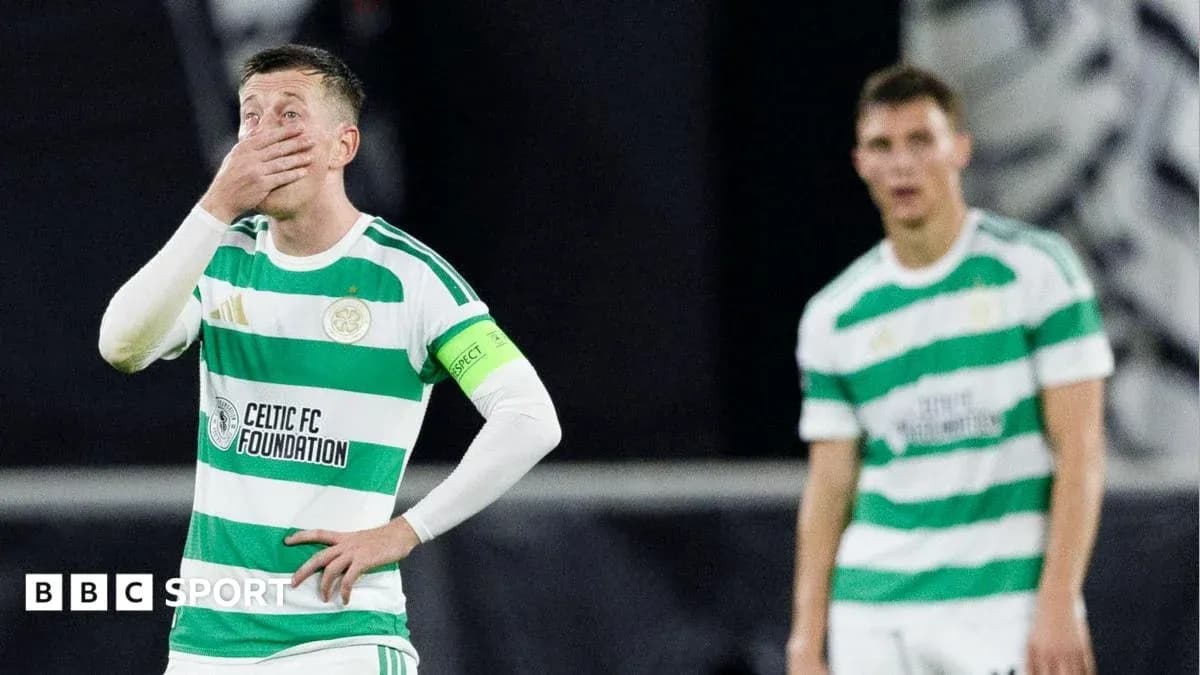
When Celtic’s captain walked into the mixed zone after the collapse against LASK, he didn’t bother with diplomacy. He went for the jugular – his own dressing room’s. “Passive.” “Scared.” Then the line that cut deepest: “Now we’ll see what people are made of.”
On a night when Celtic lost a 4-0 aggregate lead and with it a £40m Champions League jackpot, McGregor’s fury was the only coherent response to a performance that disintegrated in real time.
A decade of scars – and a new low
McGregor has been the constant through Celtic’s modern European trauma. He was there when they went 210 minutes without scoring against Kairat Almaty, then fluffed three of five penalties in the shootout. He lived through the 7-1 against Borussia Dortmund and the 6-0 against Atletico Madrid. He started the Champions League play-off exit to Midtjylland and the twin 4-1 defeats to Sparta Prague in the Europa League. He carries the memories of play-off failures against Ferencvaros, AEK Athens and Cluj, and the humiliations of 7-1 against PSG and 7-0 against Barcelona.
He wears the medals. He wears the scars. But it’s hard to remember him this angry.
He didn’t rant. That’s not his way. He spoke quietly, which only made the verdict more brutal. He was raging at another exit, raging that when LASK turned up the heat, too many in green and white melted, raging at professional pride trampled into the Linz turf.
From control to chaos
Ironically, it was McGregor who seemed to kill the tie. His deflected shot put Celtic 1-0 up on the night and 4-0 ahead on aggregate. LASK had started brightly, just as they had in Glasgow, but that goal looked like a punch to the gut. They had missed chances at Celtic Park, missed chances in the opening minutes in Linz – and still found themselves four down.
How many blows can a team take before they stay down? LASK answered that.
Celtic helped them back to their feet. Painfully. A week earlier, their slick finishing and bold attacking play in Glasgow had been hailed as a sign of maturity. It looked like they finally had some steel to go with the style. That illusion lasted half an hour in Austria.
The first crack came from Benjamin Nygren. His horribly loose pass gifted LASK their equaliser on the night. It was the kind of mistake that shifts the mood in a stadium and in a team. Suddenly, at 4-1 on aggregate with 32 minutes played, Celtic didn’t look sure of themselves at all. Mad, but true.
Three minutes into the second half, the wobble turned into something worse. Auston Trusty was brushed aside, almost swatted away, and LASK made it 4-2. The Americans’ struggles became a beacon for the Austrians. They went after him relentlessly.
Ten minutes later, the third LASK goal arrived. By then, panic had seeped through the Celtic side. Too many players in fright mode, too many passes going astray, too many shoulders slumping. The slow death was speeding up.
Camilo Duran, the hero of the first leg, disappeared as an attacking force. Kasper Hogh ran, chased, pressed – and achieved nothing. Celtic’s shape dissolved. Their composure followed. They looked like rabbits in headlights, only more lost.
McGregor tried to drag them out of it, to put out fires everywhere he turned. He couldn’t. The tension was too thick, the fear too obvious.
O’Neill’s nightmare on the touchline
On the sideline, Martin O’Neill looked like the ordeal was ageing him by the minute. Later, he would call it one of the worst nights of his football life. He accepted responsibility, but this wasn’t his burden alone.
He emptied his bench in desperation, five substitutions in 12 frantic minutes. Nothing changed. No spark, no grip, no response.
Celtic didn’t register a single shot on target in the second half of normal time. They didn’t manage one in extra time either. They clung on to the tie the way a man clings to the edge of a cliff. There was only one way it was going to end.
LASK’s fourth goal came in the 90th minute. It was fully merited. By then, they had racked up 33 attempts on Celtic’s goal – they would finish with 40 – to add to the 20 they had fired off in Glasgow. This was not a smash-and-grab. It was a sustained beating.
Cameron Carter-Vickers hobbled through the chaos on one leg. Hogh wasn’t much better. Waves of black and white shirts kept coming, and Celtic tried to resist with a back four of Anthony Ralston, Dane Murray, Trusty and Liam Scales in a match worth tens of millions.
The fifth goal almost felt like mercy. Another Celtic player, Luke McCowan this time, making the wrong decision in the wrong area at the worst possible moment. Just as Nygren and Trusty had done before him. Hapless, helpless – and out of the Champions League.
The closing stages drifted into farce. LASK missed a penalty for 6-1. Miguel Freckleton, fresh from St Mirren and new to Austrian football, slalomed into the Celtic box and, for a second, looked like he might score. Fair play to him and his fresh start, but the ease with which he threatened said everything about Celtic’s collapse.
By then, they were beyond disarray. Spooked. Over-powered. Out-fought. Out-played. The ruthless, confident side from Glasgow seven days earlier had been an optical illusion, a thin veneer over deep psychological flaws.
Nobody foresaw them disintegrating from 4-0 up. But they did.
A brutal audit of ambition
The gaps in the squad were exposed in the harshest light. Celtic plainly need a back-up left-back to Kieran Tierney. They don’t have one. They clearly require a physical presence in the heart of midfield, a player with stature and edge who will not be bullied the way they were in Austria. They don’t have one of those either.
There have been good signings this summer, but not enough of them. The club sits in net profit on transfers while nights like this decide seasons and reshape reputations.
The word that won’t go away is ambition. When you end a £40m tie with a back four of Ralston, Murray, Trusty and Scales, something fundamental has gone wrong in your planning. The players failed on the night. The recruitment failed before it. The club failed around it.
The financial damage is obvious. The damage to Celtic’s sense of themselves is harder to quantify but just as real. They thought they had left the Champions League drawing board behind, that the days of Kairat, Midtjylland, Ferencvaros, Cluj and AEK Athens were lessons learned.
Instead, they’re back in the same place, adding another name – LASK – to a grim roll call of European tormentors.
The captain has thrown down the challenge: “Now we’ll see what people are made of.” The question for Celtic is whether anyone inside the club is ready to answer it.