Brentford and Everton Share Points in Thrilling 2-2 Draw
Under grey west London skies, Brentford and Everton shared an intense 2-2 draw at the Brentford Community Stadium that kept both clubs locked together in the Premier League’s race for European places. Seventh hosted eighth with both sides starting on 47 points, and neither could find the extra edge to break away in a contest high on tempo and turning points.
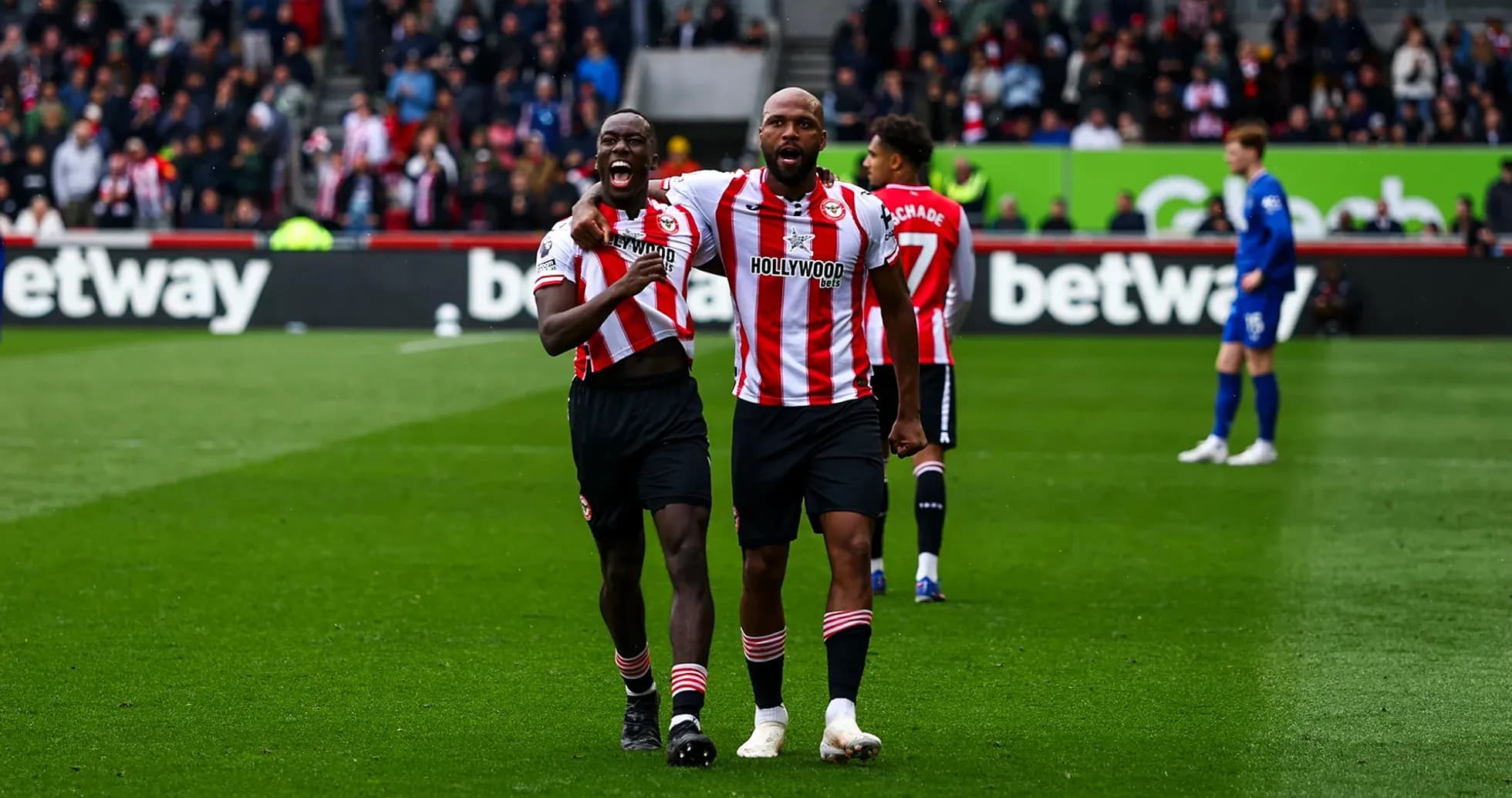
The afternoon began chaotically. After just 2 minutes Jordan Pickford was booked for tripping as Brentford pressed aggressively from the kick-off, a sign of the home side’s intent to test Everton’s composure in possession. One minute later the pressure told. In the 3rd minute, Brentford earned a penalty and Igor Thiago stepped up to send Pickford the wrong way, putting Keith Andrews’ team 1-0 up and momentarily nudging them above their visitors in the live table.
Everton, however, responded well to the early setback. Leighton Baines’ side gradually grew into the game, with Idrissa Gueye and James Garner beginning to get a foothold in midfield and Dwight McNeil and Iliman Ndiaye drifting inside to overload central areas. Their reward came in the 26th minute. Gueye drove forward from deep and slipped a clever pass into Beto, who held off his marker and finished clinically to level at 1-1. The move encapsulated Everton’s improving structure: patient build-up, then a sudden vertical burst through the middle.
The rest of the first half was finely balanced. Brentford, in their 4-2-3-1, looked most dangerous when Dango Ouattara and Kevin Schade attacked the half-spaces behind Everton’s full-backs, while Mikkel Damsgaard tried to knit play between the lines. Everton, also in a 4-2-3-1, threatened on transition, particularly when Kiernan Dewsbury-Hall joined Beto to press the Brentford centre-backs. By the interval, the 1-1 scoreline reflected a contest in which both sides had traded promising moments without fully seizing control.
Andrews made the first tactical move immediately after the break. At 46 minutes Reiss Nelson replaced Damsgaard, a like-for-like change on paper but one that added more direct running and one-on-one threat from the left. The switch pushed Brentford a little higher, with Nelson looking to attack Jake O’Brien and stretch Everton’s back line.
Everton’s response came via another moment of indiscipline. In the 47th minute Garner went into the book for tripping, the visitors’ second yellow card for a similar offence and another illustration of how often Brentford’s attacking midfielders were drawing fouls when turning on the ball.
The game’s key tactical reshaping arrived in the 74th minute with a triple substitution from Baines. Thierno Barry replaced Beto up front, Tyrique George came on for McNeil, and Tim Iroegbunam took over from Gueye in midfield. The changes injected fresh legs and pace in attack but also removed Everton’s most experienced screening midfielder at a delicate stage of the contest.
Within two minutes, Brentford punished that loss of control. In the 76th minute, right-back Michael Kayode surged forward and delivered a telling contribution, supplying the assist for Igor Thiago to strike again. The Brazilian forward’s movement was excellent, peeling into space and finishing decisively to restore Brentford’s lead at 2-1 and underline his growing influence as a penalty-box presence.
Everton, now chasing the game, pushed higher and accepted greater risk. Dewsbury-Hall began to dictate more of their play, drifting into pockets to receive and drive at Brentford’s defensive block. Brentford, for their part, dropped a few yards deeper, looking to protect their advantage and spring on the counter through Nelson and Ouattara.
The visitors’ persistence finally told deep into stoppage time. In the 90+1 minute, Dewsbury-Hall found room and struck a composed finish to make it 2-2, capping a personal performance that had increasingly become the focal point of Everton’s late surge. There was no assist credited, reflecting the individual quality of the moment as he rescued a point for his side.
Statistically, Brentford edged the attacking metrics. They produced 17 shots to Everton’s 14, with 4 on target for the hosts and 6 for the visitors. Brentford’s greater territorial control was reflected in 55 percent possession and 449 passes at 83 percent accuracy, compared with Everton’s 371 passes at 81 percent. The home side’s attacking volume translated into a higher xG of 2.4 against Everton’s 1.51, suggesting Andrews’ team fashioned the clearer chances overall.
Defensively, both back lines were heavily involved. Brentford registered 6 blocked shots to Everton’s 5, underlining their willingness to protect the box once ahead. In goal, Caoimhin Kelleher made 6 saves to match Everton’s 6 shots on target, while Pickford produced 2 saves from Brentford’s 4 efforts on goal.
In the standings, the draw leaves both clubs still tightly bound in the chase for European qualification. Brentford move to 48 points with a goals record now reading 50 scored and 46 conceded. Everton also rise to 48 points, their tally shifting to 41 goals for and 39 against. With six games remaining, this was a result that maintained, rather than resolved, the congestion in the upper-mid table, and both Andrews and Baines will leave feeling their side had done enough at different stages to merit more than a point.