Borussia Dortmund's New Hope Turns to Heartbreak: Konstantelias' Injury
Borussia Dortmund thought it had found its new showmen. Within 24 hours, the story turned into a nightmare.
“They are two lads who can bring us a different dimension here,” Niko Kovac said on Sky after Borussia Dortmund’s 2-0 win over Hamburger SV. “They showed that today.” He didn’t need to spell out the names. Signal Iduna Park already knew.
Giannis Konstantelias and Konstantinos Karetsas walked into the Bundesliga like they owned the stage. On their league debuts, the two Greeks delivered exactly what this stadium has been craving: not just tricks and flicks, but spectacular football with a purpose. Football that hurt the opponent, that lifted the crowd, that made a season opener feel like a statement.
Kovac had trailed it before kick-off. The squad, he said, now had players who could do “spectacular things” and still fit the collective. That was the plan. On Saturday evening, it became reality.
A new dimension – then a brutal twist
Kovac’s “different dimension” was obvious from the first whistle. Both Konstantelias and Karetsas arrived from smaller European leagues, both were signed to fill the creative void left by Julian Brandt’s move to Ajax Amsterdam. On this evidence, they offered more than a like-for-like swap.
They can do everything Brandt could. But they add one crucial edge: they change games from a standing start.
Where Brandt glided into space, Konstantelias and Karetsas explode from it. They take the ball between the lines, stop, tempt defenders in, and then ignite the move with a burst, a feint, a pass that rips open the shape. They are more proactive, more vertical, more ruthless in those tight pockets where modern matches are decided.
Against HSV, the impact was immediate. The first 45 minutes were a showcase.
Karetsas and Konstantelias repeatedly took control of Dortmund’s attacks, dropping into the half-spaces, turning, driving. Konstantelias had already teased what he could do in the Super Cup defeat to Bayern Munich. Now he turned the hints into a full performance.
His close control at full speed stood out. So did the way he slalomed through pressure, the lightness of his movement, the way he always seemed half a second ahead of his marker. Then came something Dortmund fans have often demanded from their flair players: aggression without the ball.
Around the half-hour mark, Konstantelias snapped into a challenge in midfield, won the ball, and Signal Iduna Park roared. A crowd that has seen plenty of artists in yellow and black instantly recognised one of their own.
The goal, when it came, felt inevitable.
Shortly before the break, Konstantelias made it 2-0 and crowned his league debut with his first Bundesliga strike. The move crackled with invention. The Greece international shaped for the near corner, sold the defender and goalkeeper with a no-look finish, and benefited from a deflection off a Hamburg defender. No one in the stadium cared about the touch. The ball hit the net, and the place erupted.
“First half, top – that was perfect. We implemented everything we wanted to implement,” defensive leader Waldemar Anton said on Sky. He knew who had lit the fuse.
After roughly 100 minutes in a Dortmund shirt, Konstantelias already looked like the next cult figure. You could see the storyline forming: the new Greek maestro, weaving his magic week after week in front of the Yellow Wall.
By Sunday afternoon, that script lay in pieces.
Cruciate tear – and a season ripped apart
One day after the Bundesliga opener, Dortmund confirmed the worst: Konstantelias had suffered a cruciate ligament tear on his league debut. He will be out for several months.
“This news hits us very hard because Giannis has already shown in a very short time why we see him as a great player for Borussia Dortmund,” said sporting managing director Lars Ricken. “For now, however, his focus and ours is on his recovery. Giannis has our full support in that.”
The fear had been there on Saturday night. Kovac hinted at it straight after the game. “We have to talk about something more serious there,” he admitted. “We will have the examination on Sunday. But at least it doesn’t sound good, from what the doctor told me.”
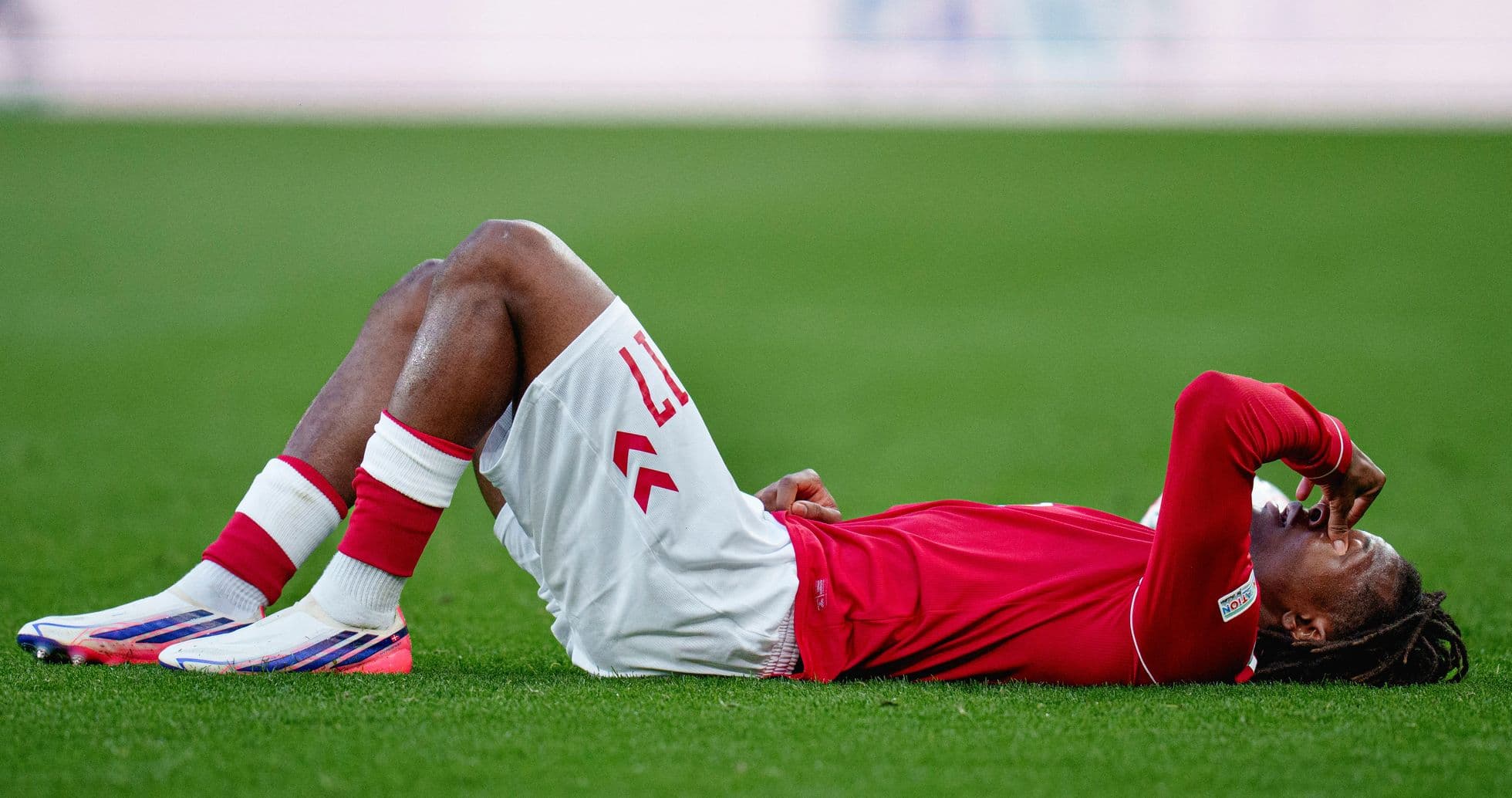
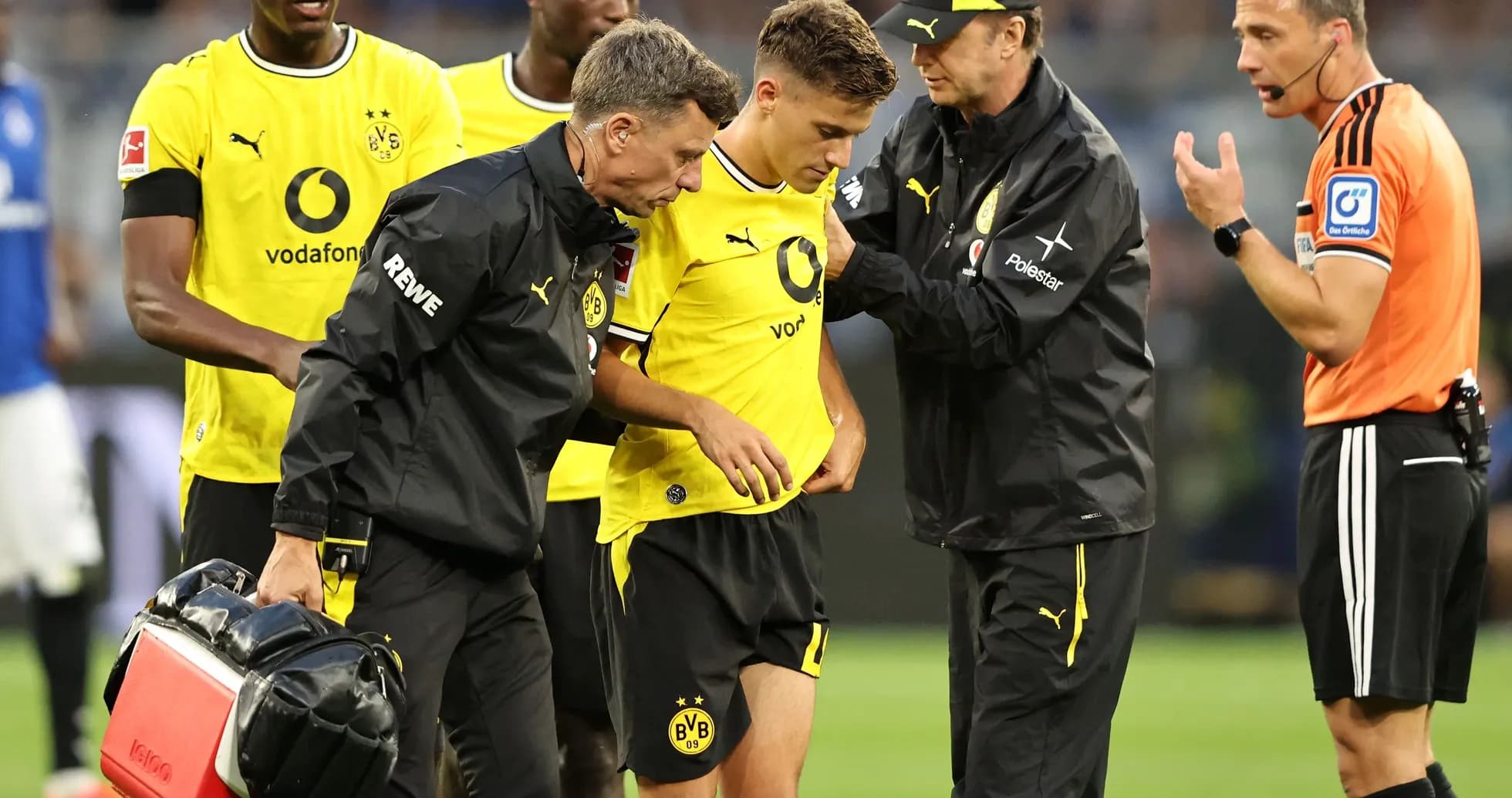
The scene was as cruel as it was harmless-looking. Shortly after narrowly missing his second goal, Konstantelias challenged for the ball, his knee twisted awkwardly, and he went down. He knew. His face said everything as he left the pitch in the 54th minute, distraught, his debut turning into a disaster in real time.
For him, it is a personal hammer blow. For BVB, it is a sporting one.
The €26 million signing had already shown he raises Dortmund’s attacking ceiling. With him on the pitch, BVB’s play between the lines was fluid, quick, inventive. Without him, it became noticeably more sluggish.
HSV improved after the break, but it was not just their adjustment that shifted the balance. Dortmund lost a chunk of their mobility and imagination the moment Konstantelias disappeared down the tunnel.
Hamburg captain Nicolai Remberg explained his team’s first-half struggles on Sky: “When Dortmund play from right to left, play into the spaces in between, then first of all you do a lot of chasing and don’t really manage to get into the press. That was our problem.” Konstantelias and Karetsas were the ones creating those problems.
Greek flair, German admiration
Together, the two Greeks gave Hamburg nightmares. They rotated constantly, swapped zones, popped up where defenders least wanted to see them. Their first touch killed the ball, their second accelerated the move. The tempo stayed high, the passes stayed sharp.
“Brutal,” was Anton’s verdict on the pair. “The mobility they have, how dangerous they are – that is a huge quality at that age and it is something we need for the future as well. I’m glad we have them with us.”
Now Karetsas has to carry that creative burden without his ideal partner. The chemistry was obvious. The question now is just as obvious: how does Dortmund replace Konstantelias?
“I felt incredibly sorry for the lad,” said sporting director Ole Book. “From day one here he has had a terrific presence, also in the dressing room. We all already like him very much.” Book had watched on with a worried expression as the player he and the club’s hierarchy had absolutely wanted limped off.
On Saturday, Kovac turned to Marcel Sabitzer. The Austrian offers stability, experience, defensive balance. He does not offer Konstantelias’ spark. The difference in profile was clear as soon as he came on.
On paper, Samuele Inacio is the closest thing in the squad to a like-for-like replacement. The 18-year-old has the talent, the flair, the instincts to play between the lines. He also left a very different kind of impression against HSV: a lightning red card, on and off the pitch in a flash. Trusting him to fill Konstantelias’ role immediately is a huge call.
Maximilian Beier is the more experienced option. But using him centrally or as a roaming playmaker would force Kovac to rip up his plan of deploying the Germany international on one of the flanks. Solve one problem, create another. Beier’s place on the wing would then open up as a fresh gap.
Transfer clock ticking – and the Sancho question
Time is not on Dortmund’s side. The summer transfer window closes on Tuesday, 1 September, at 8pm. Within those few days, BVB must decide whether this injury forces them back into the market.
Ricken had already hinted at conditional action before the diagnosis became official. “Depending on how serious the injury actually is, we will shape our further steps accordingly. But one thing is certain: over the next three days we are not planning anything.”
That was before the scans confirmed the cruciate tear.
The pool of realistic replacements is small. Said El Mala, once Dortmund’s preferred option before the Konstantelias deal, has extended his contract at 1. FC Cologne. That door is closed.
One familiar name, though, refuses to disappear: Jadon Sancho.
On a purely footballing level, the fit is obvious. Sancho is the same type of player: able to create dynamism from a standing start, to break open deep blocks with a dribble, a one-two, a disguised pass. Like Konstantelias and Karetsas, he thrives in tight spaces, between the lines, where a single touch can decide a game.
Speculation about a third Sancho stint in Dortmund had cooled after the arrivals of the two Greeks. Now, with Konstantelias out long term, it may resurface.
Sancho’s best football came in black and yellow. His spell at BVB turned him into one of Europe’s most exciting attacking talents. Since his contract at Manchester United expired, the 26-year-old has been without a club and would be available on a free transfer. Financially, the risk is limited. But he would need to accept a significant pay cut to return.
There is also the sporting gamble. Can Sancho still reach the level he once set here? His recent loans to Chelsea and Aston Villa were, as widely noted, largely disappointing. The swagger, the end product, the constant threat – they have not been seen consistently for some time.
Dortmund now stand at a familiar crossroads: trust the internal talent and tactical structure, or reach for a late-window solution with a big name and a complex backstory.
Konstantelias had started to answer that question with his feet. His season has been ripped away before it even began. How BVB respond – on the pitch and in the market – will shape not just the coming months, but the identity of this team for years to come.