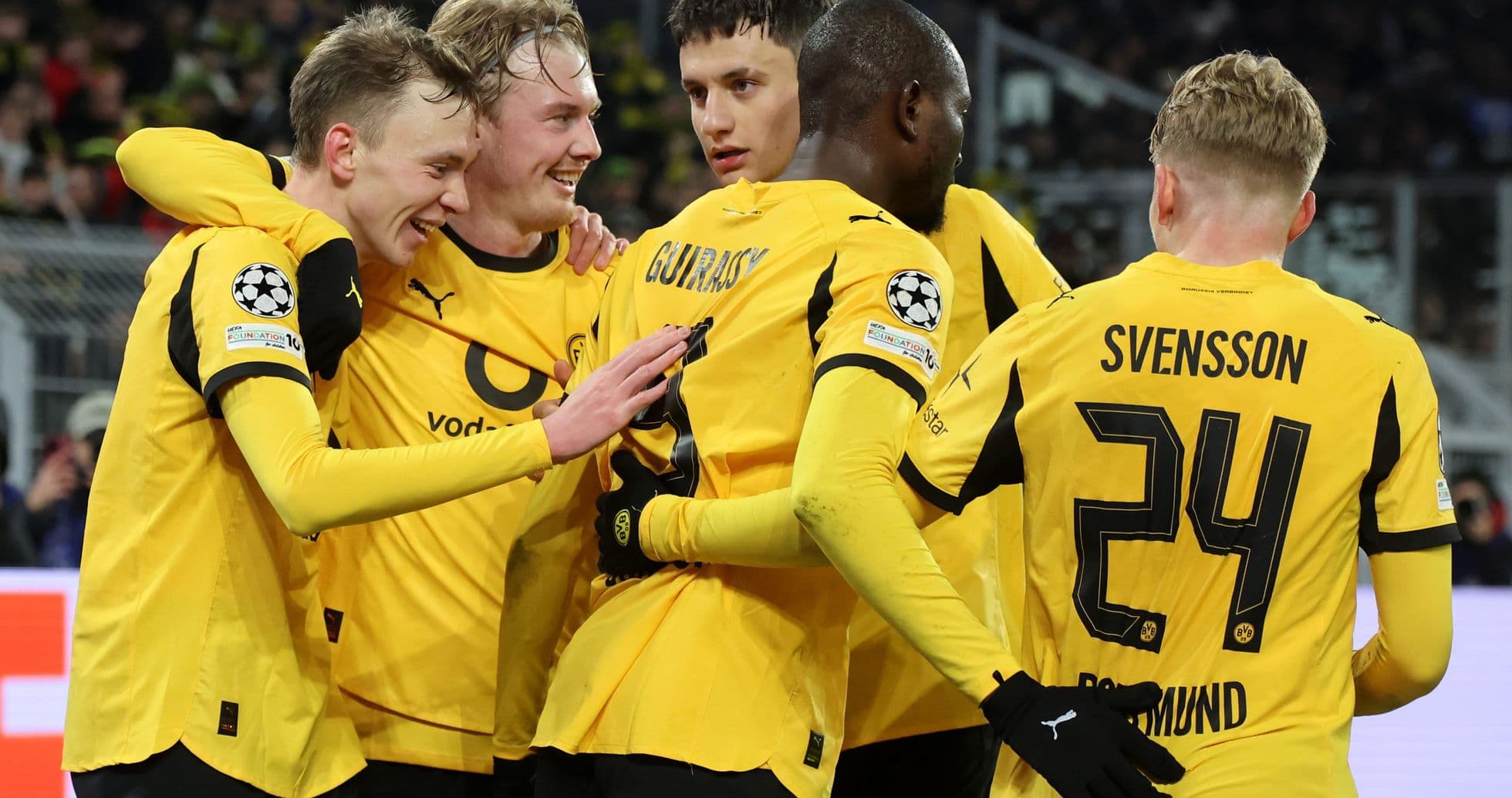
Borussia Dortmund Secures 2–0 Victory Over Atalanta in Champions League
Borussia Dortmund took a significant step in their UEFA Champions League Round of 32 campaign with a 2–0 victory over Atalanta at Signal Iduna Park on 17 February 2026. Niko Kovac’s side did the damage before half-time through Serhou Guirassy and Maximilian Beier, then managed the game intelligently after the break. Despite conceding 56% of the ball, Dortmund’s superior efficiency in both boxes proved decisive. The result nudges Dortmund closer to the competition’s last‑16 picture, while Atalanta’s strong recent European form takes a hit.
First-half analysis
Dortmund flew out of the blocks. After just 3', Guirassy gave the hosts the perfect start, finishing a move created by right-sided midfielder Julian Ryerson. The early breakthrough allowed Kovac’s 3-4-2-1 to settle, with the back three protecting Gregor Kobel and the front line of Guirassy, Beier and Julian Brandt posing a constant threat.
The first booking arrived on 18' as young defender Luca Reggiani went into the referee’s book for a foul, a reminder of Atalanta’s capacity to break quickly even while chasing the game. Raffaele Palladino’s team, also lined up in a 3-4-2-1, saw tempers flare late in the half. In the 40', centre-back Berat Djimsiti received a yellow card for an argument, and just moments later fellow defender Odilon Kossounou was booked for a foul, underlining Atalanta’s growing frustration.
Dortmund punished them again on 42'. Beier made it 2–0, with Guirassy this time turning provider. The forward combination highlighted Dortmund’s vertical threat: two goals from their only two shots on target across the match. Atalanta’s irritation was capped in 45+1' when Gianluca Scamacca was cautioned for a foul, sending the visitors into the interval two goals and three yellow cards down.
Second half & tactical shifts
Palladino reacted immediately at half-time. On 46', he removed Djimsiti for Isak Hien, a like-for-like defensive change aimed at stabilising a back line already on a booking. Simultaneously, Scamacca made way for Nikola Krstović, a fresh focal point in attack to chase a route back into the tie.
Dortmund’s defensive leader Waldemar Anton picked up a yellow card on 48' for a foul, but Kovac’s side otherwise kept Atalanta at arm’s length. The Italian visitors sought more attacking thrust from deeper areas on 63', withdrawing midfield anchor Marten de Roon and introducing Kamaldeen Sulemana. Listed as a forward, Sulemana’s arrival from the bench for a midfielder signalled a more aggressive posture, effectively shifting Atalanta towards a more attack-minded shape.
Kovac responded on 70' with a double substitution designed to refresh his attacking lines without losing structure. Brandt went off for Carney Chukwuemeka, adding fresh legs and ball-carrying in the advanced midfield role, while Beier – already on the scoresheet – was replaced by the pace of Karim Adeyemi. The pattern was clear: Dortmund would threaten on the counter rather than chase further control of possession.
Atalanta continued to adjust. On 72', Davide Zappacosta was replaced by Raoul Bellanova in the right wing-back role, adding energy out wide. Then on 82', forward Nicola Zalewski made way for creative midfielder Lazar Samardžić, another move towards technical quality between the lines. Kovac’s final changes on 83' were more conservative: midfielder Felix Nmecha departed for Marcel Sabitzer, and Guirassy, the opening scorer, was replaced by Fábio Silva. Those switches shored up midfield control and preserved key legs for the closing stages. The scoreline, however, remained untouched as Dortmund saw out a professional 2–0.
Statistical deep dive
The numbers underline a game of contrasting styles. Atalanta controlled 56% of the ball and completed 452 of 521 passes at an impressive 87% accuracy, compared to Dortmund’s 348 accurate passes from 419 attempts (83%). Yet Dortmund were far more incisive with less of the ball. They produced 9 total shots to Atalanta’s 7 and, crucially, turned their only 2 shots on goal into 2 goals. Their expected goals figure of 2.09 closely matched the final scoreline, reflecting high-quality chances.
Atalanta, by contrast, managed 3 shots on target but generated just 0.46 expected goals, suggesting their opportunities were either from poor angles or well-contained by Dortmund’s back three and Kobel. Neither goalkeeper registered goals prevented, reinforcing that finishing quality, rather than spectacular saves, defined the night.
Discipline also shaped the contest’s rhythm. Dortmund committed 11 fouls and picked up 2 yellow cards, while Atalanta’s 13 fouls and 3 bookings reflected their struggle to contain transitions and their growing frustration after falling behind early.
Standings & implications
In the wider Champions League picture, the win is significant for Dortmund. They move from 11 points and a +2 goal difference into a stronger position in the knockout-phase landscape, building on a record of 19 goals scored and 17 conceded over eight games. Their home form – now 2 wins, 1 draw, 1 loss with 10 goals for and 5 against – remains a key asset in two-legged ties.
For Atalanta, who came into the night with 13 points and a neutral goal difference, this defeat interrupts a strong recent run (LLWWW) and exposes their limitations away, where they now have 2 wins and 2 defeats with 4 goals scored and 5 conceded. The tie remains alive, but Dortmund have seized both the initiative and the psychological edge.