Bojan Miovski's Last-Minute Goal Changes Rangers' Fortune
Bojan Miovski had four minutes to change the mood at Ibrox. He used one.
As stoppage time loomed and the groans grew louder, Rangers were staring at a stalemate with St Mirren that felt far worse than a single dropped home point. Boos had already broken out. Hundreds of supporters had seen enough and headed for the exits.
Then Miovski arrived, slipped into the right pocket of space, and finished with the calm of a man who hadn’t just spent weeks on the fringes of Derek McInnes’ plans. One neat strike, one huge roar, and a stadium that had been simmering with frustration erupted like it was a cup final.
The pressure didn’t vanish, but the mood flipped.
A season-altering four minutes
The scale of that goal stretches far beyond one scrappy afternoon. With Celtic grinding out their own 1-0 win at St Johnstone to keep a perfect league record intact, Rangers were seconds away from falling seven points behind their city rivals after just six games.
Seven points. Six games in. With Martin O’Neill’s Celtic waiting twice in the next week.
That is the context in which Miovski’s winner landed. Without it, Rangers would have trudged into a Premier Sports Cup quarter-final against Celtic and a looming trip to Celtic Park with the narrative already turning toxic.
Instead, the late goal kept the gap at something manageable and extended Rangers’ home run to five unbeaten, four of them wins, since that damaging defeat by Hibernian last month. That loss, coupled with their early European exit, had McInnes feeling the heat far earlier than he would have liked.
Strip it back, and the numbers give him a platform.
- Six wins from seven.
- Four straight victories.
- No goals conceded in that run other than an own goal.
Those are the kind of stats a manager leans on when the performances still feel jagged.
McInnes knows they are.
From battering to bewildered
The first hour against St Mirren looked like a routine home win in the making. Rangers swarmed all over the visitors, pressed aggressively, and carved out chance after chance. It echoed their 5-1 demolition of the same opponents in the League Cup at Ibrox a month earlier, when they ripped the holders apart.
This time, the net refused to bulge.
“We absolutely battered St Mirren,” McInnes told BBC Scotland, and for that opening spell, few could argue. Rangers hunted the ball, snapped into tackles, and attacked with intent. The movement was sharp, the tempo high. The only thing missing was the finish.
At 0-0, though, dominance can turn into danger. St Mirren survived the onslaught and, as McInnes admitted, grew in belief. They enjoyed a strong 20-minute spell after the break when Rangers lost their way, made poor decisions, and allowed the visitors to step onto the front foot.
From the away dugout, that kind of escape breeds confidence. “It does give you power and belief that you can get something from it,” McInnes said, knowing exactly how close his side came to paying for their wastefulness.
Former Rangers midfielder Andy Halliday felt that period was longer and more worrying.
He praised the first half – the aggression, the intensity, the sheer volume of chances – but he didn’t buy McInnes’ assessment of the second. For Halliday, St Mirren had “much more than a 20-minute period” as Rangers lost control and slid into desperation, going direct too early and too often.
In the end, that directness brought the goal. Ugly, maybe. Effective, definitely.
Relief, not redemption
The celebrations at full-time told their own story. Players punching the air. Staff hugging on the touchline. Fans who had stayed roaring their approval. All this for a 1-0 home win in September.
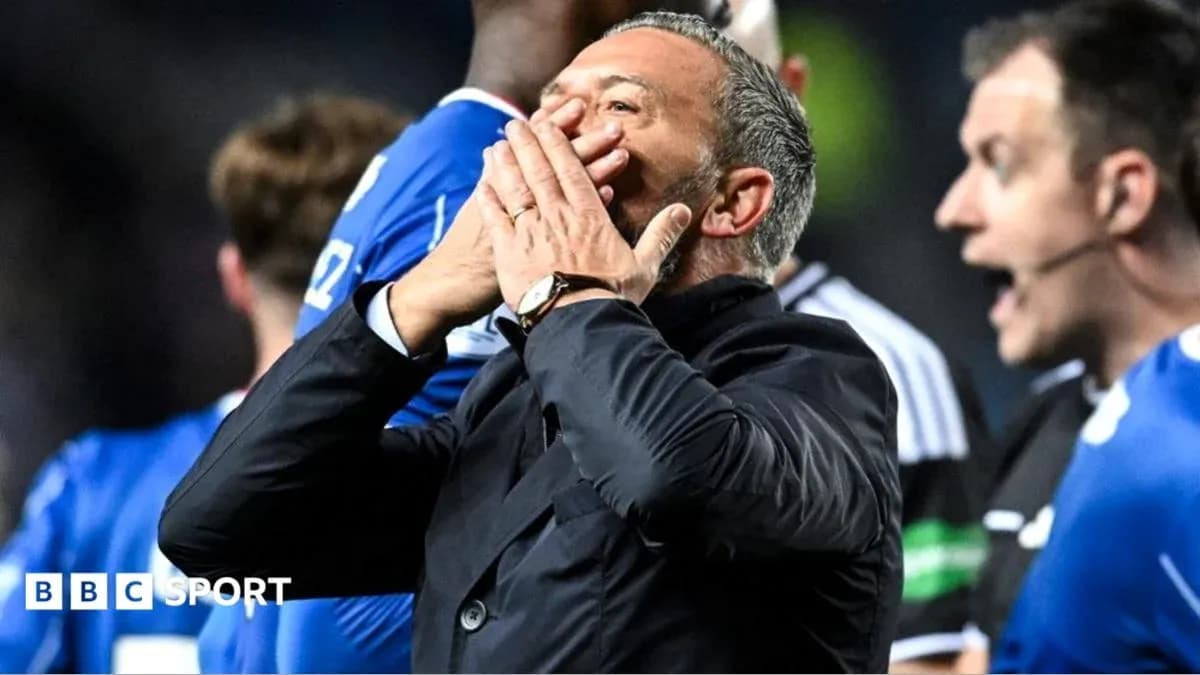
McInnes didn’t apologise for any of it.
“Last-minute winners are great for players, coaches and fans,” he said. He knows the optics, knows that Rangers would rather not leave it that late, knows too that the performance dipped badly after the break. But he also knows what relentless winning does for a dressing room trying to find itself.
“There are obviously loads we have to improve on,” he added, “but we have to meanwhile keep winning and we have to keep improving if we are to achieve anything this season.”
That balancing act defines Rangers right now. Results that say “title contenders”, performances that still say “work in progress”.
A makeshift attack and an unlikely hero
Up front, the picture has been complicated by injuries. Youssef Chermiti and Lawrence Shankland, the pair earmarked as first-choice strikers, are both long-term absentees. The blow has been compounded by the news that Daisuke Yokota, the Japanese winger signed in the summer, now requires groin surgery only weeks after arriving.
Options have thinned quickly. Plans have had to be ripped up and redrawn.
Miovski had slipped down that pecking order, to the point where he was effectively fifth-choice. McInnes had turned instead to Ryan Naderi and Kevin Kelsy, the big-money signing from Portland Timbers, to lead the line.
Two or three weeks ago, it looked like Miovski’s Rangers career might be edging towards the exit door before the transfer window closed. He seemed out of the picture. Then football did what football always does.
One chance. One finish. One narrative flipped.
“It just shows you what football is like and how quickly it can change,” Halliday said. From peripheral figure to match-winner, Miovski suddenly matters again.
Halliday still doesn’t expect him to start against Celtic, but he accepts the obvious: “He’s certainly more in the picture after a goal like that.”
McInnes, for his part, has always appreciated the numbers behind the striker. “When you actually strip it back, his goals per minutes in the Premiership is up there with Lawrence Shankland,” he pointed out. For a manager inheriting a squad in flux, that kind of efficiency is gold.
“I was delighted when I inherited someone like Bojan who knows his way about the Scottish Premiership and is a goalscorer,” McInnes said. In the right system, with the right partner, he believes Miovski can score consistently.
On this evidence, he might not have much choice but to lean on him.
Celtic looming, questions mounting
So Rangers go into a Celtic double-header with a fragile kind of momentum. The numbers are strong. The table looks survivable. The clean-sheet run offers comfort. Yet the second-half wobble against St Mirren lingers in the mind.
Can this team sustain that first-half intensity for 90 minutes against O’Neill’s side? Can a patched-up forward line find the ruthlessness that has been missing in tight games? And can a squad still being knitted together turn late escapes into convincing statements?
Miovski’s goal bought Rangers time and breathing space. The next two meetings with Celtic will reveal what they plan to do with it.