Bodo/Glimt Stuns Inter 3–1 in Champions League Clash
Bodo, 18 February 2026 – At Aspmyra Stadion, Bodo/Glimt produced one of the standout results of this UEFA Champions League Round of 32, overturning Inter 3–1 in a gripping tie that swung decisively after the break. In a contest where Inter controlled 58% of the ball and created more attempts, Kjetil Knutsen’s side were far more ruthless in both boxes. The win lifts Bodo/Glimt’s European campaign from precarious to promising, while Inter, high in the overall standings, are reminded that efficiency can outweigh pedigree on nights like this.
First half analysis
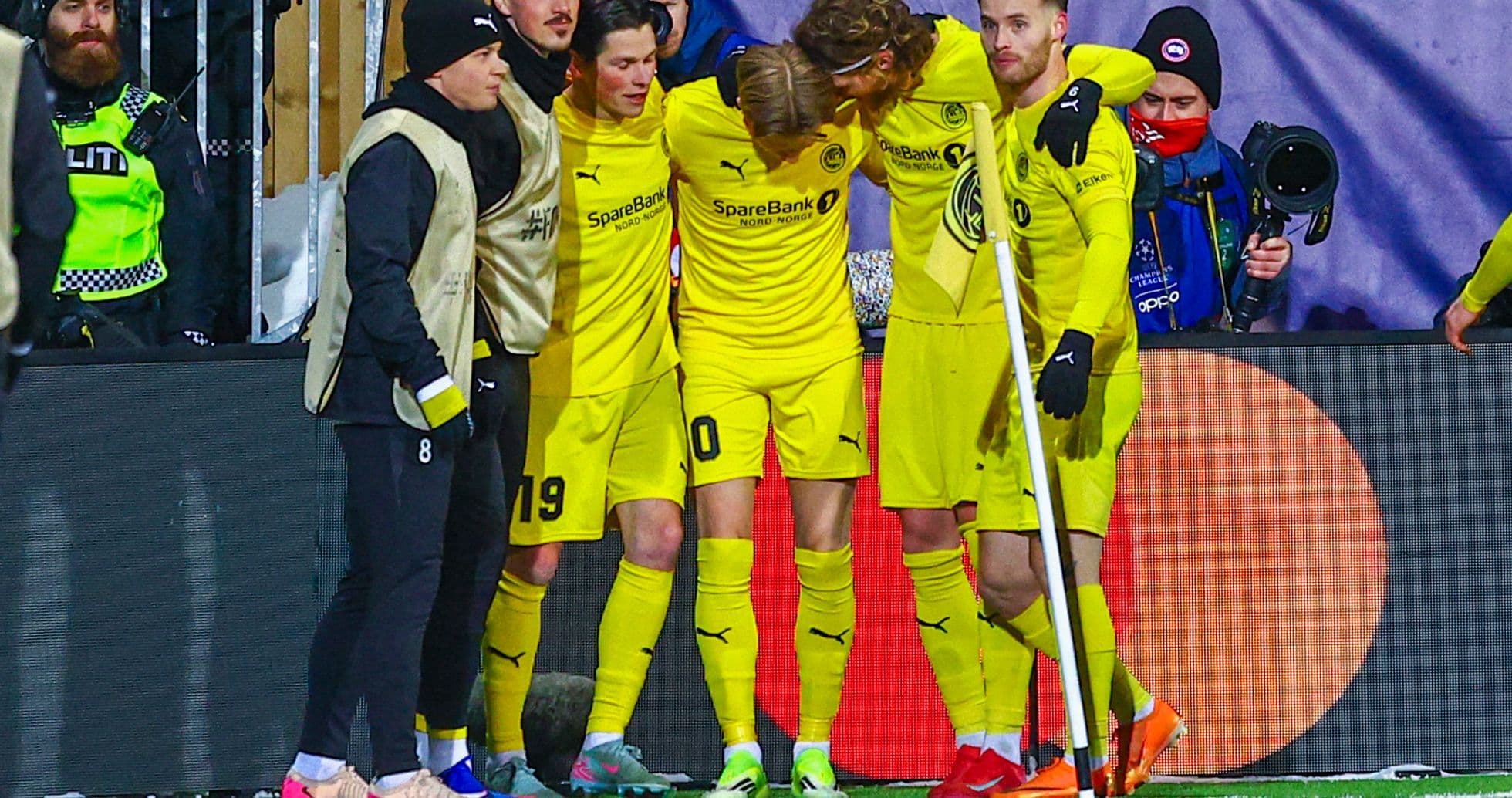
The opening 45 minutes unfolded as a balanced tactical duel between Knutsen’s 4-3-3 and Cristian Chivu’s 3-5-2. Bodo/Glimt struck first on 20', capitalising on their early incisiveness. Midfielder Sondre Fet found the net for the hosts, with centre-forward Kasper Høgh providing the assist, a combination that underlined the home side’s willingness to push midfielders into advanced positions.
Inter responded on 30', restoring parity through Francesco Pio Esposito. The young forward converted after being set up by Carlos Augusto, a reminder of the Italians’ threat from their wing-backs and midfield runners. The equaliser steadied Inter and reinforced their comfort in longer spells of possession.
The only card of the half arrived on 45', when Esposito was booked for a foul, a small sign of Inter’s frustration as Bodo/Glimt refused to be overrun despite conceding more of the ball. The half-time score of 1–1 reflected a contest that was tactically tight but already hinted at more drama to come.
Second half & tactical shifts
The second half turned on a dramatic three-minute spell just after the hour. On 61', Chivu made his first change, withdrawing captain Lautaro Martínez and introducing Marcus Thuram up front. Almost simultaneously, Bodo/Glimt landed a decisive blow: Jens Petter Hauge scored on 61', again with Høgh involved as provider. The timing of the goal, arriving just as Inter attempted to refresh their attack, shifted the psychological balance firmly towards the Norwegians.
Barely three minutes later, on 64', Høgh crowned a superb individual display with a goal of his own, assisted by right-sided forward Ole Didrik Blomberg. That strike pushed Bodo/Glimt into a 3–1 lead and exposed the risk in Inter’s back three as the hosts exploited space with quick, direct combinations.
Chivu reacted aggressively on 76', making a triple substitution: Henrikh Mkhitaryan went off for Piotr Zieliński in midfield, Matteo Darmian made way for Luís Henrique, and goalscorer Esposito was replaced by Ange-Yoan Bonny. The moves signalled a clear attempt to inject fresh creativity and pace, but Bodo/Glimt’s structure held.
The game’s physical edge grew. Blomberg was booked for a foul on 77', and Knutsen immediately adjusted, taking him off on 78' for Sondre Auklend. At the same moment, Høgh, having delivered a goal and two assists, was replaced by Andreas Helmersen, a pragmatic move to add fresh legs up front and protect a key performer.
In the closing minutes, Knutsen further locked down the result: centre-back Jostein Gundersen was substituted on 89' for defender Haitam Aleesami, while goalscorer Fet came off for defender Isak Dybvik Määttä, effectively shifting Bodo/Glimt into a more defensive posture. Inter’s final roll of the dice saw Nicolò Barella replaced by Andy Diouf on 89', but by then the Italian side were chasing a game that had slipped away in that ruthless Bodo/Glimt burst.
Statistical deep dive
Inter’s 58% ball possession and 606 total passes (with an impressive 87% accuracy) underline how much they dictated the tempo, while Bodo/Glimt, with 42% possession and 452 passes at 81% accuracy, were content to concede territory and strike more selectively. The pattern was one of an Italian side circulating the ball and a Norwegian side choosing their moments.
In terms of attacking volume, Inter attempted almost double the shots: 15 total efforts to Bodo/Glimt’s 8. Yet both teams managed a similar number of shots on goal (4 for Inter, 6 for Bodo/Glimt), highlighting the hosts’ superior shot quality. That is reinforced by expected goals: Inter’s xG of 1.35 slightly exceeded Bodo/Glimt’s 1.17, but the home side converted their chances with far greater efficiency, turning that xG into three goals from six shots on target.
Discipline and duels also shaped the narrative. Bodo/Glimt committed 12 fouls to Inter’s 6, reflecting the intensity of their defensive work and willingness to disrupt Inter’s rhythm. Each side received one yellow card, suggesting a competitive but largely controlled contest. Both goalkeepers made three saves, underlining that while Inter attacked more often, the truly clear-cut moments fell to the hosts.
Standings & implications
In the broader Champions League standings, this victory is significant for Bodo/Glimt. They now sit on 9 points with a goal difference of -1 (14 scored, 15 conceded over eight games), maintaining 23rd place but strengthening their position in the promotion zone for the 1/16-finals. Their form line of WWDLL now includes a statement win over one of Europe’s heavyweights.
Inter, by contrast, remain high in the table on 15 points and a healthy +8 goal difference (15 scored, 7 conceded), ranked 10th and still firmly in the promotion places. Yet with a form guide of WLLLW, this defeat continues a stuttering trend. For all their control and pedigree, this night in Bodo underlined that in knockout football, efficiency and clinical finishing can overturn even the most polished possession game.