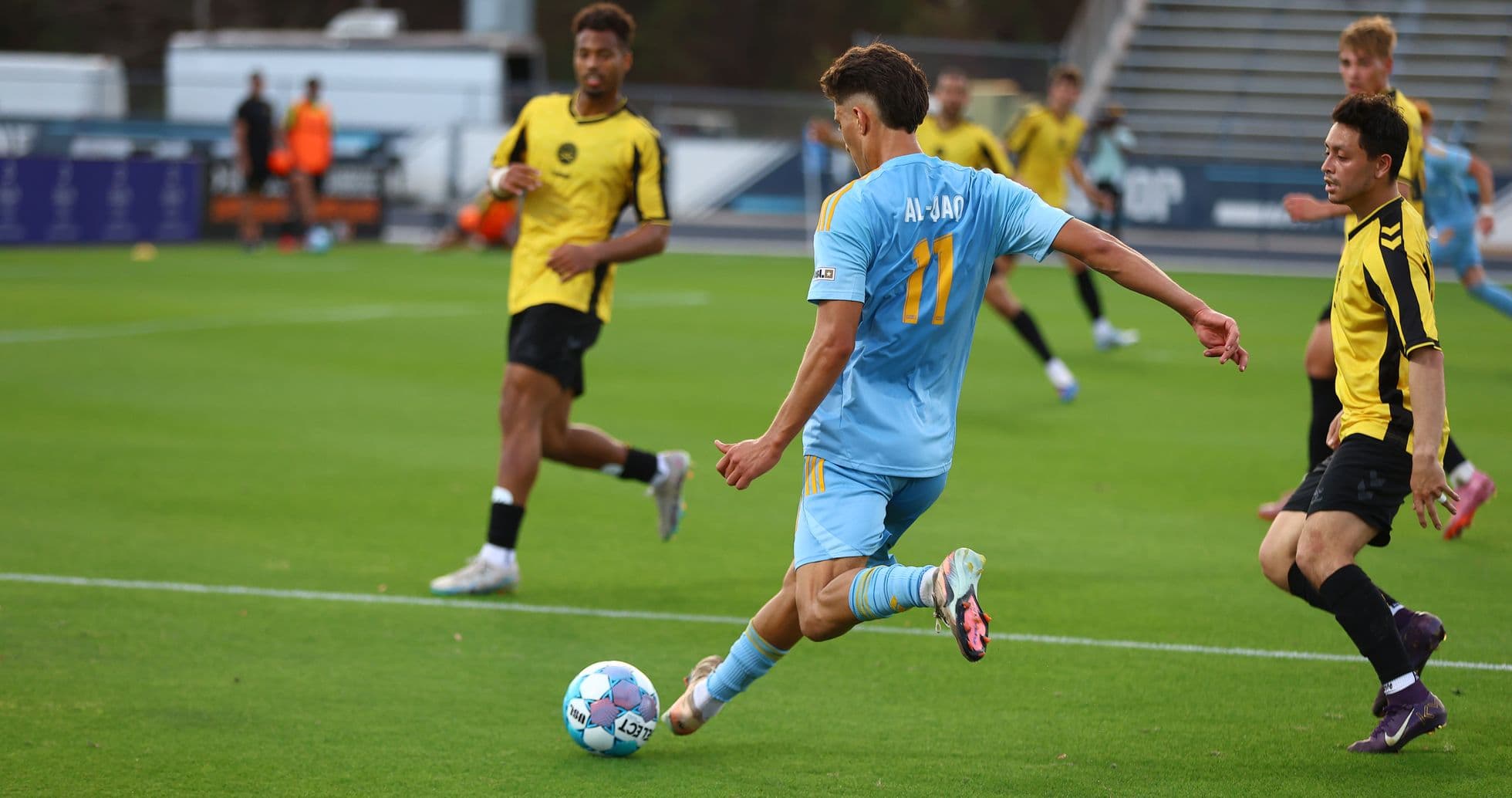
Sporting JAX vs Charleston Battery: A Clash of USL Rivals
Under the lights at Hodges Stadium, a raw expansion project met a hardened contender – and the gap told. Sporting JAX, bottom-half strugglers in the USL Championship’s USL 1 group, were torn open 5–2 by a Charleston Battery side that arrived with promotion ambitions and left with their attacking identity emphatically underlined.
Following this result, the table snapshots still frame the contrast. Sporting JAX sit 13th with 3 points, no wins from 14 matches, and a brutal overall goal difference of -22, the product of 17 goals scored and 39 conceded. Charleston, by contrast, are 2nd on 23 points with a positive overall goal difference of 8, built from 26 goals for and 18 against across 13 games. This was, in essence, a meeting between a side still learning how to survive and one already tuned for the play-off grind.
I. The Big Picture – Identities Exposed
Sporting JAX’s seasonal DNA is clear and unforgiving. Heading into this game they had played 14 matches overall, losing 11 and drawing 3, with no wins to cling to. At home they had played 7, drawing 2 and losing 5, scoring 12 but conceding 25. That home pattern – 1.7 goals scored per game against 3.6 conceded – foreshadowed exactly the kind of chaotic, open contest that unfolded.
Charleston arrived as a more balanced, if slightly split-personality, contender. Overall they had played 13 matches, winning 7, drawing 2 and losing 4. At home they are ruthless – 5 wins and 1 draw from 6, with 17 goals for and only 5 against, an average of 2.8 goals scored and 0.8 conceded. On their travels, though, they had been more volatile: 7 away games, 2 wins, 1 draw, 4 defeats, with 9 goals scored and 13 conceded, averaging 1.3 for and 1.9 against. The 5–2 away scoreline here felt like a deliberate attempt to drag their away form closer to their home standard.
The match itself mirrored the season arcs: Charleston ruthless in transition and in front of goal, Sporting JAX spirited but structurally fragile, particularly as the game stretched either side of half-time. A 3–1 deficit at the break became 5–2 by full time, the Battery never really loosening their grip.
II. Tactical Voids – Where the Game Broke
Neither side had an official list of absences in the data, but the lineups told their own story. Sporting JAX, without a named coach in the report, leaned on experience and industry in the spine: C. Olivares between the posts, a back line anchored by H. Neville, R. Edwards, A. Gomez and T. Rose, and a central trio of J. Rossiter, R. Somersall and W. Kuzain tasked with controlling the middle.
The void was less about personnel and more about structure. Heading into this game, Sporting JAX had yet to keep a clean sheet at home or away; their clean sheet total stood at 0 from 14 fixtures overall. They concede in waves, with 39 goals against at an overall average of 2.8 per match, and 25 of those at home at 3.6 per game. That kind of defensive fragility demands compactness and discipline, but the pattern of their season suggests repeated lapses, especially as legs tire.
Disciplinary trends underline the psychological strain. Their yellow-card profile shows a late-game spike: 26.32% of their bookings arrive between 76–90 minutes, with another 21.05% between 61–75 minutes. Even more telling, 66.67% of their red cards come in that 76–90 window, with the remaining 33.33% between 16–30 minutes. Sporting JAX do not just concede goals late; they lose control late.
Charleston, by contrast, carry their aggression more evenly and more calmly. Their yellow cards are spread across the match, with notable clusters in 31–45 (22.22%), 46–60 (22.22%) and 76–90 (22.22%), but crucially they have no red cards recorded in any time band. That capacity to play on the edge without tipping over was visible here: they managed the game state, absorbed JAX’s bursts, and kept enough discipline to continue punishing in transition.
III. Key Matchups – Hunter vs Shield, Engine Room vs Engine Room
Without explicit top-scorer data, the “Hunter vs Shield” battle is more about collective profiles than individual stars. Charleston’s attack – with forwards like M. Foster, M. Berry, J. Kelly and wide presence from C. Swan – arrived with 26 goals in total this campaign, averaging 2.0 overall. On their travels they had produced 9 goals at 1.3 per game, but their ceiling is clear: their biggest away win heading into this match was 5–2, a scoreline they replicated here. That is a side comfortable running up the numbers when the game opens up.
Sporting JAX’s “shield” has been thin all season. A back line of Neville, Edwards, Gomez and Rose in front of Olivares has shipped 39 overall, and the home numbers are particularly stark: 25 conceded in 7 at Hodges Stadium. The Battery’s front unit was always likely to find joy attacking those channels, especially with runners like Foster and Berry working off the shoulders of defenders who have been under siege for weeks.
In midfield, the “Engine Room” battle pitted Charleston’s E. Ycaza and K. Pakhomov against JAX’s Rossiter, Somersall and Kuzain. On paper, JAX’s trio offers a blend of bite and ball progression, but the broader team context matters: a side that has failed to win any of its 14 matches overall and has failed to score in 5 of them (2 at home, 3 away) is often chasing games, forcing midfielders to cover too much ground and exposing the back four.
Charleston’s midfield, by contrast, plays with the security of a team that has kept 3 clean sheets overall and concedes just 1.4 goals per game on average. With L. Zamudio behind them and a settled defensive unit including S. Suber, G. Smith, J. Akpunonu and N. Messer, they can step higher, press more aggressively, and trust their structure. That superiority in the middle third was evident as they repeatedly sprang counters that Sporting JAX simply could not track.
IV. Statistical Prognosis – xG Shape and Defensive Reality
Even without raw xG values, the season data allows a clear expected-goals silhouette. Sporting JAX’s attack is not toothless – 17 goals overall at 1.2 per game, and at home they reach 1.7 per match – but their defensive concessions overwhelm any attacking progress. A team conceding 3.6 at home on average needs an outlier attacking night just to draw; more often, they are swimming against a tide of chances against.
Charleston’s profile is that of a side whose underlying xG likely sits comfortably positive. Scoring 2.8 at home and 1.3 away suggests a flexible attack that can dominate weaker visitors and still threaten on the road. Conceding 1.9 on their travels hints at some openness, but against a Sporting JAX side that leaks 2.8 overall, the balance of probability always leaned heavily toward a Battery win with multiple goals.
Following this result, nothing in the numbers feels anomalous. Sporting JAX once again showed flashes – the 2 goals at home are in line with their 1.7 average – but their structural issues, disciplinary volatility and late-game frailty remain unresolved. Charleston, meanwhile, reaffirmed their credentials as a promotion-chasing side: clinical, composed, and ruthless enough to turn a struggling defence’s bad night into a statement away win.
If this match were to be replayed tomorrow with the same squads – Olivares, Neville, Edwards, Gomez, Rose, Rossiter, Somersall, Kuzain, Pedder, Sadlier and Jaaskelainen for JAX; Zamudio, Suber, Smith, Akpunonu, Messer, Ycaza, Pakhomov, Foster, Berry, Kelly and Swan for Charleston – the statistical prognosis would barely shift. The Battery’s attacking “hunter” unit is simply better armed than Sporting JAX’s “shield” is currently built to withstand, and until that defensive architecture is rebuilt, nights like this at Hodges Stadium will remain more pattern than exception.