Benfica 0–1 Real Madrid: Vinícius Júnior's Decisive Goal in Champions League Clash
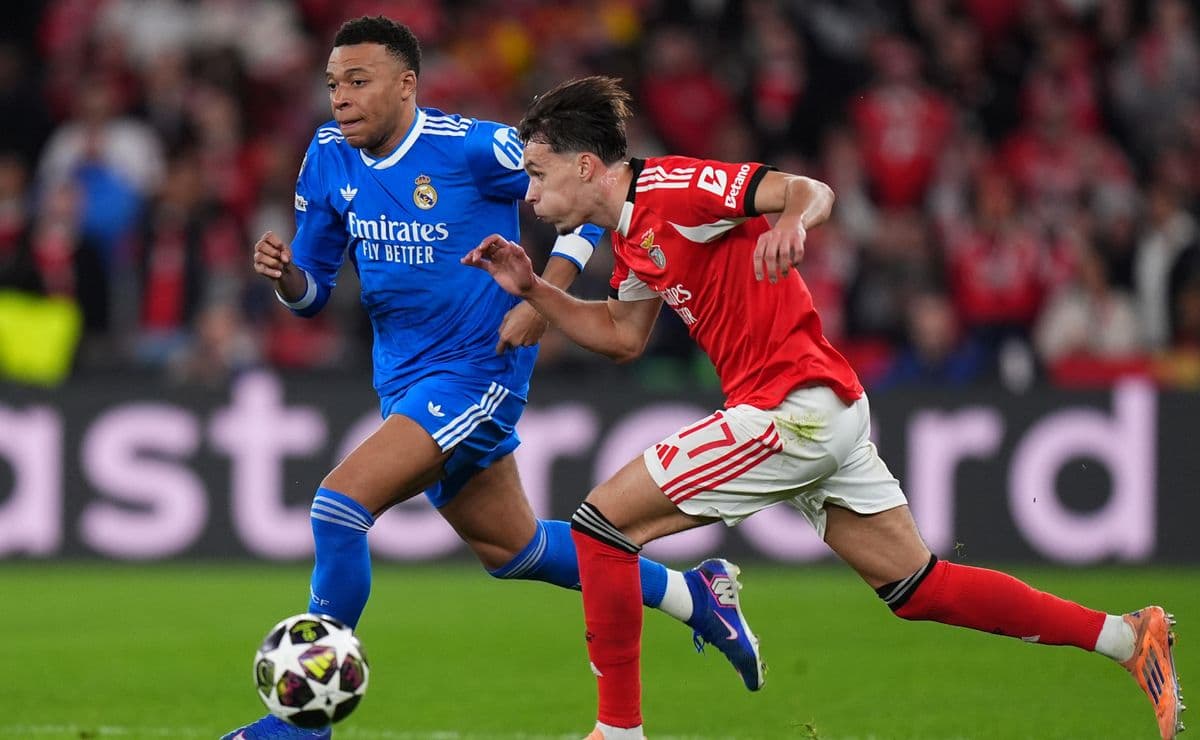
Under the lights at Estádio da Luz, Real Madrid carved out a narrow 1–0 win over Benfica in their UEFA Champions League Round of 32 clash, decided by a single second‑half goal. With referee François Letexier overseeing a largely controlled contest, Vinícius Júnior’s finish early after the break separated two sides who had cancelled each other out before half-time. The result underlines Madrid’s status as one of the competition’s form away sides and leaves Benfica, already with a negative goal difference in the standings, facing an uphill task to stay on course in the knockout phase.
First Half Analysis
The opening 45 minutes were tight and cagey, reflected in the half-time scoreline of 0–0. Neither side produced a breakthrough, and there were no goals or cards recorded before the interval.
Jose Mourinho’s Benfica lined up in a 4-2-3-1, with Vangelis Pavlidis leading the line and Rafa Silva operating as the central creative hub. Alvaro Arbeloa responded with a 4-4-2 for Real Madrid, pairing Kylian Mbappé and Vinícius Júnior up front, supported by a midfield quartet that included Arda Güler and Eduardo Camavinga.
While the event log offers no major flashpoints in the first period, the eventual full‑match numbers hint that Madrid gradually imposed their technical superiority, with more shots and higher passing accuracy, while Benfica tried to stay compact and counter. The absence of disciplinary action before the break also underlined a controlled, tactical contest rather than an overly physical one.
Second Half & Tactical Shifts
The match finally opened up after the restart. At 50', Vinícius Júnior was booked for Real Madrid, a sign of rising intensity. Moments later in the same minute, the Brazilian delivered the decisive moment, scoring the only goal of the game for Madrid, assisted by Kylian Mbappé. That quick one-two punch – a yellow card followed by a clinical finish – transformed the dynamic, forcing Benfica to chase the game.
Shadows over the Luz: Racism Allegations and Mourinho’s Red Card
However, the football was soon overshadowed by a toxic second-half incident. Immediately after his goal, Vinícius Júnior accused Gianluca Prestianni of racial abuse, prompting referee François Letexier to trigger UEFA’s three-step anti-racism protocol. The match was suspended for a tense 11 minutes as players debated walking off and debris rained down from the stands. Amidst the chaos, Benfica manager José Mourinho was sent off in the 86th minute for a furious tirade against the officials, meaning the "Special One" will be banned from the touchline for the high-stakes return leg at the Santiago Bernabéu.
Mourinho reacted on 74' with a double substitution, clearly looking for more creativity and energy. Andreas Schjelderup made way for Georgiy Sudakov, while Rafa Silva was replaced by Richard Ríos. Both changes were like-for-like in midfield zones, but with an eye on fresh legs to break Madrid’s structure.
Benfica’s frustration began to show. On 78', Gianluca Prestianni was booked for simulation, a moment that summed up the hosts’ struggle to find clear routes through Madrid’s defence. Mourinho then altered his back line at 80', withdrawing Fredrik Aursnes for defender Sidny Lopes Cabral, and a minute later went more attacking again, taking off Prestianni and sending on forward Dodi Lukebakio at 81', a late attempt to add pace and direct threat.
Arbeloa’s response was measured. On 86', he replaced Arda Güler with Brahim Díaz, a like-for-like attacking midfield switch to inject fresh pressing and ball-carrying. Tension spiked again at 87' when Mbappé received a yellow card, but Madrid largely managed the closing stages. In stoppage time, Sudakov collected a yellow card at 90+2' for Benfica, underlining their late desperation. Arbeloa then made two time‑killing, stabilising changes: Álvaro Carreras went off for Daniel Carvajal at 90+9', and Eduardo Camavinga was replaced by Thiago Pitarch at 90+4', reinforcing Madrid’s control as they saw out the win.
Statistical Deep Dive
Across the 90 minutes, Real Madrid controlled 58% of the ball, with Benfica conceding possession and operating at 42%. That territorial edge was backed by superior passing: Madrid completed 549 of 621 passes (88% accuracy), compared to Benfica’s 355 of 443 (80%). The visitors’ ability to retain and recycle the ball helped them protect their lead once ahead.
In attack, Madrid’s numbers told the story of a deserved, if narrow, victory. They registered 16 total shots to Benfica’s 10, and crucially 7 shots on goal versus the hosts’ 3. Expected goals underlined that difference: Madrid posted 1.11 xG to Benfica’s 0.41, showing they fashioned the better chances and converted one. Both goalkeepers finished with identical “goals prevented” values of 0, indicating that the scoreline broadly matched the quality of opportunities created.
Discipline was relatively balanced. Madrid committed 9 fouls to Benfica’s 6, with both sides receiving two yellow cards. The bookings – especially for Vinícius, Mbappé, Prestianni and Sudakov – reflected isolated flashpoints rather than a consistently bad-tempered encounter.
Standings & Implications
In the broader Champions League standings, this result reinforces contrasting trajectories. Real Madrid, ranked 9th with 15 points and a +9 goal difference (21 scored, 12 conceded), continue to look like a serious contender deep into the knockout rounds, now boasting two away wins in four on the road. Benfica, by contrast, sit 24th with 9 points and a -2 goal difference (10 for, 12 against). With five defeats in eight and no draws to cushion their record, Mourinho’s side remain in the play‑off positions but have little margin for error if they are to progress further in this campaign.