Belgium's Comeback Win Over Senegal: A Tactical Breakdown
Belgium’s 3-2 extra‑time win over Senegal at Lumen Field in this World Cup Round of 32 tie was a contest of structural control versus vertical punch. Belgium needed 120 minutes to turn 0-2 into 3-2, but the underlying story is how Rudi Garcia’s 4-2-3-1 slowly bent Senegal’s 4-3-3 out of shape through territory, passing volume and late bench impact.
Belgium’s initial structure was conservative for such a creative side. With Youri Tielemans and Hans Vanaken as the double pivot ahead of a back four, the build-up relied heavily on Kevin De Bruyne and Leandro Trossard stepping into half-spaces while Jérémy Doku started wide on the left. Yet across the first hour Senegal’s 4-3-3 press, with Habib Diarra and Pape Gueye jumping onto Belgium’s pivots, repeatedly forced Belgium into longer passes and sterile circulation. Despite ultimately finishing with 699 passes, 602 accurate (86%), Belgium’s early possession (they ended on 52%) lacked incision, and they were punished in transition.
Senegal’s 4-3-3 was built for direct threat. With Sadio Mané and Ismaïla Sarr high and wide and Iliman Ndiaye between the lines, they accepted a slight deficit in possession (48%) in exchange for more verticality. The shot profile underlines this: Senegal generated 19 total shots, matching Belgium, but with a huge xG of 3.54 versus Belgium’s 1.8. That gap reflects how often Senegal accessed central, high-value zones despite having only 10 shots inside the box to Belgium’s 11. When Habib Diarra struck on 25 minutes and Ismaïla Sarr added a second on 51 minutes, both were manifestations of clean, direct patterns: early release into space, forward runners ahead of the ball, and Belgium’s back line exposed in transition.
Garcia’s response was decisive and structural rather than cosmetic. At 46', Romelu Lukaku (IN) came on for Charles De Ketelaere (OUT), turning the 4-2-3-1 into something closer to a 4-2-3-1 with a true reference nine who could pin Moussa Niakhaté and Pathé Ismaël Ciss. The double change on 56' — Nicolas Raskin (IN) for Kevin De Bruyne (OUT) and Dodi Lukebakio (IN) for Jérémy Doku (OUT) — recalibrated the midfield energy and the right flank. Raskin’s presence added ball-winning and shorter distribution, while Lukebakio offered more direct depth running than Doku’s dribbling, stretching Senegal’s back four and creating more space between full-back and centre-back.
Belgium’s territorial squeeze increased as the second half wore on. They finished with 19 total shots, 5 on target and 5 blocked, illustrating a sustained barrage rather than sporadic efforts. The full-backs were key to this shift. Timothy Castagne and Maxim De Cuyper, later replaced by Thomas Meunier (IN) for Maxim De Cuyper (OUT) on 78', pushed higher, effectively locking Senegal into a deeper 4-5-1 without the ball. Corner kicks (4-2 in Belgium’s favour) and a foul count of 22 against Belgium versus 12 against Senegal show how often Belgium were contesting second balls in advanced zones, accepting defensive fouls to prevent counters.
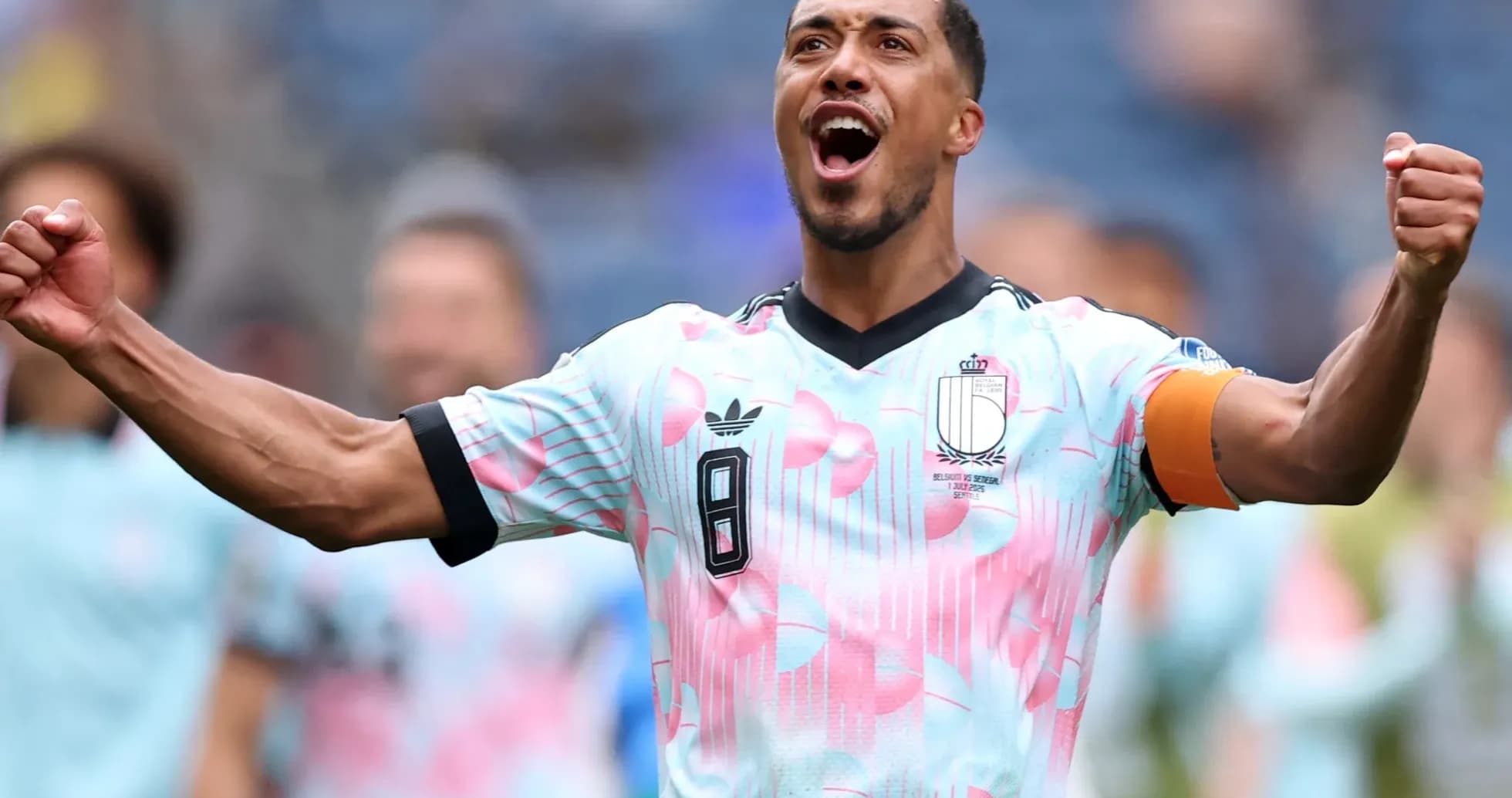
The breakthrough on 86' came from exactly this structural tilt: with Meunier advanced on the right, his delivery or involvement created the platform for Lukaku to finish, halving the deficit. The 89' equaliser from Tielemans, assisted by Trossard, reflected Belgium’s growing ability to find their number eight arriving late at the edge of the box, a pattern that had been missing earlier. Trossard’s inside movements from the left, especially after Lukaku’s introduction, dragged Senegal’s right-sided defenders narrow, opening the seam for a cutback and a high-quality central shot.
Extra time was about game management and fatigue. Garcia’s late introduction of Amadou Onana (IN) for Trossard (OUT) at 109' signalled a shift towards controlling second balls and protecting against counters, even as Belgium still chased a winner. The decisive moment came deep into added time: Tielemans converted a penalty at 120+5', a sequence confirmed by VAR moments earlier. That Belgium’s winner came from the spot rather than open play fits the statistical story: they had volume and territory, but Senegal’s deeper block reduced their open-play xG despite the shot count.
Individually, the goalkeepers had parallel statistical lines but different tactical experiences. Thibaut Courtois (Belgium) made 3 saves, facing 5 shots on target from Senegal. The negative goals prevented figure (-0.61) suggests Senegal’s finishing exceeded the model’s expectation, underlining how clean their looks were when they did break through. Mory Diaw (Senegal) also recorded 3 saves against 5 Belgian shots on goal, with the same -0.61 goals prevented, indicating that Belgium’s best chances were likewise high-quality and that neither goalkeeper significantly outperformed the shot quality they faced.
Defensively, Belgium’s higher foul count and single yellow card — Brandon Mechele booked for “Foul” on 64' — highlight how often their centre-backs were forced into emergency interventions as Senegal broke through the first press. Senegal, by contrast, drew one yellow card for Lamine Camara, also for “Foul” on 67', as they increasingly had to disrupt Belgium’s rhythm in midfield once the European side seized control of possession.
Statistically, the match is a paradox. Belgium advanced 3-2 after extra time despite trailing significantly in xG (1.8 to 3.54) and matching Senegal’s 19 shots. Their marginal edge in possession (52%-48%), passing volume (699 passes to 639) and accuracy (86% to 84%) speaks to systemic control rather than outright chance creation dominance. Senegal’s model-beating xG reflects their directness: fewer long passing sequences, more incisive entries and better shot locations. Yet the late-game narrative favoured the side with the deeper bench and more stable possession structure.
Ultimately, this Round of 32 tie turned on Belgium’s ability to reconfigure their attacking shape around Lukaku and Tielemans, pushing full-backs high and flooding the half-spaces, while Senegal’s 4-3-3, so dangerous in transition, gradually ran out of vertical outlets as the game stretched. The numbers confirm it: both teams created and conceded, but Belgium’s structural tweaks and late penalty execution carried them through.