Bayer Leverkusen vs Olympiakos Piraeus: Champions League Playoff Preview
The BayArena under the lights, knockout jeopardy in the air, and just a single goal effectively separating two sides who have taken very different routes to the same stage. Bayer Leverkusen return home with a precious 2–0 advantage from Piraeus, but in this Round of 32 Champions League clash they know the job is only half done. Olympiakos arrive in Germany with nothing to lose and everything to chase, just one point and two table places behind Leverkusen in the overall standings, and with recent form that suggests they are more dangerous than their rank of 18th might imply.
Leverkusen’s mood is cautiously upbeat: a mixed recent run in Europe (form WLDWW in the standings) but trending positively, and a solid away win in the first leg. Olympiakos, whose form line of WWWLD shows a side that surged late in the league phase, must now summon that same resilience to overturn a daunting deficit in one of Germany’s more intimidating arenas. This is less a title clash and more a high‑stakes test of nerve between two clubs fighting to stay in the Champions League spotlight.
Form Guide & Season Trends
Leverkusen’s European campaign has been defined by contrast: free‑flowing and risky at home, more controlled and pragmatic away. In the league table they sit 16th with 12 points from eight games, scoring 13 and conceding 14. The BayArena has been anything but dull: in four home matches they have scored eight and shipped ten, averaging 2.0 goals for and 2.5 against. That includes both a 3–0 high and a bruising 2–7 low, underlining how open their home encounters can become.
The broader season statistics paint the same picture. Across nine Champions League outings, Leverkusen have found the net 15 times (1.7 per game) but conceded 14 (1.6 per game). They have failed to score just once, and kept only one clean sheet at home. Their preferred 3‑4‑2‑1 system, used in eight matches, leans into attacking width and numbers between the lines, but it also leaves them vulnerable in transition. Still, four clean sheets overall suggest that when they tighten up—particularly away, where they concede just 0.8 per game—they can be disciplined. Translating that defensive control back to the BayArena will be key if they are to protect their 2–0 cushion.
Olympiakos, meanwhile, have been the archetypal rollercoaster side in Europe. Their overall record—10 scored, 14 conceded in eight league‑phase matches—mirrors Leverkusen’s defensive frailty but with a slightly blunter attack. They sit 18th with 11 points, just one behind their German opponents, yet their goal difference of -4 hints at some heavy blows along the way. Away from Piraeus they are unpredictable: two wins and two defeats from four, with four goals scored and nine conceded. The average of 2.3 goals shipped per away game tells its own story, reinforced by their heaviest loss, a 6–1 reverse on the road.
Yet Olympiakos are not easily written off. Their season‑long form string (DLLDLWWWL) shows a side that has already pieced together a three‑game winning streak when it mattered. They have kept three clean sheets, and have failed to score in only three of nine games, suggesting that even when second best they often find a way onto the scoresheet. Set against a Leverkusen defence that can be generous at home, the Greeks will travel believing that an early goal could turn this tie into a real contest.
Head-to-Head History
Recent history between these two is short but sharply defined. This tie is already the third meeting of the season in the Champions League. In the league stage back in January, Olympiakos used the Georgios Karaiskakis Stadium to full effect, racing into a 2–0 half‑time lead and holding on for a 2–0 victory over Leverkusen. That night underlined their capacity to hurt the Germans early and then manage a game with discipline and aggression.
Fast forward to the first leg of this Round of 32 showdown, and the script flipped completely. Again in Piraeus, but this time with Olympiakos as hosts in the knockout phase, Leverkusen produced a mature European away performance, winning 2–0 after a goalless first half. They kept the Greeks at arm’s length and struck with clinical precision after the break, securing both a win and two invaluable away goals.
So across their last two meetings, both sides have enjoyed a 2–0 home success—except that this time, Leverkusen’s win came on Greek soil. That makes this BayArena clash fascinating: Olympiakos know they can beat this opponent by two goals, but they must now do it in a stadium where Leverkusen tend to play more expansively. The pattern of recent matches suggests long spells of tension rather than a chaotic goal‑fest, but with both teams capable of multi‑goal wins, the tie remains alive.
Team News & Key Men
Leverkusen’s biggest concern heading into this match is depth and balance rather than wholesale absences, but they will be without several notable squad options. E. Ben Seghir is ruled out with an ankle injury, while M. Flekken is sidelined through injury as well, potentially affecting the goalkeeping hierarchy. N. Tella, another absentee, removes a dynamic attacking option from the bench or starting XI, and I. Traore is also unavailable. L. Bade is listed as questionable with an injury, which could influence how bold Leverkusen are with their defensive line if he is not fully fit.
Even so, the German side’s season statistics suggest the responsibility will fall on the attacking structure rather than one single talisman. Their 3‑4‑2‑1 shape has produced the highest home scoring ceiling of the two sides, and with only one match all season in which they have failed to find the net, the expectation is that Leverkusen will again lean on their collective creativity between the lines and from wing‑back areas.
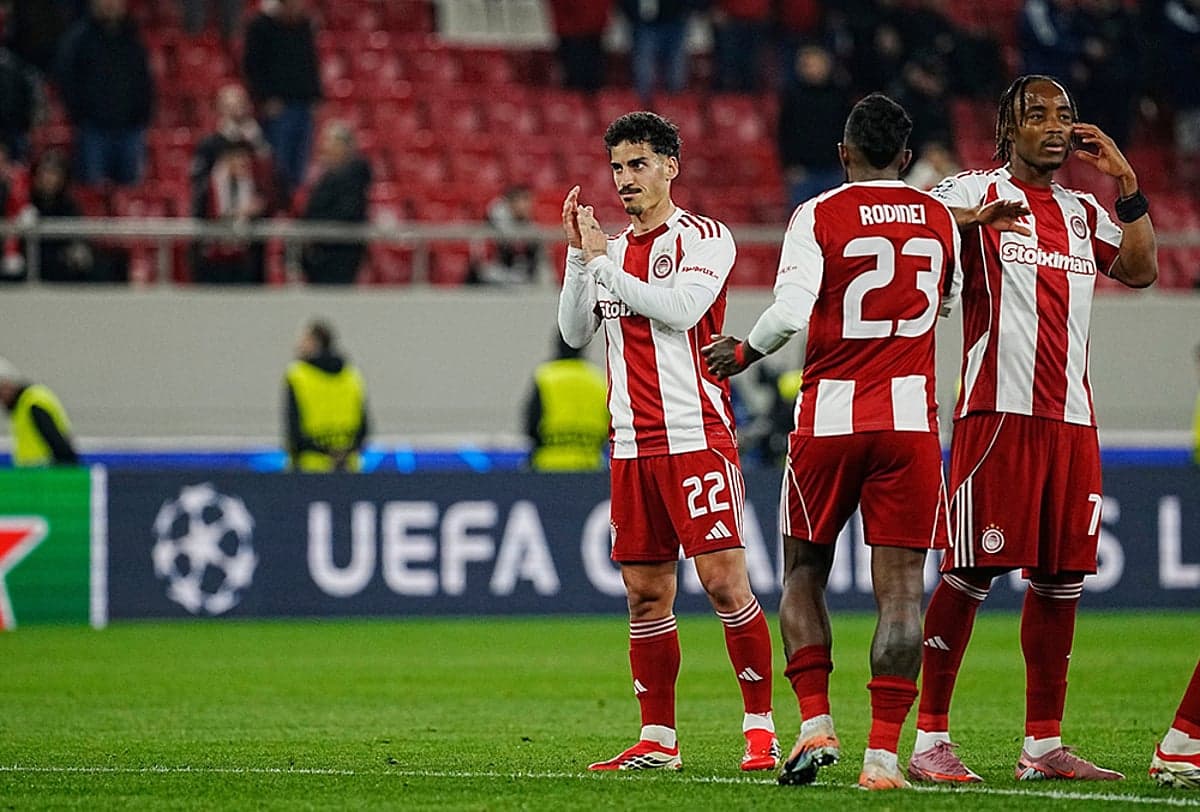
Olympiakos’ list of absentees is shorter but not insignificant. K. Angelakis, Rodinei, R. Vezo and Y. Yazici are all listed as missing, removing both defensive and creative options from the squad. With their standard 4‑2‑3‑1 used in all nine Champions League matches this season, the Greeks rely heavily on structure and familiarity; losing experienced pieces like Rodinei or Vezo can disrupt that defensive cohesion, particularly away from home where they already concede heavily.
Without official top‑scorer data available, the focus shifts to patterns rather than individuals: Olympiakos have shared their ten goals fairly evenly, but they have also shown they can be ruthless in spells, as that 2–0 league‑stage win over Leverkusen proved. Their attacking midfield line in the 4‑2‑3‑1 will be crucial in pressing Leverkusen’s build‑up and exploiting any space left by adventurous wing‑backs.
The Verdict
This has all the ingredients of a tense, tactical second leg. Leverkusen, with a 2–0 away lead and a naturally expansive home style, are likely to dominate possession and create chances, but their leaky home defence keeps the door open for Olympiakos. The Greeks must chase the game without collapsing defensively, a difficult balance for a side that concedes over two goals per match on the road.
Expect a match that starts cagey but opens up if Olympiakos find an early breakthrough. Over 90 minutes, Leverkusen’s attacking depth and home advantage should be enough to see them through, even if Olympiakos make them sweat. The Germans look slightly more likely to edge the night or at least manage the tie, but the margin may be far narrower than their first‑leg scoreline suggests.