Bayer Leverkusen vs Olympiakos Piraeus: Champions League Showdown
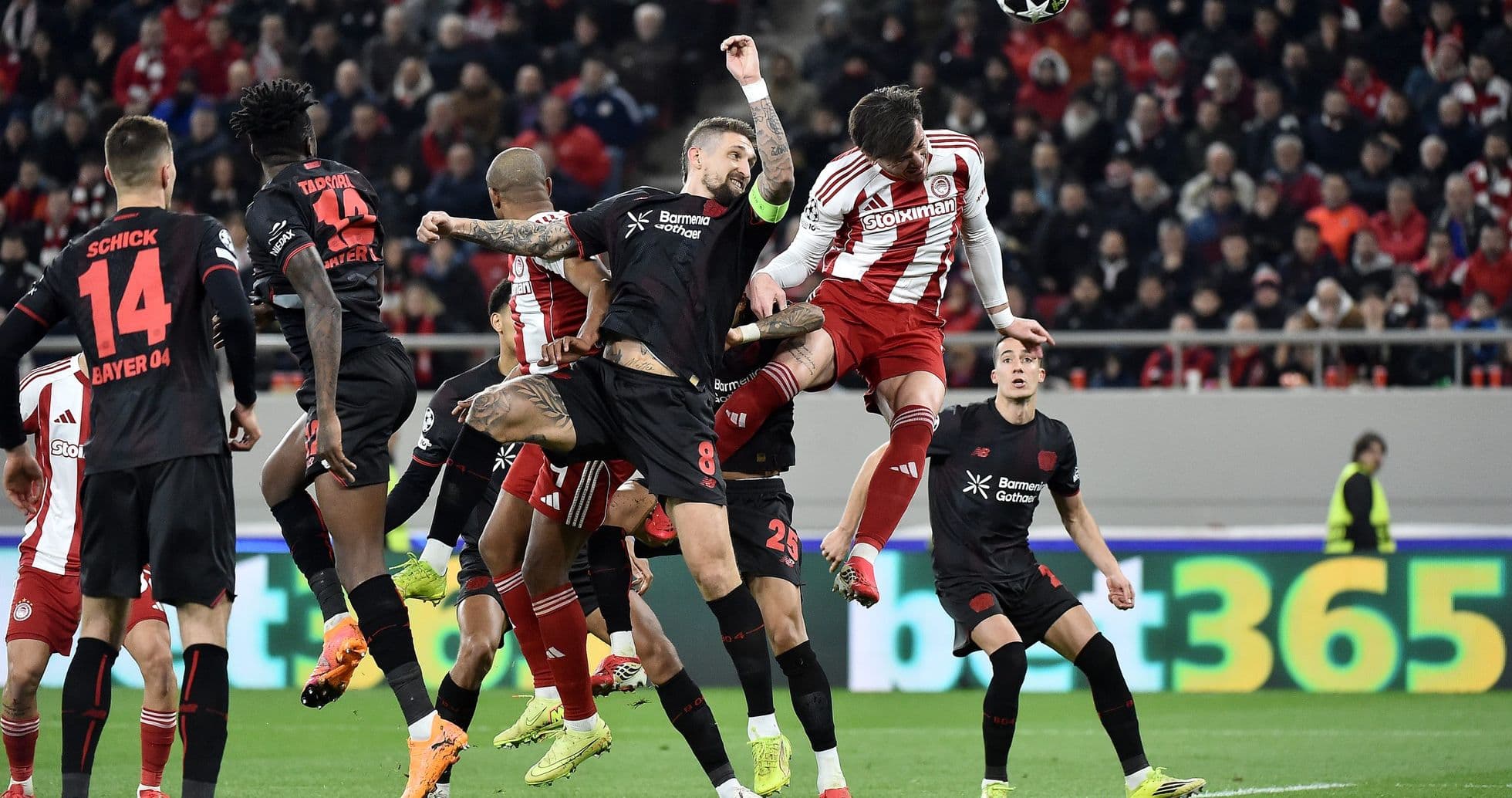
Bayer Leverkusen host Olympiakos Piraeus at the BayArena in the UEFA Champions League Round of 32 on 24 February 2026 (20:00 UTC). Leverkusen arrive ranked 16th with 12 points and a -1 goal difference from 8 games, while Olympiakos sit 18th with 11 points and a -4 goal difference from their 8 matches.
Squad Analysis: Bayer Leverkusen
Leverkusen’s Champions League campaign has been built on a high-output but occasionally fragile attack. Across 9 continental fixtures this season they have scored 15 goals, averaging 1.7 per game, with an even stronger 2.0 goals per game at home (8 in 4). However, they have also conceded 14 times (1.6 per game), including 10 goals in just 4 home matches, a worrying 2.5 per home game.
Structurally, Leverkusen are consistent: a 3-4-2-1 has been used in 8 of 9 European games, indicating reliance on wing-backs and a double line of “2” behind the striker for creativity and second-line runs. Defensively, they have still managed 4 clean sheets, and away from home they concede only 0.8 goals per game (4 in 5), underlining that their biggest vulnerability appears at the BayArena.
Injuries could reshape key lines. E. Ben Seghir (ankle), N. Tella and M. Flekken are all listed as “Missing Fixture”, while L. Bade is “Questionable”. The absence of Flekken removes an experienced goalkeeping option, and Tella’s injury removes an attacking piece in a side that has failed to score only once in 9 matches. Discipline is another subplot: R. Andrich has already received 1 red card in this Champions League season, underlining a potential risk in midfield duels.
Squad Analysis: Olympiakos Piraeus
Olympiakos have been more conservative in attack, scoring 10 goals in 9 Champions League fixtures (1.1 per game). Their output is slightly higher at home (6 goals, 1.2 per game) than away (4 goals, 1.0 per game), but their away record is still dangerous: 2 wins in 4 away fixtures show they can travel effectively. However, they have failed to score in 3 of 9 matches, suggesting more reliance on moments than sustained pressure.
Defensively, Olympiakos concede 1.8 goals per game (16 in 9). The away figure is particularly concerning: 9 goals conceded in 4 away games, an average of 2.3 per match, including a heaviest away loss of 6-1. Despite that, they have 3 clean sheets overall, indicating a team that oscillates between solidity and collapse.
Formation-wise, Olympiakos are stable in a 4-2-3-1 across all 9 matches, giving them a clear double-pivot platform. In midfield, Santiago Hezze is central: in 8 appearances (609 minutes), he has contributed 1 goal and 1 assist, attempted 268 passes with 7 key passes, and made 17 tackles plus 17 interceptions. Discipline is a concern: Hezze has collected 3 yellow cards and 1 yellow-red, and the team’s card profile includes a red in the 46–60 minute window, suggesting volatility just after half-time. Olympiakos are also missing several squad options (K. Angelakis, Rodinei, R. Vezo, Y. Yazici), trimming their depth, especially in defensive and wide areas.
Key Matchups & Tactical Trends
1. Leverkusen Attack vs Olympiakos Away Defense
Leverkusen’s home attack (8 goals in 4 Champions League home games, 2.0 per match) directly confronts an Olympiakos back line conceding 2.3 goals per away game (9 in 4). Olympiakos’ heaviest away defeat, 6-1, shows how quickly their 4-2-3-1 can unravel if the double pivot is bypassed. Leverkusen’s 3-4-2-1 naturally overloads the half-spaces with two advanced midfielders; against a side that concedes 25% of its goals between minutes 61–75 and another 25% between 76–90, sustained pressure from Leverkusen’s second line could be decisive in the final half-hour.
2. Control vs Transition: Midfield Structure
Leverkusen’s record of 4 clean sheets and only 1 game without scoring in 9 suggests they usually control large phases, especially through their three-man back line stepping into midfield. Their biggest home loss (2-7) also highlights how risky that high structure can be if transitions are poorly managed. Olympiakos, who score 30% of their goals between minutes 46–60 and 20% between 76–90, are particularly dangerous immediately after half-time and late on, phases where Leverkusen’s yellow-card profile spikes (38.46% of their yellows between 46–60 and 23.08% between 76–90). That combination hints at a midfield battle where Leverkusen’s control could be tested by Olympiakos’ timing in counters.
3. Creative Force vs Disciplinary Risk: Hezze vs Leverkusen’s Engine Room
With no explicit top assist data, Hezze’s 7 key passes and 1 assist in 609 minutes make him a primary creative conduit for Olympiakos from deep. His 17 tackles and 17 interceptions show he is equally important in ball recovery. However, his 3 yellow cards and 1 yellow-red across just 8 appearances underline a disciplinary tightrope. On the other side, Leverkusen’s R. Andrich, who has 1 red card in 6 appearances, embodies similar edge. In a midfield where both key operators carry card histories, the risk of a numerical disadvantage is real; given Olympiakos already average 1.8 goals conceded per game, going down to ten men could be fatal.
Discipline more broadly points to a potentially heated contest. Olympiakos have 3 early yellows in the 0–15 minute window (17.65% of their total), while Leverkusen’s single red came in the 31–45 window. Both teams have already seen one red card in this campaign, suggesting the referee M. Oliver may need to manage tempo and challenges carefully.
Verdict
The numbers give Leverkusen the attacking edge: 15 goals in 9 games (1.7 per match) versus Olympiakos’ 10 in 9 (1.1), and a stronger home scoring rate of 2.0 per game. Defensively, neither side is watertight, but Leverkusen’s 4 clean sheets and just 0.8 goals conceded per away game hint at a slightly more robust structure than Olympiakos’ 2.3 goals conceded per away match. The outcome may hinge on which midfield keeps its discipline under pressure.