Bayer Leverkusen Overcomes Olympiakos Piraeus 2–0 in UEFA Champions League
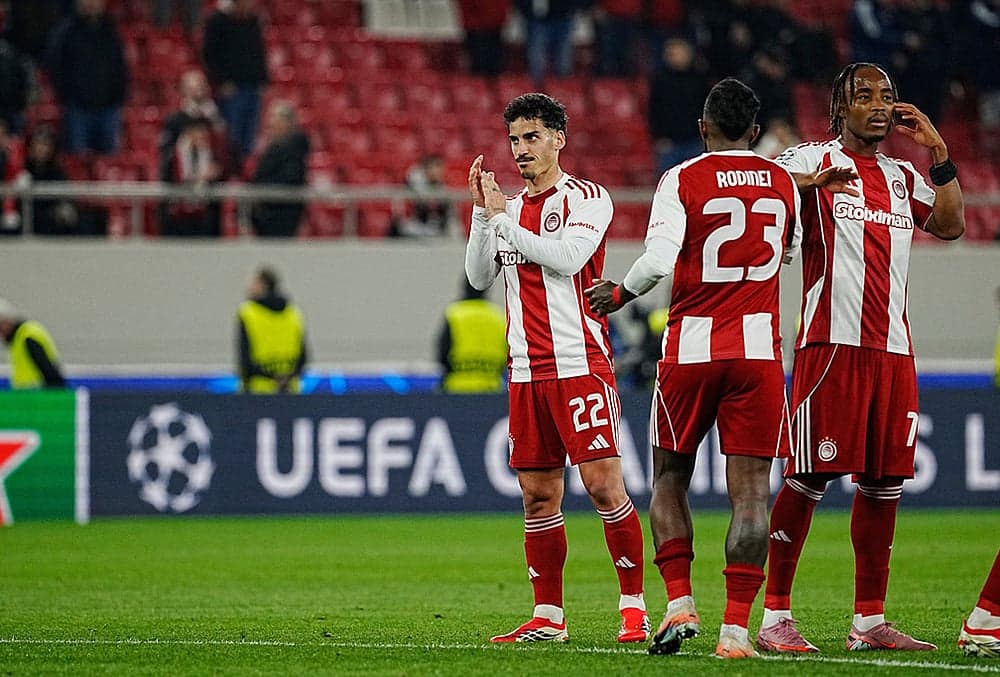
At Georgios Karaiskakis Stadium in Piraeus, Bayer Leverkusen produced a composed away performance to beat Olympiakos Piraeus 2–0 in the UEFA Champions League Round of 32. A second-half brace from Patrik Schick settled a tie that had been finely balanced before the interval, and nudged Kasper Hjulmand’s side into a strong position for the return leg. For Olympiakos, who came into the night with momentum from a solid European campaign, the defeat stalls their push up the continental rankings and exposes the fine margins at this level.
First-half analysis
The opening 45 minutes were tight, physical and largely defined by discipline rather than clear chances, at least in terms of major incidents. Olympiakos’ intent to compete aggressively was underlined as early as 13', when Ayoub El Kaabi collected a yellow card for a foul, forcing him to tread carefully for the rest of the contest.
Leverkusen, for their part, matched that edge in midfield. Aleix García went into the book on 42' for a foul, a sign of how keen both sides were to disrupt the other’s rhythm in central areas. With neither team able to translate their territorial phases into a breakthrough, the half’s pivotal moment arrived deep into stoppage time.
In 45+2', Mehdi Taremi thought he had given Luis Mendilibar Jose’s side a precious lead, only for VAR to intervene and cancel the goal. The decision preserved the goalless scoreline at the interval and subtly shifted the psychological balance: Olympiakos trudged off feeling aggrieved, while Leverkusen were relieved to escape.
Second half and tactical shifts
Mendilibar reacted immediately at the restart, reshaping his back line. At 46', Lorenzo Pirola was withdrawn and Giulian Biancone introduced, a like-for-like defensive change that suggested either an injury concern or a tweak to deal with Leverkusen’s attacking structure.
The match truly turned on the hour. In 60', Leverkusen finally pierced the home defence: Patrik Schick struck the opener, finishing a move supplied by Ernest Poku. Just three minutes later, in 63', Schick doubled the advantage, this time assisted by Alejandro Grimaldo. The rapid one-two not only gave the visitors a commanding 2–0 lead but also forced Olympiakos into a more expansive, risk-taking approach.
Mendilibar responded with a double attacking shift on 64'. Daniel Podence made way for André Luiz, adding fresh legs in the advanced line, while the unlucky Taremi, whose earlier strike had been chalked off, was replaced by Chiquinho to inject creativity between the lines. Hjulmand countered by refreshing his own attacking midfield: Ibrahim Maza departed for Malik Tillman on 64', maintaining Leverkusen’s energy and pressing from the front.
As Olympiakos pushed, Leverkusen continued to manage the game with calculated substitutions. In 76', Poku, already with an assist to his name, was replaced by Martin Terrier, a move aimed at preserving attacking threat while keeping intensity high. A minute later, at 77', Lucas Vázquez was withdrawn for Arthur, a defensive-minded change to stabilise the right flank and protect the lead.
Mendilibar’s final roll of the dice came on 82', when Santiago Hezze was replaced by Lorenzo Scipioni in midfield and Francisco Ortega by Bruno Onyemaechi at left-back, freshening both the engine room and the defensive line for a late surge. Hjulmand’s closing moves at 87' were about game management: Aleix García made way for Ezequiel Fernández to anchor midfield, and two-goal hero Schick was substituted for Christian Kofane, preserving the striker for future battles and adding running power up front to press and chase clearances. Leverkusen saw out the contest without further incident on the scoreboard.
Statistical deep dive
The numbers underline how Leverkusen quietly controlled key aspects of the match. They held 58% of the ball, leaving Olympiakos with 42% possession and often chasing the game after falling behind. That territorial edge was reinforced by cleaner passing: Leverkusen completed 499 of 591 passes at 84% accuracy, compared to Olympiakos’ 328 of 414 at 79%. The visitors’ superior circulation allowed them to dictate tempo and choose when to accelerate or slow the game.
In attack, Leverkusen were markedly more efficient. Despite attempting only eight total shots to Olympiakos’ 13, the Germans hit the target five times, while the hosts managed just one shot on goal. Expected goals (xG) tell a similar story: Leverkusen’s 1.95 xG reflected sustained threat, especially inside the box (seven of their eight efforts), whereas Olympiakos generated 0.87 xG, with many of their attempts coming from lower-quality positions outside the area. Both goalkeepers registered saves, but with “goals prevented” at 0 for each, the scoreline aligned closely with the quality of chances created.
Discipline-wise, the game was competitive but not reckless. Leverkusen committed nine fouls to Olympiakos’ seven, and each side collected a single yellow card. The card count and relatively modest foul totals suggest a firm but controlled contest, with neither team losing their composure despite the stakes.
Standings and implications
This result nudges Leverkusen further ahead in the tightly packed knockout field. They came into the tie ranked 16th with 12 points and a -1 goal difference from eight matches (3 wins, 3 draws, 2 defeats). Adding a 2–0 away win strengthens both their points tally and goal differential, reinforcing their trajectory after a recent “WLDWW” run.
Olympiakos, previously 18th with 11 points and a -4 goal difference (3 wins, 2 draws, 3 losses), now face an uphill task. Their strong overall form line of “WWWLD” before this match is dented, and with only one home win from four in Europe so far, overturning a two-goal deficit away will demand a near-perfect display in the second leg.