Atletico Madrid's Tactical Mastery Against Club Brugge
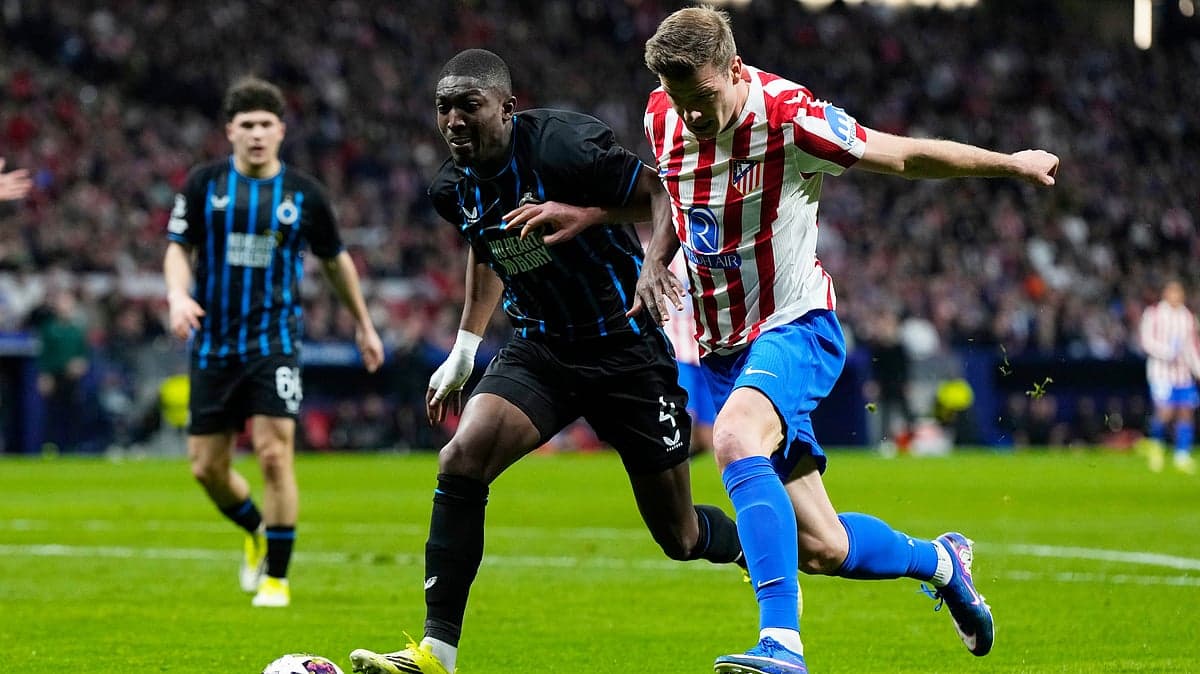
This was a classic case of the team with less of the ball controlling the more dangerous spaces. Club Brugge held 55% possession and completed 556 passes at 87% accuracy, suggesting a patient, ball-dominant approach in their 4-1-4-1. Atletico Madrid, with 45% possession and 464 passes at 84%, were content to concede territory and pick moments to spring forward from a compact 4-4-2. Despite trailing in the ball share, Atletico turned that mid-block structure into territorial control, especially by forcing Brugge to shoot more often from distance. The 4-1 scoreline against lower possession underlines a clinical, space-oriented game plan rather than one built on sterile domination.
Offensive Efficiency
The attacking numbers highlight how Atletico converted control of key moments into goals. With 14 total shots to Brugge’s 11, the margin is modest, but Atletico’s shot profile is telling: 10 of their 14 attempts came from inside the box, indicating they consistently engineered high-quality positions. Their xG of 2.32 reflects this focus on penalty-area entries. In contrast, Brugge split their 11 shots almost evenly between inside (5) and outside (6) the box, aligning with an xG of 1.81 that suggests more speculative efforts once Atletico’s block set.
Set-piece and territorial indicators also show the pattern: Brugge earned 7 corners to Atletico’s 2, implying more sustained pressure and time in the final third, but struggled to turn that volume into clear-cut chances. Atletico’s 5 shots on target from 14 attempts, combined with the lopsided 4-1 score, point to ruthless efficiency rather than heavy bombardment. Their forwards were used as end-points of carefully timed attacks rather than the product of constant crossing or repeated waves. The fact that Atletico outscored their xG by a healthy margin, while Brugge could not convert a comparable underlying chance quality, underlines the home side’s superior finishing and decision-making in the final third.
Defensive Discipline & Intensity
Defensively, Atletico balanced aggression with control. They committed only 5 fouls and received a single yellow card, suggesting a disciplined, well-timed pressing and tackling scheme rather than a disruptive foul-heavy approach. Brugge, with 8 fouls and 2 yellow cards, had to break up transitions more often, hinting at difficulties in stopping Atletico’s vertical surges once the first line was beaten.
Goalkeeper data shows that Atletico’s structure did allow shots, but largely manageable ones: Jan Oblak made 5 saves, a relatively high figure that confirms Brugge’s territorial presence without translating into dominance on the scoreboard. At the other end, Brugge’s keeper faced only 5 shots on goal and made just 1 save, meaning Atletico’s on-target efforts were both rare and devastatingly effective. The similar number of blocked shots (4 each) indicates both sides protected their boxes, but Atletico’s compactness forced Brugge into less efficient shooting zones.
Conclusion
Ultimately, Atletico Madrid’s compact 4-4-2, focused on controlling space rather than possession, combined with a box-focused shot profile and ruthless finishing, trumped Club Brugge’s 55% ball share and higher passing volume. Efficiency in key moments, not possession, defined the tactical outcome.