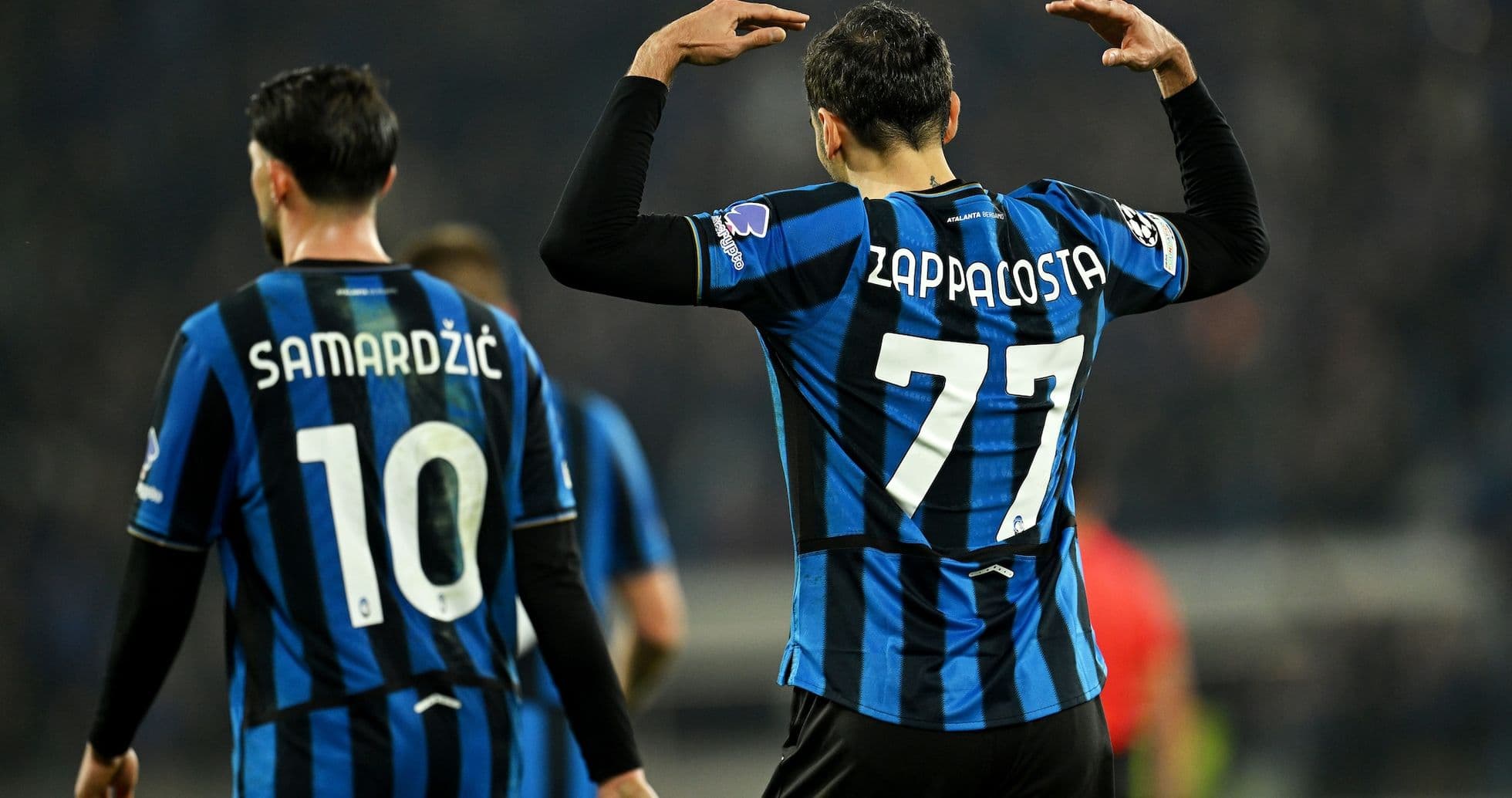
Atalanta Defeats Borussia Dortmund 4–1 in Champions League
Atalanta produced a ruthless 4–1 victory over Borussia Dortmund at Gewiss Stadium in Bergamo on Wednesday night, taking a commanding lead in their UEFA Champions League Knockout phase play-off tie. Raffaele Palladino’s side struck twice in each half, with Gianluca Scamacca, Davide Zappacosta, Mario Pašalić and Lazar Samardžić on the scoresheet, while Karim Adeyemi replied for Niko Kovač’s Dortmund. The result underlines Atalanta’s resurgence in Europe: they sit on 13 points in the overall Champions League table, strengthening their position in 15th, while Dortmund stay on 11 points in 17th and face an uphill task in the return leg.
First-half analysis
The tone of the night was set even before kick-off. Nico Schlotterbeck was shown a red card for argument at -5', leaving Dortmund a man down from the outset and forcing Kovač into an immediate rethink of his 3-4-2-1 structure. Atalanta, already strong at home in this campaign, capitalised on the numerical advantage almost instantly.
On 5', Scamacca opened the scoring with a normal goal, rewarding Palladino’s decision to trust him as the lone striker in the 3-4-2-1. From there, Atalanta were able to manage the tempo against a Dortmund side trying to reorganise defensively. Ramy Bensebaini collected a yellow card for a foul on 13', symptomatic of Dortmund’s growing frustration.
As the half wore on, Atalanta’s wing-backs became increasingly influential, and the pressure told right on the interval. At 45', Zappacosta struck Atalanta’s second, sending the hosts into the break 2–0 up and fully in control of the tie’s momentum, even if Dortmund still had time to respond across two legs.
Second half & tactical shifts
Kovač attempted to keep his side competitive after the interval, but discipline continued to be an issue. Emre Can was booked for a foul on 53', and just four minutes later Atalanta tightened their grip. On 57', Pašalić made it 3–0 with a normal goal, assisted by Marten de Roon, a classic late run from midfield rewarded by clever support play.
Chasing the game and already a man down, Dortmund turned to their bench on 60'. Julian Brandt went off for Carney Chukwuemeka, and Maximilian Beier was replaced by Fábio Silva. The like-for-like nature of those changes suggested Kovač wanted fresh legs in advanced areas without completely abandoning structure.
Further attacking tweaks followed on 70', with Julian Ryerson making way for Yan Couto and Jobe Bellingham replaced by Adeyemi. Those substitutions injected some pace and width, and they briefly revived Dortmund. On 75', Adeyemi pulled one back with a normal goal, assisted by Chukwuemeka, a reward for Kovač’s proactive changes.
Palladino responded by consolidating. Sead Kolašinac went off for defender Honest Ahanor on 72', and goalscorer Scamacca was replaced by forward Nikola Krstović at the same time, keeping a focal point up front while adding fresh defensive energy. Giorgio Scalvini then made way for Berat Djimsiti on 77', another move aimed at shoring up the back line, before Nicola Zalewski was replaced by Kamaldeen Sulemana on 85' to preserve intensity on the flanks.
Late drama arrived deep into stoppage time. At 90+6', VAR confirmed a penalty for Atalanta involving Krstović. Dortmund’s night then fully unravelled at 90+7', when Bensebaini picked up a second yellow for a foul, immediately followed by a red card, reducing Kovač’s side to nine men. Fittingly, Atalanta had already restored their three-goal cushion: Samardžić converted a penalty at 90', capping a comprehensive 4–1 win.
Statistical deep dive
The numbers underline how effectively Atalanta used their advantages. Dortmund actually controlled 56% of the ball and completed more passes (515 to Atalanta’s 394) with marginally better accuracy (80% to 78%). Yet it was Palladino’s side who turned territory into threat. Atalanta produced 14 total shots to Dortmund’s 7, with 8 on target compared to 4, and generated a significantly higher expected goals figure of 2.49 versus 0.93.
Atalanta’s 12 efforts inside the box highlight how often they were able to penetrate Dortmund’s reshuffled defence, while Dortmund did not attempt any shots from outside the box. Both goalkeepers recorded saves (3 for Marco Carnesecchi, 4 for Gregor Kobel), but the two penalties and open-play chances meant Kobel was under far more sustained pressure.
Discipline was a decisive factor. Atalanta committed 17 fouls to Dortmund’s 10, yet the German side collected exactly four yellow cards and two reds in total, including Bensebaini’s dismissal and Schlotterbeck’s pre-match red. Those moments not only tilted the tactical battle but also eroded Dortmund’s ability to press and counter, particularly in the closing stages.
Standings & implications
In the broader Champions League picture, Atalanta sit on 13 points with a positive trajectory after a form line of LLWWW, and a goal difference of 0. Their home record in Europe (now 3 wins, 1 draw, 1 loss with 10 goals for and 6 against) looks increasingly formidable. Dortmund, stuck on 11 points with a goal difference of +2 and a form line of LLDWL, remain in 17th and must overturn a three-goal deficit in the second leg. Given their away record of 1 win, 1 draw and 2 defeats with 9 goals scored and 12 conceded, Kovač’s side face a daunting task to rescue this tie.