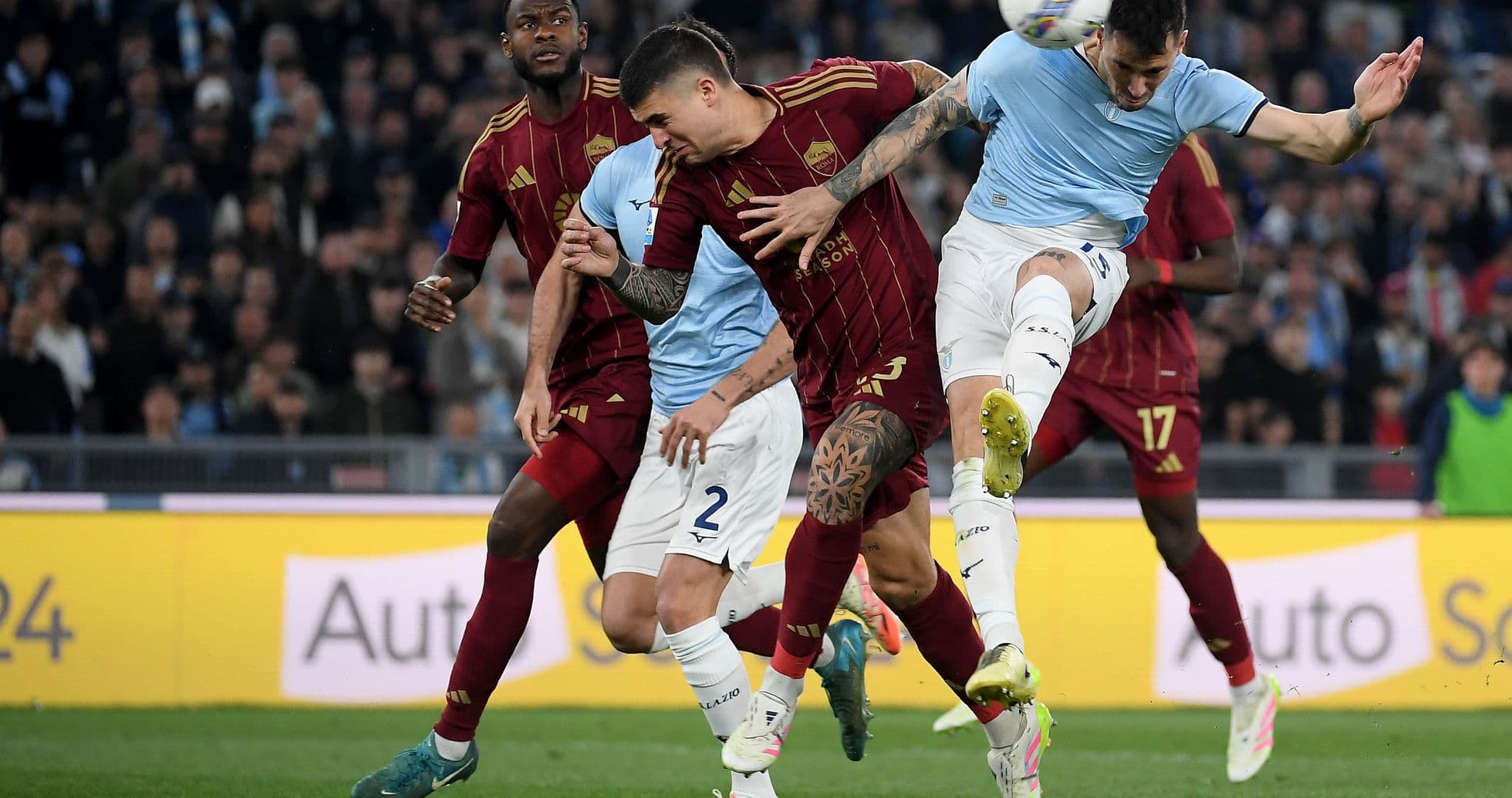
AS Roma Dominates Lazio in Derby della Capitale
The Derby della Capitale returned to a sun‑drenched Stadio Olimpico with a familiar tension, but an unfamiliar hierarchy. Following this result, AS Roma sit 4th in Serie A on 70 points, Champions League bound in all but name, while Lazio remain 9th on 51, their campaign a mosaic of inconsistency. Over 37 league games, Roma’s total goal difference of 26 (57 scored, 31 conceded) tells of a side reshaped in Piero Gasperini Gian’s image: aggressive, vertical, and increasingly ruthless. Lazio’s total goal difference of 0 (39 for, 39 against) captures a team caught between identities, still bearing the imprint of Maurizio Sarri’s possession ideals but lacking the incision to match.
The 2‑0 scoreline felt like the crystallisation of those trajectories. Roma leaned again on their trusted 3‑4‑2‑1, a shape they have used in 29 league matches, and it showed. The back three of M. Hermoso, E. Ndicka and G. Mancini gave them a stable platform to push high and compress the pitch. In front, the wing‑backs and dual No.10s created the layered pressure that has made the Olimpico such a hostile venue: heading into this game, Roma at home had scored 33 goals and conceded only 10 across 19 matches, with an average of 1.7 goals for and 0.5 against. That home defensive steel underpinned this derby too.
Lazio’s 4‑3‑3, the formation Sarri has selected 35 times this season, was forced into compromise even before kick‑off. The absences list read like a spine torn out: I. Provedel (shoulder injury), A. Romagnoli (suspended after a red card), M. Zaccagni (knee injury) and E. Motta all missing, stripping Lazio of their first‑choice goalkeeper, their most composed centre‑back and their most elusive wide threat. Into that void stepped A. Furlanetto in goal, with M. Gila and O. Provstgaard anchoring the back line and a front three of M. Cancellieri, B. Dia and T. Noslin asked to stretch Roma on the break.
Roma’s tactical story began with their central triangle. B. Cristante and N. El Aynaoui sat at the base of midfield, shielding and recycling, while Wesley Franca operated as the hinge between lines. Wesley’s season has been defined by intensity: in total he has attempted 60 dribbles, made 53 tackles and 23 interceptions, and drawn 57 fouls, all while walking a disciplinary tightrope with 6 yellows and 1 straight red. Here, installed as a starter on the right of the midfield four, he became the pressure valve and the trigger, stepping out to harry Lazio’s build‑up and then driving Roma forward once possession was won.
Out wide, Z. Çelik and Wesley on one flank, and the opposite wing‑back on the other, boxed Lazio in. Çelik’s league profile – 62 tackles, 6 blocked shots and 21 interceptions in total – underlines why Gasperini trusts him in these high‑risk duels. His ability to step into midfield and still recover into the back line allowed Roma to tilt the pitch, pinning N. Tavares and A. Marusic deep and isolating Lazio’s wingers.
In the “Hunter vs Shield” duel, the numbers were always tilted towards Roma. D. Malen arrived as one of Serie A’s most efficient forwards: 13 total league goals from 17 appearances, with 46 shots and 29 on target, plus 3 penalties scored from 3 attempts. He spearheaded an attack that, heading into this game, averaged 1.5 total goals per match and had failed to score only 7 times all season. Lazio’s defence, by contrast, had conceded 39 goals in 37 games, an average of 1.1 per match both overall and away, and had been at their most vulnerable in late, chaotic phases, as reflected in a disciplinary profile heavy on late cards.
That disciplinary edge was a hidden undercurrent to the derby. Roma’s yellow cards are spread, but there is a clear late‑game surge: 22.39% of their bookings come between 61‑75 minutes and 23.88% between 76‑90. Lazio are even more combustible, with 22.37% of yellows and a striking 55.56% of reds arriving between 76‑90 minutes. This is a team that often finishes games on the brink, and without Romagnoli’s calm presence – a defender who, in total, has blocked 19 shots and intercepted 31 this season – that fragility was always likely to be exposed once Roma turned the screw.
The “Engine Room” battle pitted Roma’s hybrid creators against Lazio’s more classical midfield trio. N. Rovella and T. Basic tried to orchestrate from deep, with K. Taylor offering vertical runs. But Roma’s structure, with P. Dybala and N. Pisilli floating between the lines behind Malen, repeatedly dragged Lazio’s midfield out of shape. Dybala’s tendency to drop into the half‑spaces forced Gila and Provstgaard to step out, opening lanes for Malen to dart across the line or for late runners like Wesley to arrive on the edge of the box.
Gianluca Mancini embodied Roma’s defensive aggression. Across the season he has made 51 tackles, 14 successful blocked shots and 47 interceptions, while committing 69 fouls and collecting 9 yellow cards. In this derby he again walked that disciplinary line, but his front‑foot defending was crucial in keeping B. Dia and T. Noslin from turning. When Lazio did manage to progress, Ndicka’s covering pace and Hermoso’s reading of the game closed the door before Furlanetto’s goal could be threatened.
On the Lazio side, Mario Gila’s numbers – 46 tackles, 17 blocked shots and 25 interceptions in total – show a defender capable of heroic last‑ditch work, and he needed every bit of it. Yet without Provedel behind him and Romagnoli beside him, the back four lacked its usual hierarchy. The full‑backs were often stranded between tracking Roma’s wing‑backs and tucking in to protect the box, a dilemma Roma’s 3‑4‑2‑1 is designed to create.
From a statistical prognosis standpoint, Roma’s victory aligns almost perfectly with the season‑long patterns. At home, they have 13 wins from 19, with 11 clean sheets and an average of 1.7 goals scored. Lazio, on their travels, have managed only 14 away goals in 19 matches – an average of 0.7 – and have failed to score away 11 times in total across the season. A 2‑0 home win, built on territorial dominance and structural superiority, fits both the eye test and the underlying trends.
If we map likely xG narratives onto the tactical canvas, Roma’s layered attacks, Malen’s shot volume and Dybala’s creative gravity would be expected to generate a higher xG total, especially against a patched‑up Lazio back line. Lazio’s limited away output and reliance on transitional moments suggest a lower xG, constrained by Roma’s compact back three and aggressive wing‑backs.
Following this result, the derby feels less like a one‑off and more like a statement of where the city stands. Roma, with their 22 total wins and 17 clean sheets, look every inch a Champions League side built on structure and intensity. Lazio, balanced on that total goal difference of 0, must now decide whether to double down on Sarri’s 4‑3‑3 or evolve again. At the Olimpico, at least, the tactical and statistical balance of power has rarely looked so clearly giallorosso.