Arsenal's Challenge: Defending the Premier League Title
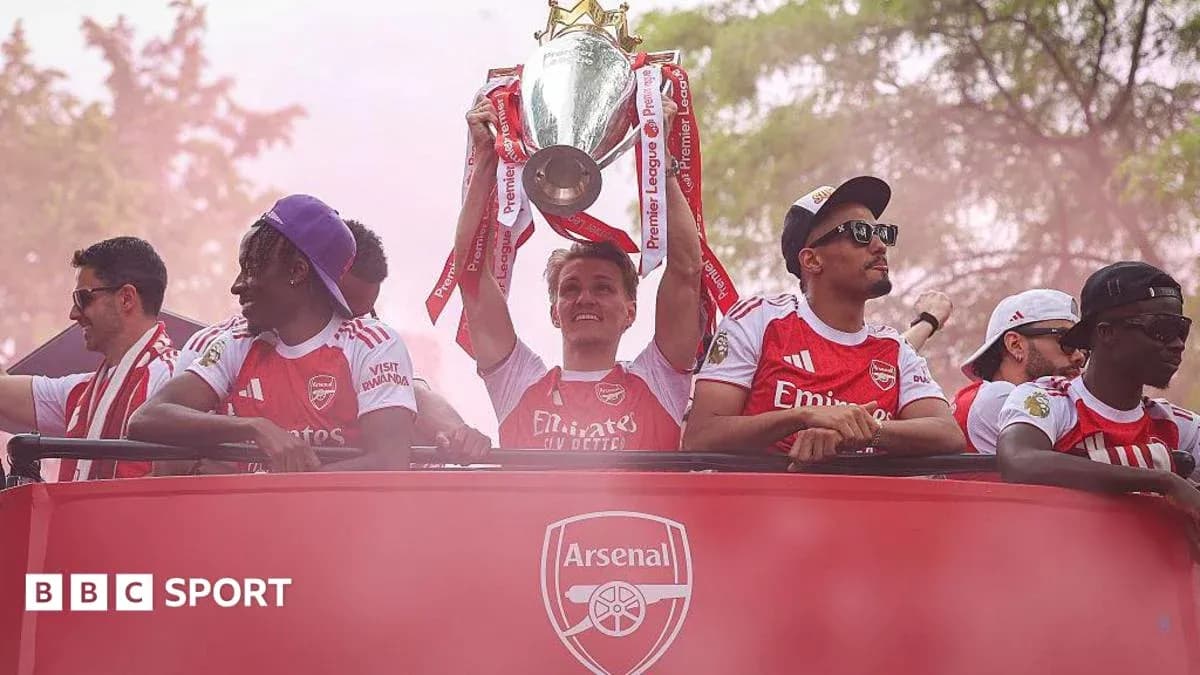
Arsenal finally climbed the mountain again last season. After years of near-misses, rebuilds and recriminations, the Premier League trophy is back in north London and the club walks into this campaign with a title to defend for the first time since 2004-05.
Now comes the harder part: doing it again.
Life as the hunted
Arsenal start this season as champions and favourites. The mood around the Emirates is transformed, the scars of previous collapses replaced by a sense of authority. Yet history is blunt on this: defending the Premier League is brutal.
Pep Guardiola briefly made it look routine. From his first title with Manchester City in 2017-18, he reeled off four successful defences before walking away this summer, turning the concept of a title “race” into something closer to a ritual procession.
Before Guardiola, it was nothing like that. In the eight seasons leading up to his first title, the trophy changed hands every year. Only two managers had ever defended a Premier League crown: Sir Alex Ferguson at Manchester United and Jose Mourinho at Chelsea. That was the company you had to keep to go back-to-back.
Arsenal now step into that conversation. The numbers say it’s rare. The psychology says it’s exhausting.
Climbing Everest twice
Winning a title is a year-long obsession. Every session, every meeting, every sacrifice is pointed at one goal. When it lands, players talk about relief as much as joy. Then the champagne dries, the parade ends, and the message is simple and ruthless: do it all again, with everyone gunning for you.
Leicester City learned the cost of that comedown in 2016-17. Months after their fairytale triumph, they drifted towards the relegation zone. One Foxes player described the experience to the Guardian as “like climbing Mount Everest. Then you get back down, receive a pat on the back and you're told to climb up it all over again."
That is the emotional terrain Arsenal are walking into.
Ex-Premier League winger Andros Townsend expects that strain to show. Speaking on BBC Radio 5 Live, he pointed to Liverpool’s recent struggles to back up success.
"The last two times Liverpool have won the title the next season they have not been able to replicate it. They have had relatively poor seasons," he said, with the Reds finishing third and fifth after their Premier League wins. "When you get over the line, that huge relief. Do you go into the summer with the same sort of aggression and mentality?"
That is the question hanging over Mikel Arteta’s squad.
Stability in a changing league
Around them, the landscape has shifted. Arsenal’s rivals are rolling the dice.
Manchester City, Liverpool and Chelsea all start the season under new managers. Enzo Maresca replaces Guardiola at City. Andoni Iraola takes over at Liverpool. Chelsea have turned to Xabi Alonso, one of the most coveted young coaches in Europe. At Tottenham and Manchester United, Roberto de Zerbi and Michael Carrick are about to experience their first full campaigns after mid-season appointments.
There is uncertainty everywhere. On the touchline, at least, Arsenal stand still. Arteta remains, his ideas embedded, his demands familiar. That continuity might be their sharpest weapon.
The squad has been tweaked rather than torn up. The headline arrivals are Greece forward Christos Tzolis from Club Brugge for £34m and Bruno Guimaraes from Newcastle United for £75m. Arteta has pinned a lot on the Brazilian.
"I think he describes himself as a warrior," Arteta said. "I think he's a warrior with a tremendous quality as well and intuition and leadership and charisma that is going to help us, that is going to really ignite something different in the team.
"We want to go to the next level and are very, very much convinced that we're going to need players with such a personality, desire and character to push everybody inside the organisation to go even higher."
Guimaraes is being signed not just as a midfielder, but as a tone-setter for a dressing room that must find hunger all over again.
A defensive crack in the armour
Not everything has gone Arsenal’s way. William Saliba, one half of last season’s outstanding central defensive pairing with Gabriel Magalhaes, is set to miss an “extended period” after suffering a back injury at the World Cup.
That partnership underpinned Arsenal’s control and consistency. It allowed the full-backs to push, the midfield to squeeze, the press to bite. Without Saliba, the picture changes. Even with efforts to bring in Ezri Konsa, the length of the France international’s absence could tilt the title race.
Champions rarely defend their crown with a patched-up back line. Arteta knows that.
Chelsea reload under Alonso
While Arsenal bank on stability, Chelsea have gone the other way, but with intent rather than chaos.
Alonso arrives at Stamford Bridge off the back of a historic, unbeaten domestic double with Bayer Leverkusen in 2023-24. Now he has a squad that looks far more coherent than some recent Chelsea rebuilds.
England forward Morgan Rogers, 24, has joined from Aston Villa for a club-record £117m. France defender Maxence Lacroix, 26, comes in from Crystal Palace for £52m. New £47m full-back Marco Palestra, 21, has been one of the standout performers in pre-season, aggressive and polished down the flank.
To balance the youth, Chelsea have moved for experience. Jordan Henderson, 36, and Danny Welbeck, 35, both Premier League winners, have been added to a young dressing room to drag standards up and hold them there.
This is not a team starting from scratch. It is a team that expects to challenge.
City without Pep
Across Manchester, City are trying to prove the machine can run without its architect.
Maresca, a former Guardiola assistant, steps into the most unforgiving job in English football: follow the man who turned title defences into a habit. City have paid £116m to sign Elliot Anderson from Nottingham Forest, a midfielder they believe can grow into a central role.
But they look set to lose Rodri, Spain’s World Cup player of the tournament and the metronome of their recent dominance. Chelsea’s Enzo Fernandez could replace him, yet replacing Rodri’s influence is another matter entirely.
The champions of the last era are vulnerable in a way they have not been for years. Arsenal cannot ignore that.
United, Liverpool, Spurs and the shifting pack
Manchester United have moved aggressively in midfield, weakening a rival in the process. Youri Tielemans arrives from Aston Villa for £35m, with Andrey Santos joining from Chelsea for £48m after an eye-catching pre-season. Carrick’s side looks more balanced, more technical, and Opta’s global power rankings say they also have the kindest opening run of fixtures among the leading contenders.
Aston Villa, Europa League winners just three months ago, have already been reshaped. Rogers, Tielemans and Lucas Digne, all starters in that final, have gone. In their place come Johan Manzambi from Freiburg for £59.5m and Joao Gomes from Wolves for £38m, while Alejandro Garnacho has arrived on loan from Chelsea. Behind the scenes, three coaches have departed, including set-piece specialist Austin MacPhee to Chelsea. For a club trying to stay at the top table, that is a lot of moving parts.
Liverpool, champions two seasons ago, are now under Iraola’s command. Centre-back Jeremy Jacquet joins from Rennes for £60m, Ronald Araujo arrives on loan from Barcelona, and 22-year-old forward Victor Munoz adds another attacking option. The pieces look promising; pre-season results have been mixed. The ceiling is high, the floor uncertain.
Tottenham, after a turbulent spell, expect to be back in the argument. De Zerbi has not been shy, spending well over £200m: Sandro Tonali from Newcastle for £100m, Mateus Fernandes from West Ham for £85m, Jan Paul van Hecke from Brighton for £52m. The squad looks heavier, more aggressive, built for a fight near the top.
The chasing pack is deep. Arsenal will not be allowed to stroll.
The run-up: fixtures and fine margins
Starts matter. They do not decide a season, but they can shape its mood.
Using global power rankings that grade more than 13,500 domestic teams, Opta has measured the difficulty of every Premier League club’s first five games. Among the most likely title contenders, Manchester United have the softest landing. Arsenal and Manchester City sit together in the same band of difficulty.
Arsenal open at home to Coventry, then head to Aston Villa, host Chelsea and travel to Sunderland and Brighton. It is a schedule that mixes emotion, narrative and potential traps. Villa away so early. Chelsea under Alonso. Brighton, awkward as ever.
City begin with Bournemouth at home, then visit Crystal Palace, host Coventry, travel to Manchester United and finish that initial stretch with Sunderland at the Etihad. Not simple. Not terrifying. Enough to punish any early complacency.
For Arsenal, the equation is sharp. They have the title, the continuity, the belief and a midfield reinforced by a self-styled warrior. They also have a wounded defence, a league full of ambitious managers and the weight of history pressing down on their shoulders.
Champions are judged by what comes after the parade. Are Arsenal built for an era, or was last season their Everest?