Arsenal Defeats Bayer Leverkusen 2-0 in UEFA Champions League
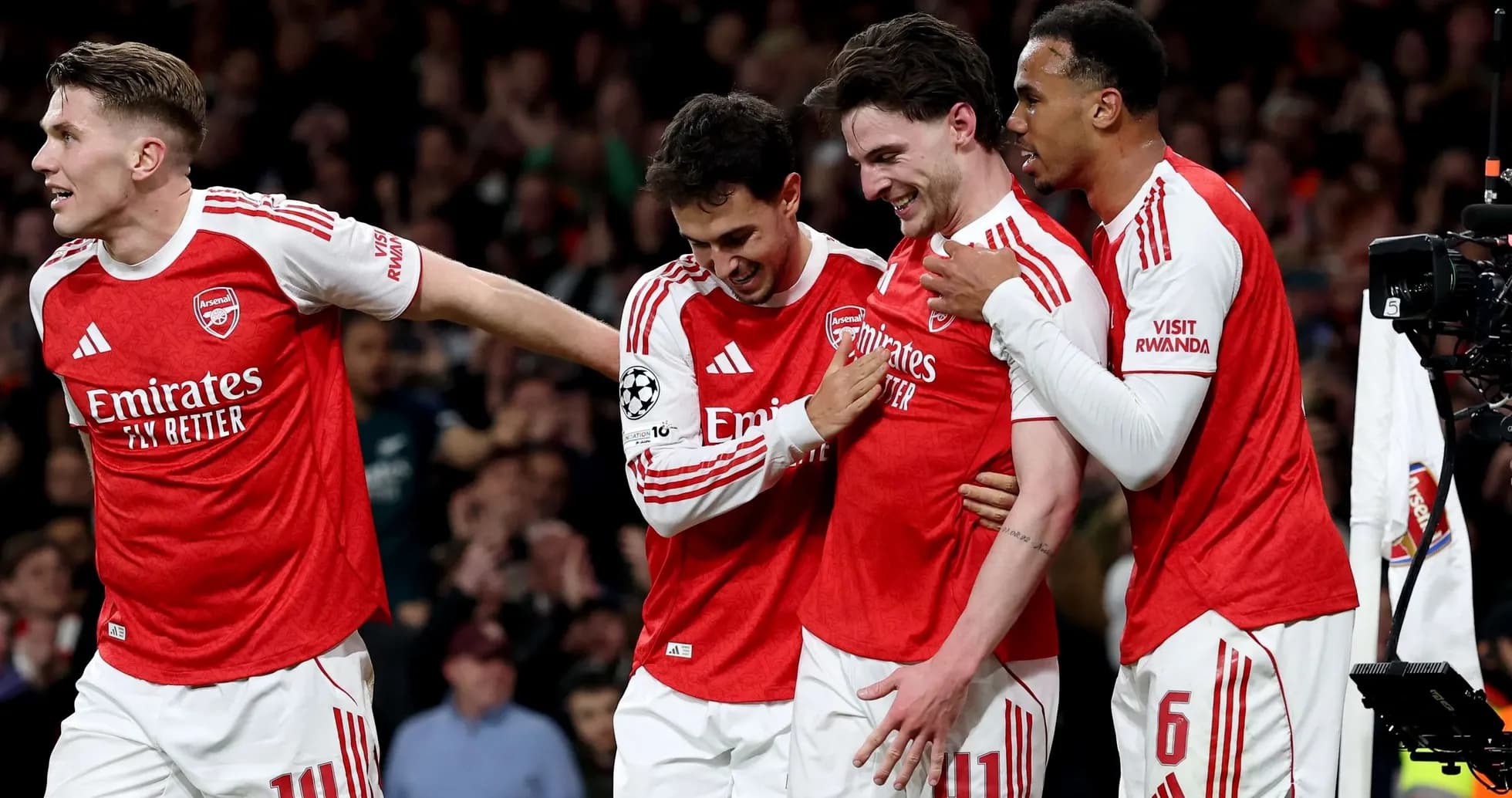
Emirates Stadium hosted this UEFA Champions League 1/8 final second leg, where Arsenal defeated Bayer Leverkusen 2–0 after 90 minutes, with the score 1–0 at the break. The match was refereed by D. Makkelie.
Squad context and season platform (overall this season)
Arsenal
- Competition rank: 1st in the Champions League table with 24 points.
- Overall this season in the Champions League:
- Played: 10
- Wins: 9
- Draws: 1
- Losses: 0
- Goals scored: 26
- Goals conceded: 5
- Average goals scored: 2.6 per game
- Average goals conceded: 0.5 per game
- Clean sheets: 6
- Failed to score: 0
- Penalties: 2 taken, 2 successful penalties (0 missed).
This is an elite defensive unit by numbers (only 5 goals conceded in 10 games) combined with one of the most productive attacks in the competition.
At home overall this season:
- Played: 5
- Wins: 5
- Goals scored: 14
- Goals conceded: 3
- Arsenal have not failed to score at home and have not lost in this Champions League campaign.
Bayer Leverkusen
- Competition rank: 16th in the Champions League table with 12 points.
- Overall this season in the Champions League:
- Played: 12
- Wins: 4
- Draws: 5
- Losses: 3
- Goals scored: 16
- Goals conceded: 17
- Average goals scored: 1.3 per game
- Average goals conceded: 1.4 per game
- Clean sheets: 5
- Failed to score: 3
- Penalties: 1 taken, 1 successful penalty (0 missed).
Leverkusen’s numbers point to a more fragile defensive structure (17 goals conceded in 12 games) and a more modest attack compared with Arsenal.
Away overall this season:
- Played: 6
- Wins: 3
- Draws: 1
- Losses: 2
- Goals scored: 7
- Goals conceded: 6
They are competitive away from home but not dominant, and their defensive record on the road is clearly weaker than Arsenal’s home record.
Lineups and structural setups
Arsenal – 4-2-3-1
Starters:
- Goalkeeper: David Raya (1)
- Defence: Ben White (4), William Saliba (2), Gabriel Magalhães (6), Piero Hincapié (5)
- Double pivot: Martín Zubimendi (36), Declan Rice (41)
- Advanced line of three: Bukayo Saka (7, right), Eberechi Eze (10, central), Leandro Trossard (19, left)
- Centre-forward: Viktor Gyökeres (14)
Arsenal used their familiar 4-2-3-1, with strong ball circulation from the back and a physically powerful spine (Saliba–Gabriel–Rice–Gyökeres). Zubimendi anchored alongside Rice, providing balance and ball progression, while Saka, Eze and Trossard supported Gyökeres between the lines and in wide overloads.
Bench options:
- Goalkeepers: Kepa Arrizabalaga (13), Khari Ranson (79)
- Defenders: Cristhian Mosquera (3), Myles Lewis-Skelly (49), Riccardo Calafiori (33)
- Midfielders: Christian Nørgaard (16), Max Dowman (56)
- Forwards: Gabriel Martinelli (11), Kai Havertz (29), Noni Madueke (20), Gabriel Jesus (9)
The bench is deep in attacking talent (Martinelli, Havertz, Madueke, Gabriel Jesus), giving Arsenal multiple ways to change the front line’s profile, plus Nørgaard as a more defensive or controlling midfield option.
Bayer Leverkusen – 3-4-2-1
Starters:
- Goalkeeper: Janis Blaswich (28)
- Back three: Jarell Quansah (4), Robert Andrich (8), Edmond Tapsoba (12)
- Wing-backs / wide midfielders: Ernest Poku (19, right), Alejandro Grimaldo (20, left)
- Central midfield: Exequiel Palacios (25), Aleix García (24)
- Two behind the striker: Martin Terrier (11), Ibrahim Maza (30)
- Centre-forward: Christian Kofane (35)
Leverkusen set up in a 3-4-2-1, with Grimaldo and Poku expected to provide width and progression, while Palacios and Aleix García formed the central axis. Andrich, a key enforcer figure, played on the left of the back three, combining build-up responsibility with defensive aggression.
Bench options:
- Goalkeepers: Jonas Omlin (18), Niklas Lomb (36)
- Defenders: Tim Oermann (15), Axel Tape (16)
- Midfielders: Malik Tillman (10), Montrell Culbreath (42), Ezequiel Fernández (6), Jonas Hofmann (7)
- Forward: Patrik Schick (14)
The bench offered different attacking profiles in Schick and Tillman, with Hofmann as an experienced creative option, but less depth than Arsenal overall, especially in high-level defensive replacements.
Absences and “Battle 3 – The Void”
Arsenal absentees
- M. Merino – Leg Injury (Missing Fixture)
- M. Odegaard – Knee Injury (Missing Fixture)
- J. Timber – Injury (Missing Fixture)
All three are significant in terms of structure:
- M. Odegaard is normally a creative hub and pressing leader from the right half-space. His absence shifted the creative responsibility onto Eberechi Eze as the central “10” and increased the on-ball burden for Saka and Trossard.
- M. Merino would typically be a high-volume, two-way midfielder. Without him, Martín Zubimendi’s role as organiser and defensive shield becomes even more central.
- J. Timber removes a flexible full-back option who can invert into midfield or defend wide one-v-one. Arsenal compensated with a more conventional back four and the inclusion of Piero Hincapié at left-back.
Battle 3 – The Void (Arsenal):
Odegaard’s usual output (creativity, pressing intensity, late arrivals) had to be replicated by Eze. The starting 4-2-3-1 shows Eze trusted to occupy the same high-responsibility zone, with Zubimendi and Rice behind him to protect transitions. In structural terms, Arsenal traded some of Odegaard’s elite final-third passing for Eze’s ball-carrying and dribbling threat.
Bayer Leverkusen absentees
- Arthur – Ankle Injury (Missing Fixture)
- L. Bade – Muscle Injury (Missing Fixture)
- E. Ben Seghir – Ankle Injury (Missing Fixture)
- M. Flekken – Knee Injury (Missing Fixture)
- Lucas – Calf Injury (Missing Fixture)
- N. Tella – Inactive (Missing Fixture)
- I. Traore – Inactive (Missing Fixture)
Leverkusen were missing depth both in defence and attack:
- L. Bade would have been a natural alternative in the back line; his absence places more load on Andrich and Tapsoba to manage Arsenal’s front line.
- M. Flekken being out confirms Blaswich as the clear first-choice in this tie.
- N. Tella is usually a high-intensity wide option, so Leverkusen had to lean more on Poku and Grimaldo for width and deep runs.
Battle 3 – The Void (Leverkusen):
With Bade out, Andrich had to continue as a hybrid centre-back/enforcer. This compresses the margin for error at the back, especially against Arsenal’s multi-layered attack, and reduces the coach’s flexibility to adjust the back three during the game.
Key individuals and matchup engine
Battle 1 – Top Scorer vs Opponent Defense
The listed top scorer in this Champions League season is:
- Gabriel Martinelli (Arsenal) – 6 goals, 1 assist in 9 appearances, 7.36 average rating.
He started on the bench here but remains Arsenal’s primary goal reference over the whole campaign.
Gabriel Martinelli – overall this season:
- Goals: 6
- Assists: 1
- Shots: 15 (7 on target)
- Key passes: 14
- Dribbles: 31 attempts, 16 successful
He is facing a Bayer Leverkusen defense that, overall this season:
- Has conceded 17 goals in 12 Champions League games (1.4 per game).
- Away from home: 6 goals conceded in 6 games (1.0 per game).
- Suffered a heaviest defeat of 2–7 at home in this competition.
By contrast, Arsenal’s overall defensive record is outstanding:
- 5 goals conceded in 10 games (0.5 per game).
- At home: 3 goals conceded in 5 games.
Interpretation of Battle 1:
On the season platform, Martinelli’s efficiency and volume face a Leverkusen defense that concedes significantly more than Arsenal’s. Even when he does not start, his presence on the bench means Arsenal can introduce a top-level scorer against a back line that has already struggled in high-intensity games. Statistically, Arsenal’s attack has a clear edge over Leverkusen’s defensive numbers.
Battle 2 – Playmaker vs Enforcer
We use the cards data and general profiles to set up this duel.
Enforcer – Robert Andrich (Leverkusen):
- Position: Midfielder / defender in this game.
- Overall this season in the Champions League:
- Appearances: 9
- Minutes: 744
- Goals: 1
- Yellow cards: 1
- Red cards: 1 (he is the top red-carded player in the competition data)
- Passes: 495 total, 88% accuracy
- Tackles: 2, interceptions: 11
Andrich is a physical presence with a clear disciplinary risk profile (one red card already). His role in the back three increases his exposure to Arsenal’s most dangerous zones.
Playmaker / Controller – Martín Zubimendi (Arsenal):
- Overall this season in the Champions League:
- Appearances: 8
- Minutes: 681
- Assists: 2
- Passes: 457 total, 86% accuracy
- Key passes: 13
- Tackles: 8, interceptions: 7
- Yellow cards: 4 (top yellow-carded player in the competition data)
Zubimendi is both a controller and a defensive midfielder. He dictates tempo and progression from deep, while also acting as a first defensive shield. His passing volume and accuracy underpin Arsenal’s ability to dominate possession and to keep the ball away from Leverkusen’s pressing traps.
Interpretation of Battle 2:
- Zubimendi’s 86% pass accuracy and 13 key passes show a high-volume playmaker who can break lines and control rhythm.
- Andrich’s role as an enforcer is underlined by his card record (one red, one yellow) and his involvement in the back three. He must step out to challenge Gyökeres or follow Eze and Saka between the lines, which raises his risk of fouls and cards.
- With Arsenal overall this season enjoying strong control metrics (only 5 goals conceded, many clean sheets), Zubimendi’s ability to keep the ball and absorb pressure looks more stable than Andrich’s capacity to disrupt without disciplinary damage.
Given that both teams have notable card profiles (Arsenal’s yellow-card clustering between 61–75 minutes, Leverkusen’s red card in the 31–45 range in the season data), this duel is also about who maintains composure when the game becomes stretched.
Tactical squad analysis
Arsenal squad dynamics
- Defensive line: Saliba and Gabriel Magalhães form a dominant central pairing. Their season-long record (5 goals conceded in 10 games, 6 clean sheets) reflects strong positioning and aerial control. With Hincapié at left-back and White at right-back, Arsenal can defend wide spaces while also stepping into midfield when needed.
- Midfield balance: Zubimendi and Rice provide a double pivot with both defensive solidity and passing range. Rice offers ball-carrying and pressing, while Zubimendi anchors and recycles. This is central to Arsenal’s ability to limit transitions and protect the back four.
- Attacking three plus striker: Saka, Eze and Trossard behind Gyökeres create multiple angles:
- Saka stretching wide and cutting inside.
- Eze operating between the lines, compensating for Odegaard’s absence.
- Trossard drifting infield to combine and open the channel for Hincapié.
- Gyökeres as a physical and mobile target, pinning Leverkusen’s back three.
On the bench, Martinelli, Havertz, Madueke and Gabriel Jesus allow Arsenal to change the type of threat: from wide dribblers to aerial presence to second-striker runs.
Bayer Leverkusen squad dynamics
- Back three and build-up: Quansah, Andrich and Tapsoba must cover large horizontal spaces against a four-man Arsenal attack. Tapsoba is the most natural centre-back, while Andrich adds aggression and passing from the left. Any mis-timing in stepping out against Gyökeres or Eze can open gaps.
- Wing-backs: Grimaldo is a major offensive outlet, but against Arsenal’s wide threats he is forced into deeper starting positions. Poku on the right must manage both defensive duties on Trossard/Hincapié and provide width in attack.
- Midfield pair: Palacios and Aleix García are technically gifted and can progress the ball, but they face a physically imposing Arsenal double pivot. Their ability to escape pressure and find Terrier and Maza between the lines is crucial if Leverkusen want to create sustained attacks.
- Front three: Terrier and Maza support Kofane. They need quick combinations and rotations to disrupt Arsenal’s compact 4-2-3-1 block. However, given Leverkusen’s overall season numbers (16 goals in 12 games, 1.3 per game), this unit has been more functional than explosive.
The bench (Schick, Tillman, Hofmann) offers alternative shapes: Schick as a more traditional target man, Hofmann as an experienced wide playmaker, and Tillman as a hybrid attacking midfielder. But the overall attacking ceiling, based on season data, remains lower than Arsenal’s.
Disciplinary profiles
To maintain balance:
- Arsenal overall this season (cards):
Yellow cards are spread across the match, with a notable spike between 61–75 minutes (7 yellows, 33.33% of their total).
No red cards recorded in the season data. - Bayer Leverkusen overall this season (cards):
Yellow cards peak between 46–60 minutes (7 yellows, 38.89% of their total).
One red card recorded between 31–45 minutes, attributed to Robert Andrich in the top red cards list.
Both teams have aggressive phases after half-time, which can influence substitutions and tactical adjustments in the second half.
Matchups summary and verdict
Battle 1 – Top Scorer vs Defense
- Gabriel Martinelli’s 6 goals and 1 assist stand against a Leverkusen defense that concedes 1.4 goals per game overall this season in the Champions League.
- Arsenal overall this season concede just 0.5 goals per game, giving them a significantly stronger defensive base than Leverkusen.
Edge: Arsenal, both in attacking firepower and defensive solidity.
Battle 2 – Playmaker vs Enforcer
- Martín Zubimendi: 457 passes, 86% accuracy, 13 key passes, 2 assists. A high-volume, high-accuracy organiser.
- Robert Andrich: 495 passes, 88% accuracy, but with 1 red card and 1 yellow card. He must balance aggression with discipline while operating in the back three.
Edge: Arsenal again, as Zubimendi’s control looks more sustainable than Andrich’s disruptive role, especially against a technically superior midfield.
Battle 3 – The Void (Injuries vs Replacements)
- Arsenal lose Odegaard, Merino and Timber, but compensate with Eze as a creative 10, Zubimendi and Rice as a double pivot, and Hincapié in the back line. The structural integrity remains high.
- Leverkusen lose Bade, Flekken, Tella and others, reducing defensive depth and wide attacking options. Andrich’s continued deployment in the back three is partly a response to this void.
Edge: Arsenal, whose squad depth and versatility allow them to absorb key absences without major structural downgrade.
Statistical edge
Using the season-long data as the golden reference:
- Arsenal overall this season:
9 wins, 1 draw, 0 losses in 10 Champions League games.
26 goals scored, 5 conceded.
6 clean sheets, 0 games without scoring. - Bayer Leverkusen overall this season:
4 wins, 5 draws, 3 losses in 12 games.
16 goals scored, 17 conceded.
5 clean sheets, 3 games without scoring.
Combined with their 1st place in the standings and perfect home record, Arsenal’s squad profile—depth, balance, and defensive excellence—gives them a clear statistical edge over Bayer Leverkusen in this 1/8 final tie.