Arsenal Dominates Bayer Leverkusen in Champions League Clash
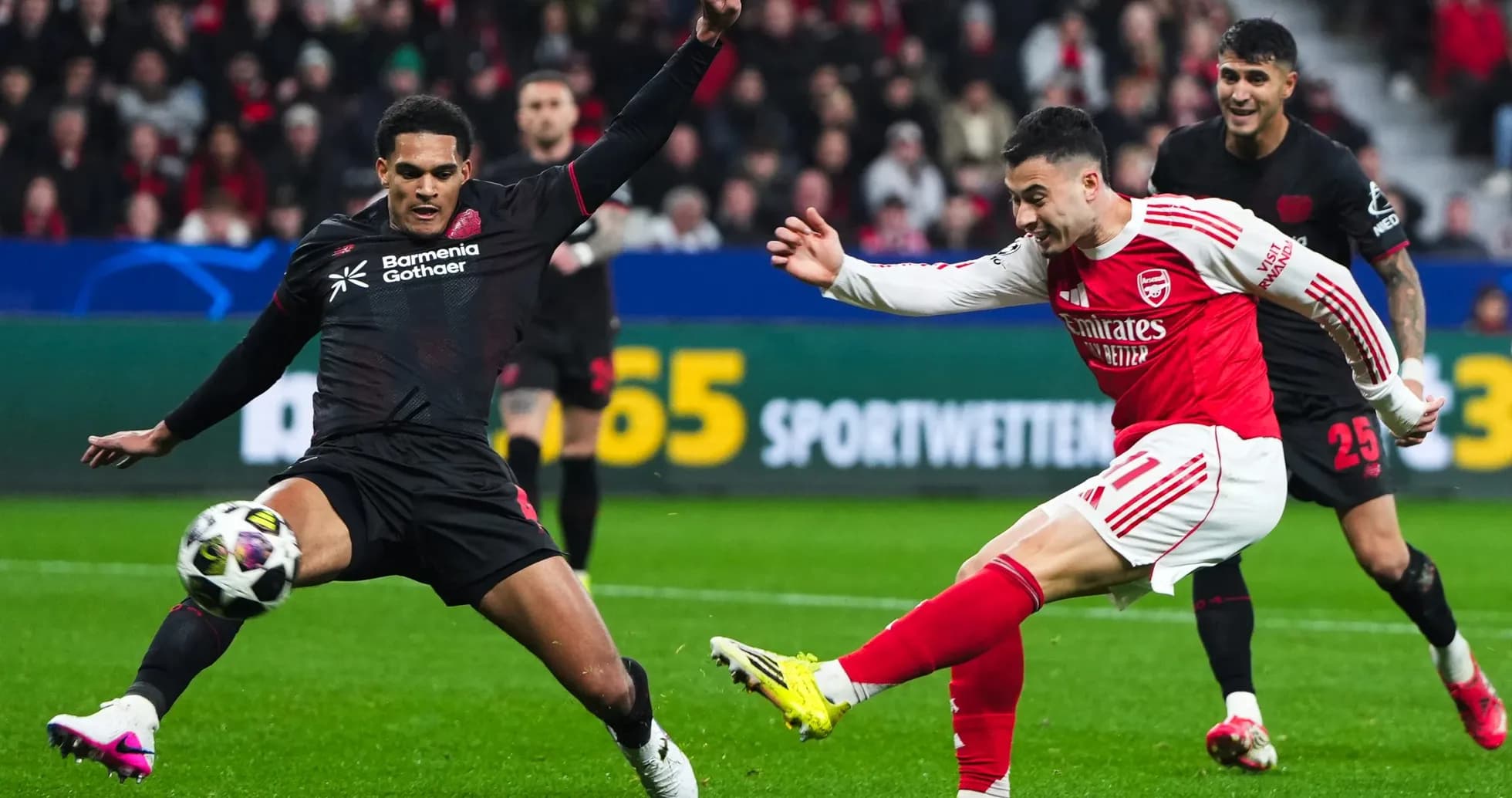
Under the lights at Emirates Stadium in London on 17 March 2026, Arsenal underlined their status as the competition’s in‑form side with a controlled 2-0 victory (HT: 1-0) over Bayer Leverkusen in the UEFA Champions League Round of 16. The result fits neatly into a broader picture: Arsenal sit top of the Champions League standings snapshot with 24 points from eight matches, a perfect record of eight wins, and a goal difference of +19. Leverkusen, ranked 16th with 12 points and a -1 goal difference, arrived as dangerous underdogs but left with work to do.
Arsenal, set up in Mikel Arteta’s familiar 4-2-3-1, combined structure with incision. The hosts struck their first blow on 36 minutes when Eberechi Eze finished from open play, assisted by Leandro Trossard, to give Arsenal a 1-0 lead that they carried into half-time. It was a goal that encapsulated Arsenal’s attacking balance: the nominal “No 10” drifting into space and the left-sided playmaker providing the final pass.
Bayer Leverkusen, aligned in a 3-4-2-1 under Kasper Hjulmand, had plenty of the ball but struggled to turn territory into clear chances. Their frustration began to show immediately after the interval; Exequiel Palacios went into the book for a foul on 46 minutes, the only yellow card of the night, underlining a contest that was competitive but largely clean.
Arsenal’s grip tightened on 63 minutes when Declan Rice added a second from open play, this time without an assist credited. At 2-0, with no further scoring, the tie’s tactical storyline became clear: Arsenal’s efficiency against Leverkusen’s possession.
The numbers tell that tale starkly. Leverkusen enjoyed 58% of the ball and completed 471 of 536 passes for an 88% accuracy rate, moving the ball with composure across their back three and midfield. Yet their attacking output was modest: just 9 total shots, 2 on target, and an xG of 0.52. Arsenal, by contrast, had only 42% possession and fewer passes (383, with 320 completed at 84%), but were far more incisive in the final third: 21 total shots, 12 on target, and an xG of 1.75.
The shot profile underlines Arsenal’s territorial dominance in dangerous areas. They produced 13 efforts from inside the box to Leverkusen’s 5, and 8 from outside. Leverkusen’s defenders blocked 4 Arsenal shots, while Arsenal’s rearguard got in the way of 2 Leverkusen efforts, reflecting how often the visitors were forced into lower‑quality attempts.
In goal, David Raya had a relatively straightforward evening, making 2 saves and recording 0 goals prevented, a reflection of how well-protected he was by the back four of Ben White, William Saliba, Gabriel Magalhães and Piero Hincapié. At the other end, Janis Blaswich was far busier, producing 10 saves. Despite that workload, his goals prevented metric also stood at 0, suggesting Arsenal’s finishing more or less matched the quality of chances they created.
Discipline and game management were hallmarks of Arsenal’s performance. They committed just 4 fouls and avoided any cards entirely, while Leverkusen committed 8 fouls and collected that solitary yellow for Palacios. Arsenal also held a clear edge in set-piece pressure, earning 10 corners to Leverkusen’s 8, an indicator of sustained attacking waves even without majority possession.
The second half was shaped by a flurry of substitutions as both coaches searched for control and solutions. For Leverkusen, Martin Terrier made way for Malik Tillman on 60 minutes, and Ernest Poku went off for Montrell Culbreath at the same time. Later, Palacios was withdrawn for Patrik Schick on 70 minutes, and Robert Andrich departed for Ezequiel Fernández on 83 minutes as Hjulmand tried to tilt the attacking balance.
Arteta’s changes were more about consolidation and energy management. On 68 minutes, Martín Zubimendi went off for Christian Nørgaard. A minute later, Ben White was replaced by Cristhian Mosquera, Trossard departed for Gabriel Martinelli, and Eze was withdrawn for Kai Havertz in a triple change designed to refresh both flanks and the central creative zones. In stoppage time, Viktor Gyökeres made way for Myles Lewis-Skelly on 90 minutes, a final adjustment to see out the contest.
Within the wider Champions League context, this match reinforced established narratives. Arsenal’s snapshot record of 8 wins from 8, with 23 goals scored and just 4 conceded, now has another clinical home display added to it, extending a home line of 4 wins from 4 with 12 goals for and 3 against. Leverkusen’s profile — 3 wins, 3 draws, 2 defeats, 13 scored and 14 conceded — was mirrored here: competitive in phases, technically sound, but ultimately second best in both boxes.
The verdict: Arsenal remain the benchmark side of this Champions League campaign’s snapshot, top of the standings on 24 points and riding a “WWWWW” form line, while Leverkusen, 16th on 12 points with a “WLDWW” run, are reminded that possession alone is not enough at this level.