Argentina's Tactical Dominance in 2-1 Victory Over England
England’s 1-2 defeat to Argentina at Mercedes-Benz Stadium was a textbook illustration of control versus punch. Argentina’s 64% possession, 590 passes and 1.84 xG eventually overwhelmed an England side built to suffer without the ball, whose 36% share and 0.53 xG underline how narrow their margin for error was. England led for over half an hour but could not turn their compact 4-2-3-1 into a sustainable defensive block once Argentina layered on attacking changes.
England's Formation
Thomas Tuchel’s England shape was clear: a 4-2-3-1 with J. Pickford in goal, R. James and D. Spence as full-backs, J. Stones and M. Guéhi centrally, D. Rice and E. Anderson as the double pivot, and a fluid three of M. Rogers, J. Bellingham and A. Gordon behind H. Kane. Out of possession, this became a 4-4-1-1, with Bellingham stepping up to screen Argentina’s deepest midfielder and Gordon dropping to form the left of a midfield four.
Argentina's Formation
Lionel Scaloni’s Argentina started in a 4-4-2 that functioned more like a 4-3-3 with the ball. E. Martínez was protected by a back four of N. Molina, C. Romero, Lisandro Martínez and N. Tagliafico. In midfield, L. Paredes anchored with A. Mac Allister and E. Fernández either side, while G. Simeone worked as a right-sided runner alongside L. Messi and J. Álvarez. The structure aimed to pin England’s back line with dual forwards while using Fernández and Mac Allister to overload the half-spaces.
Tactical Battle
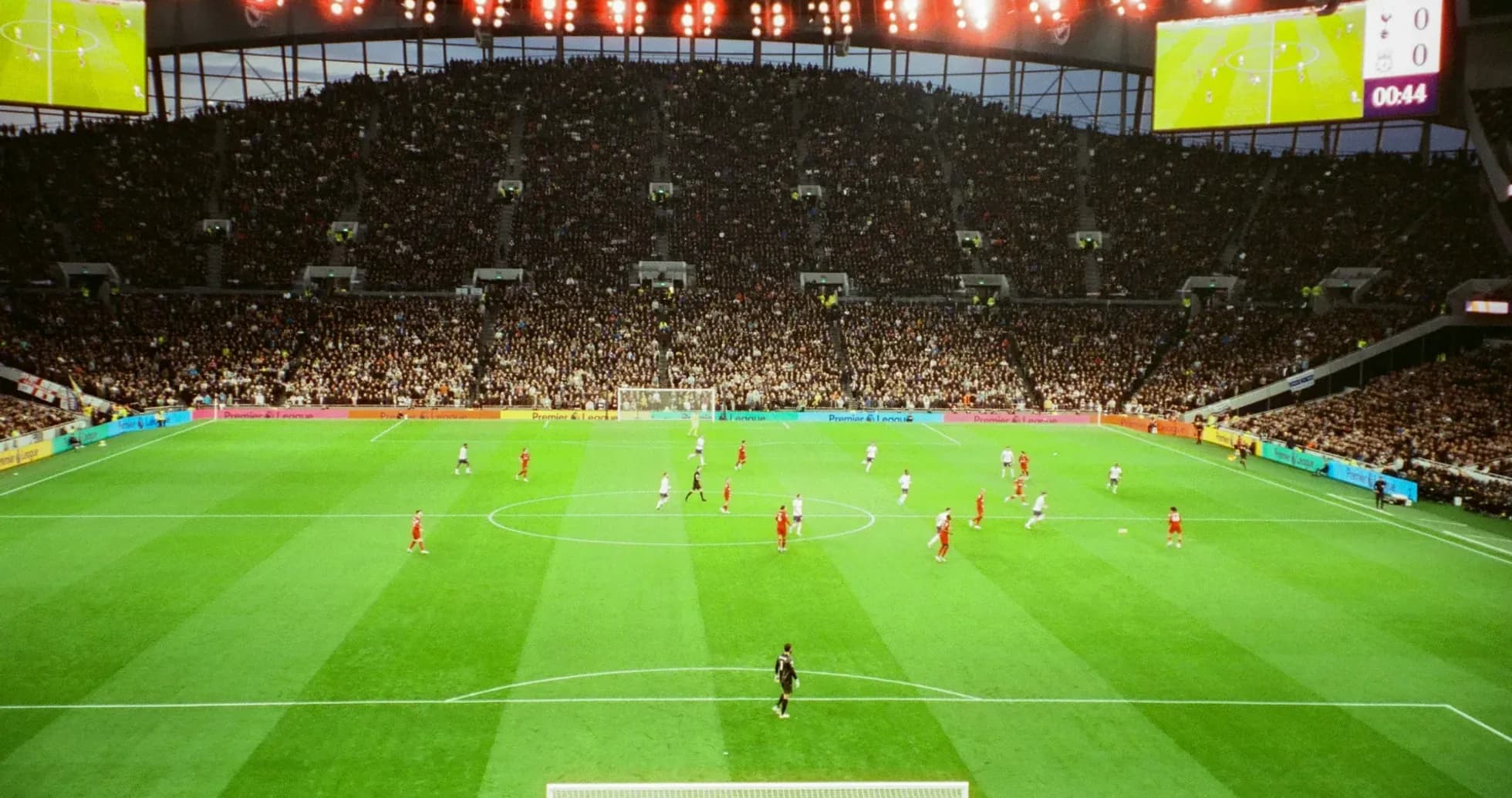
The early tactical battle revolved around England’s mid-block. With only 5 total shots and just 2 on target, England accepted long phases without the ball, focusing on compactness between the lines. Rice and Anderson stayed narrow to deny central progression; Bellingham and Rogers tucked in, leaving the flanks relatively accessible but defending the box. Argentina responded by increasing shot volume rather than forcing the middle: 15 total shots, split between 7 inside the box and 8 from range, show a steady probing rather than constant penetration.
Key Details
The first half’s key detail was discipline. England’s single booking went to Elliot Anderson at 37' (“Foul”), reflecting his combative role in screening Paredes and contesting second balls. Argentina’s Lisandro Martínez was booked at 42' (“Foul”), a sign of how England’s front four, when they did transition, could draw aggressive interventions from defenders defending high up.
Opening Goal
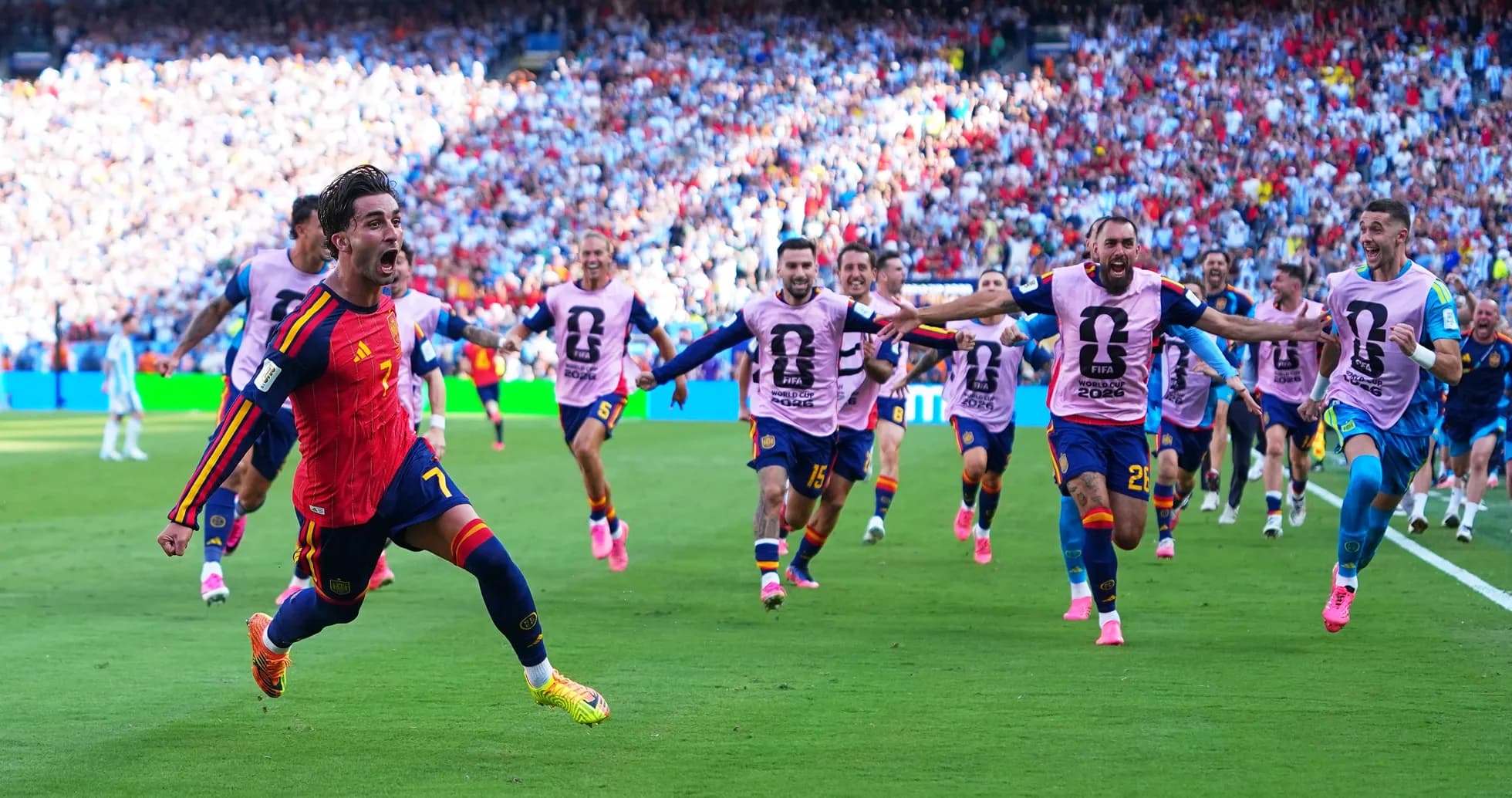
The game pivoted around England’s opening goal at 55'. Anthony Gordon’s strike, assisted by Morgan Rogers, was the payoff for Tuchel’s transition plan: win the ball in midfield, break quickly into the spaces behind Argentina’s advanced full-backs, and attack the box with speed. Given England’s modest xG of 0.53 from only 2 shots on target, this was a high-value moment in an otherwise low-volume attacking display.
Argentina's Adjustments
From there, Scaloni’s adjustments defined the tactical story. At 64', Leandro Paredes (OUT) made way for Nicolás González (IN), a clear shift towards more direct wing threat and higher pressing from the front. The triple wave on 72' underlined Argentina’s intent: Nahuel Molina (OUT) for Gonzalo Montiel (IN), Lisandro Martínez (OUT) for Nicolás Otamendi (IN), and Giuliano Simeone (OUT) for Rodrigo De Paul (IN). The back line gained aerial and duelling presence via Otamendi, while De Paul added vertical running and ball-carrying from midfield, and Montiel provided more aggressive overlapping than Molina.
England's Response
Tuchel’s response was more conservative. At 72', England removed their scorer: Anthony Gordon (OUT) for Ezri Konsa (IN). This effectively shifted England towards a back five in defensive phases, prioritising box protection over counter-attacking threat on the left. The later double switch at 82' — Reece James (OUT) for Dan Burn (IN) and Declan Rice (OUT) for Nico O’Reilly (IN) — further tilted the side towards height and defensive solidity, but at the cost of Rice’s screening and first-pass quality. By the closing stages, England were deep, tall, but increasingly unable to progress the ball out.
Argentina's Late Dominance
Argentina’s late dominance is reflected in the numbers. Their 6 corner kicks to England’s 1 show sustained territorial pressure. The foul count — 15 for Argentina, 11 for England — indicates an increasingly stop-start contest, with Argentina willing to disrupt transitions and England forced into last-ditch interventions as legs tired. Cristian Romero’s yellow at 51' (“Foul”) came just before England’s goal and typified Argentina’s aggressive front-foot defending.
Decisive Moments
The decisive phase arrived in the final minutes. Enzo Fernández’s equaliser at 86', assisted by Lionel Messi, rewarded Argentina’s structural superiority and the fresh legs introduced across the pitch. Lautaro Martínez’s winner at 90+2', again set up by Messi, was the culmination of relentless pressure against an England side that had sunk very deep and struggled to contest second balls around their box.
Goalkeeping Performances
In goal, J. Pickford (England) made 3 saves and, with 0.02 goals prevented, marginally outperformed the model relative to the quality of chances faced, but the volume and quality of Argentina’s attempts eventually told. E. Martínez (Argentina) faced only 2 shots on target and made 1 save; his 0.02 goals prevented underscores that England rarely forced him into high-difficulty stops.
Passing Data
Passing data underlines the tactical contrast. England completed 272 of 324 passes (84%), showing competence but limited volume in buildup; their plan was not to circulate but to survive and spring. Argentina, by contrast, completed 537 of 590 passes (91%), reflecting both technical superiority and a game state where they chased and then protected a lead. Their 3 blocked shots to England’s 2 further highlight how often they were able to work shooting positions in and around a crowded box.
Final Thoughts
Discipline closed the narrative. Rodrigo De Paul’s yellow card at 90+4' (“Argument”) came in the emotional aftermath of the comeback, but it did not alter the tactical balance: Argentina had already tilted the pitch decisively. The final pattern was clear: England’s low-block, transition-heavy 4-2-3-1 nearly held, but once Scaloni’s substitutions added width, verticality and box presence, Argentina’s possession-and-pressure model translated its statistical edge into a late, deserved 2-1 win.