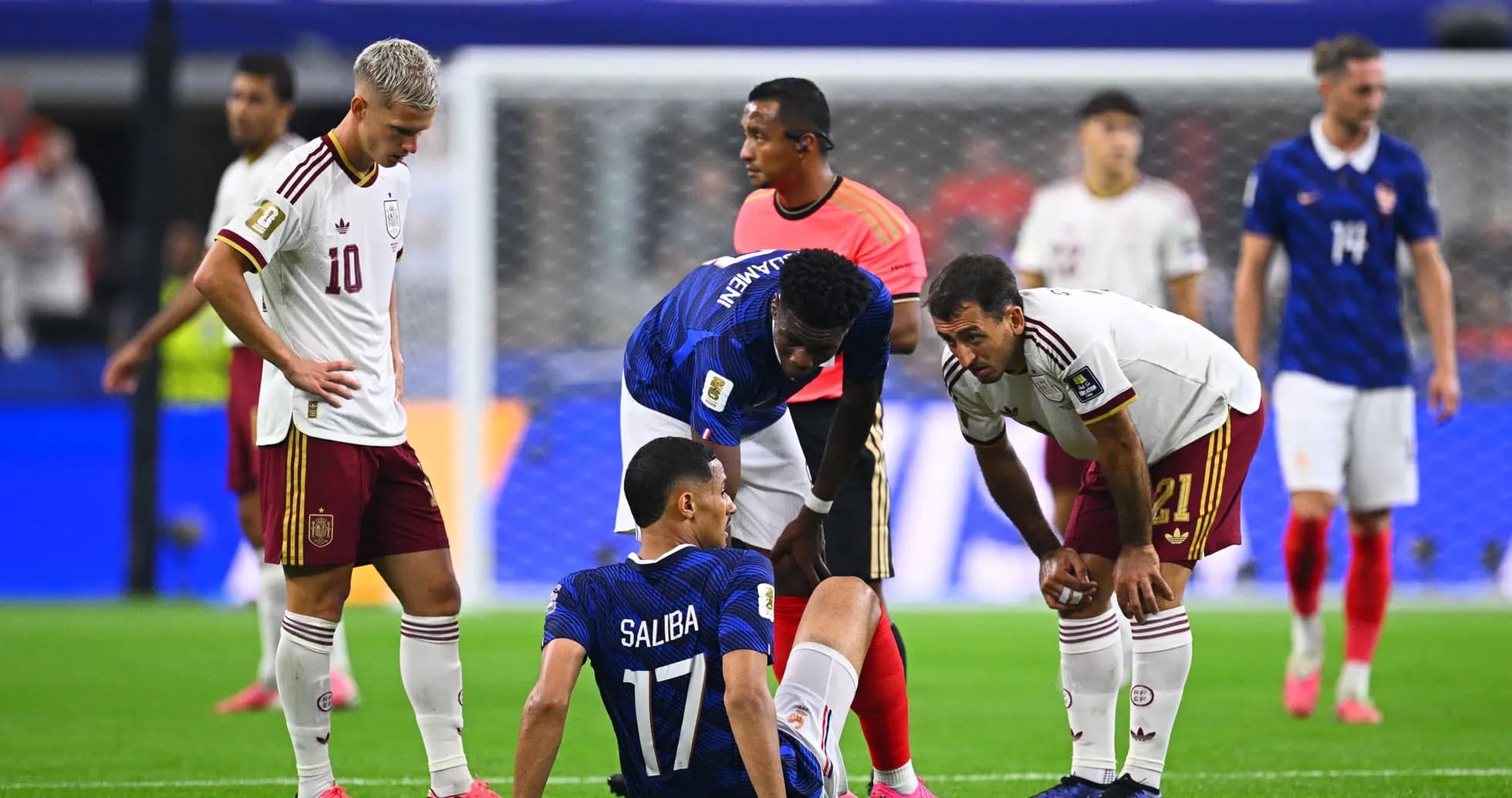
Spain Triumphs Over France 2-0 in World Cup Semi-Final
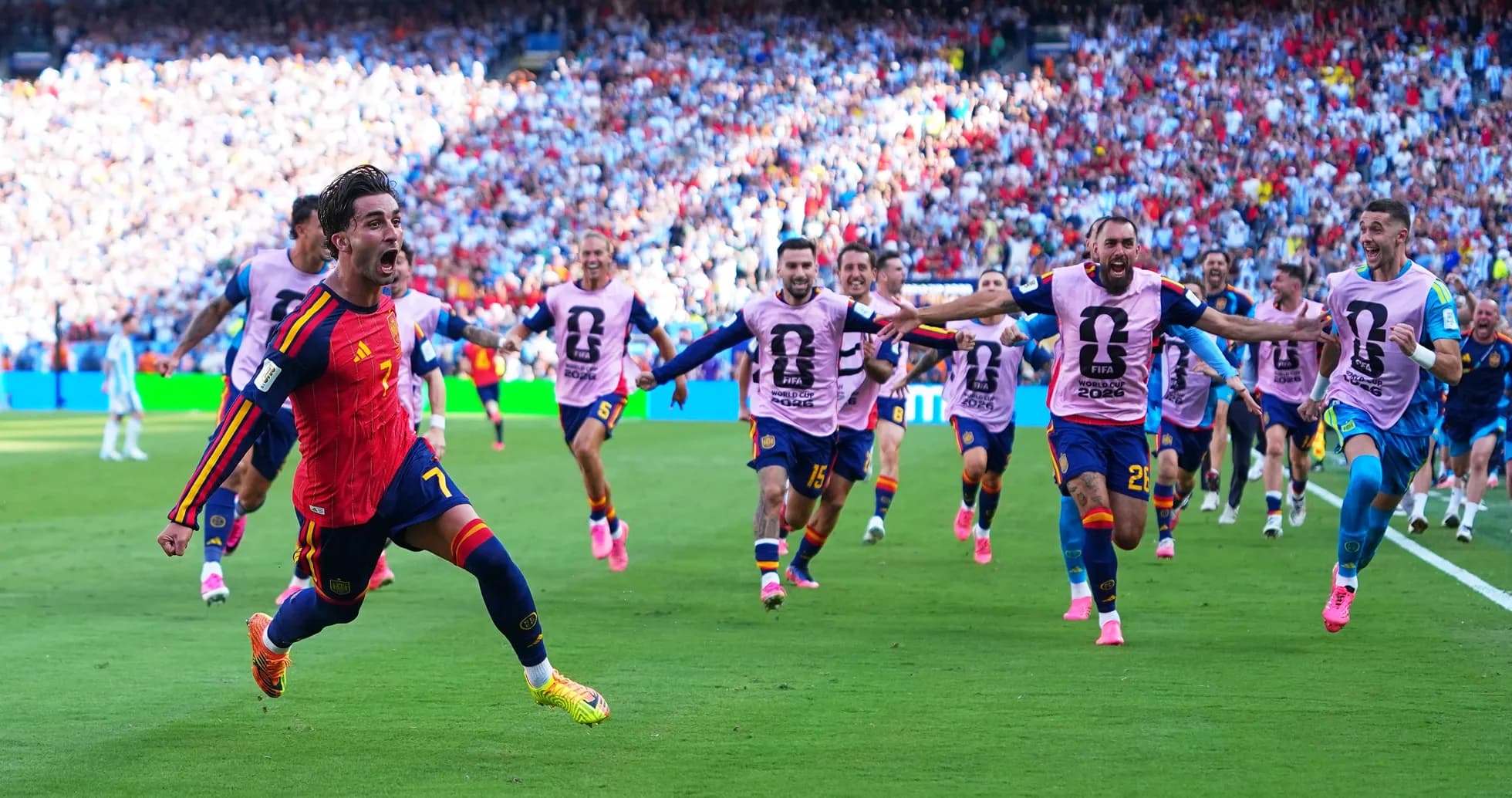
The night in Arlington closed on a surprise. Under the lights of Dallas Stadium, Spain dismantled a France side that had looked close to unstoppable across this World Cup, winning 2–0 in the Semi-finals and imposing their collective control over a game that was supposed to belong to the individual brilliance of Kylian Mbappé.
This was not a meeting of outsiders. Both sides had marched through their groups as leaders: France topped Group I with 9 points and a goal difference of 8, scoring 10 and conceding 2 in 3 matches. Spain did the same in Group H, taking 7 points with a goal difference of 5, scoring 5 and conceding none. Across the tournament, France had been devastating going forward, with 16 goals in total and an overall scoring average of 2.3 per match, while conceding only 4 at 0.6 per game. Spain arrived with a different kind of perfection: 13 goals in total, 1.9 per match, but an almost surreal defensive record — just 1 goal conceded overall at 0.1 per game, and 6 clean sheets in 7 fixtures.
In that context, the 2–0 scoreline felt like the triumph of structure over chaos. The formations told the story before a ball was kicked. Didier Deschamps stayed loyal to the 4-2-3-1 that France had used in all 7 of their matches, a shape built to unleash Mbappé, Ousmane Dembélé and the creativity of Michael Olise behind a lone striker’s reference point. Luis de la Fuente answered with Spain’s now-familiar 4-1-2-3, with Rodri as the single pivot, Dani Olmo and Fabián Ruiz as dual interiors, and a fluid front three of Lamine Yamal, Mikel Oyarzabal and Álex Baena.
The tactical void that France never really solved lay in the double pivot. Aurélien Tchouaméni and Adrien Rabiot were asked to do everything: protect the centre-backs Dayot Upamecano and William Saliba, connect quickly to the three attacking midfielders, and cover the half-spaces when Dembélé and Barcola pressed high. Against a Spain side that lives on positional overloads, that proved too much.
Rodri, sitting at the base of Spain’s midfield, quietly dictated the tempo. His job was both simple and brutal: block the lanes into Mbappé’s feet, then recycle possession into the advanced midfielders. With Spain’s season-long defensive record — just 1 goal conceded overall and a flawless away record without a single goal against — the plan was to starve France’s stars of transition moments. It worked. France, a side that had scored 11 times at home in this World Cup with a home average of 2.2 goals per game, were reduced to isolated bursts rather than sustained waves.
At the other end, the “Hunter vs Shield” duel between Mbappé and Spain’s back four became a study in collective defending. Mbappé came into the Semi-finals as the tournament’s most lethal forward: 8 goals and 3 assists in 7 appearances, with 30 shots and 19 on target. Yet against Spain, the shield was not just Aymeric Laporte and Pau Cubarsí Paredes, it was the entire structure in front of Unai Simón. The centre-backs held a relatively high line, trusting Rodri to block the vertical passes and the full-backs Pedro Porro and Marc Cucurella to compress the wide channels quickly whenever Dembélé or Barcola received.
Spain’s defensive numbers this World Cup back up what unfolded: 6 clean sheets in total, with their away defensive average an immaculate 0.0 goals conceded. France, by contrast, had shown a tiny crack in the armour: 4 goals conceded overall, with 3 of those at home at 0.6 per match. In Dallas, those margins became decisive. When Spain stepped into France’s half, their midfield triangle tilted aggressively. Olmo and Fabián Ruiz pushed high between the lines, Oyarzabal drifted inside to become a second striker, and Yamal held the width to stretch Lucas Digne and Jules Koundé.
The “Engine Room” battle between Olmo and Fabián on one side and Tchouaméni and Rabiot on the other was where the Semi-final tilted. Olmo, already one of Spain’s creative hubs, found pockets between France’s midfield and defence, forcing Upamecano and Saliba to step out and open corridors for diagonal runs. Fabián, with his left foot and calm under pressure, repeatedly broke France’s first line, turning what should have been a compact 4-2-3-1 block into a disjointed press.
Further up, the duel on France’s right flank was brutal. Dembélé, who had been one of the tournament’s most productive wide players with 5 goals and 2 assists, was pinned back more often than he would have liked by Cucurella’s aggressive positioning and Yamal’s constant threat in behind. Every time France tried to spring Dembélé into space, Spain’s structure shifted: Rodri slid across, Porro narrowed, and Spain’s midfield line closed the central passing lane into Mbappé.
France’s own attacking DNA — 16 goals in total, a biggest away win of 4–1, and only 1 match in which they failed to score — met its antithesis in Spain’s control. Even France’s penalty profile hinted at fragility: 2 penalties in total, 1 scored and 1 missed, a 50.00% conversion rate that underlined a slight vulnerability in high-pressure execution. Spain, by contrast, had scored their only penalty of the tournament with a perfect 100.00% record and no misses.
Discipline also played its quiet part. France’s yellow cards tended to cluster late, with 33.33% of their bookings coming between 76–90 minutes and another 16.67% in added time up to 105 minutes. Spain’s bookings peaked even later, with 50.00% of their yellows arriving between 91–105 minutes. In a Semi-final where Spain led from the first half — going into the break 1–0 up — that pattern favoured them: France were the side more likely to chase, stretch and take risks in the closing stages, exactly when their disciplinary profile was at its most fragile.
In the end, the statistical prognosis that had quietly followed Spain through the tournament played out on the pitch. A side conceding 0.1 goals per match overall, with 6 clean sheets and no defeats in 7 fixtures, simply suffocated a France team that had relied on explosive forward talent and a 2.3-goal scoring average. The Semi-final became less about individual moments and more about a system that refused to break.
Following this result, the narrative of this World Cup shifts. France, who had swept their group and ridden the goals of Mbappé and Dembélé, ran into a ceiling built from Spanish control, Rodri’s metronome, and a back line that turned even the most dangerous attacker in the tournament into a peripheral figure. Spain’s 2–0 win in Dallas was not just a scoreline; it was the logical conclusion of a campaign defined by defensive perfection and collective clarity.