The Italy job is vacant again, and this time the crisis feels deeper than a simple change of coach.
Gennaro Gattuso walked away after the World Cup play-off final defeat to Bosnia-Herzegovina, a result that completed a disastrous qualifying campaign and left Italian football staring at another four-year exile from the biggest stage. The dugout is empty, the federation is in turmoil, and one name keeps circling above the wreckage: Antonio Conte.
Conte, the Proven Firefighter
Conte knows this seat better than most. He took charge of the Azzurri in 2014 after leaving Juventus, inheriting a national team that had lost its edge and identity. Across 25 matches, he dragged Italy back into contention, winning 14 and losing just five. His Italy were not always pretty, but they were ferociously competitive.
His reign ended in heartbreak at Euro 2016, a penalty shootout defeat to Germany in the quarter-finals that felt more like a heroic exit than a failure. Since then, his club résumé has only strengthened his aura: a Premier League title with Chelsea, a Scudetto with Inter, and most recently, leading Napoli to the Serie A crown last season after a turbulent spell at Tottenham.
So when the Azzurri bench opens up in the middle of an institutional meltdown, it is no surprise that Conte is immediately pushed to the front of the conversation. Italy need a strong hand. Conte is the archetype.
De Laurentiis: “I’d Say Yes – But He Won’t Go Into Chaos”
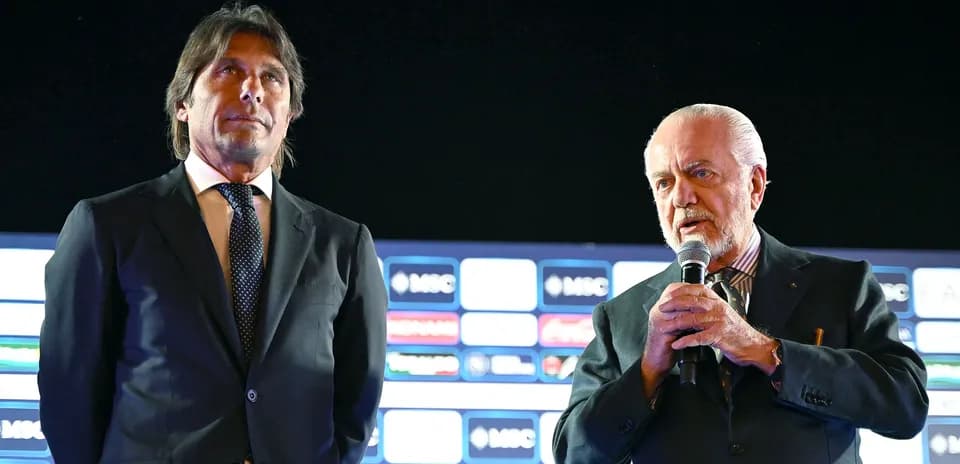
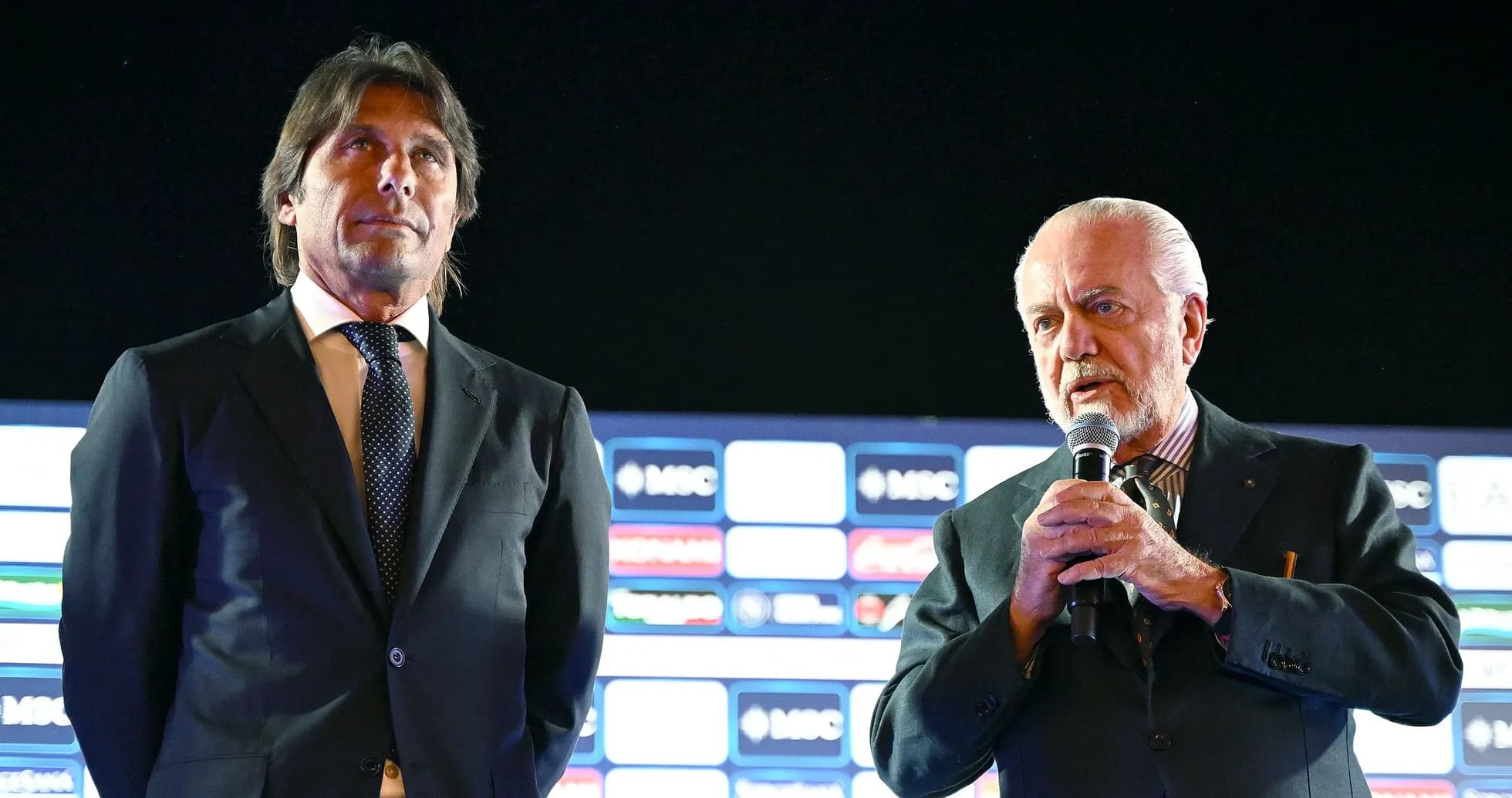
Napoli president Aurelio De Laurentiis knows exactly what kind of figure he has on his bench. Speaking to CalcioNapoli24, he did not try to shut down the rumours. He did the opposite.
On the idea of Conte taking the national team job, De Laurentiis said Napoli would be ready to let him go for such a prestigious role, provided the approach is direct and serious. In his view, the door is open.
But he quickly turned the spotlight on the federation, and his tone hardened. De Laurentiis expressed deep scepticism about the current state of the FIGC, questioning whether Conte would ever accept working at the head of what he described as something “completely disorganised.” In his eyes, Conte is too intelligent to walk into a structure that, right now, lacks what he called a “serious interlocutor.”
The message was clear: the problem is not Conte, nor Napoli’s willingness. The problem is Rome.
A Third World Cup Miss and a Federation in Pieces
The pressure around the FIGC has been simmering for years. Bosnia-Herzegovina simply turned up the heat to boiling point.
Italy’s qualifying campaign began under Luciano Spalletti and already looked fragile. Gattuso arrived late, tasked with salvaging a sinking ship. He oversaw eight matches, won six, and briefly gave the impression of a revival. Then came the decisive blows: a damaging defeat to Norway in the final group game and the collapse against Bosnia-Herzegovina in the play-off final.
Two losses. One enormous cost.
Italy will now miss the World Cup in 2018, 2022 and 2026. For a four-time world champion, that is not a blip. It is an indictment. The fallout has been brutal. FIGC president Gabriele Gravina stepped down, followed by delegation chief Gianluigi Buffon, a legend now forced to watch the national team stumble from the outside.
The technical failures on the pitch have exposed the deeper rot off it. That is the landscape Conte would be walking into.
“Cinderella” Serie A and the Power Struggle
De Laurentiis has never been shy about picking fights with the establishment, and this crisis has given him a bigger stage. For him, the World Cup debacle is not just about coaches or tactics. It is about power, money and who actually runs Italian football.
He has openly called for sweeping changes at the top of the game. His preferred figure to lead the rebuild is Giovanni Malagò, the president of CONI. De Laurentiis believes Malagò is the ideal man to step in as commissioner and ultimately become FIGC president, someone capable of imposing order and vision on a system he sees as fractured.
Then came his most stinging criticism: the way Serie A clubs are treated inside the federation.
“Italian football is Serie A,” he argued, before describing the top flight as a “Cinderella” within the FIGC structure. According to De Laurentiis, Serie A holds just 18% of the federation’s power, while amateurs and players command the majority. For a league that, as he pointed out, finances the federation to the tune of around €130 million a year, he called that balance “an absurdity.”
His point cut straight to the heart of the crisis. The clubs bring the money, the visibility, the global pull. Yet in his view, they are sidelined when decisions are made about the direction of the sport.
Conte Between Two Fires
Amid all this, Conte finds himself at the crossroads of club ambition and national duty.
On one side, a Napoli project he has already turned into a title-winning machine. On the other, a national team stripped bare by repeated failure, with a federation in need of rebuilding almost from scratch. The prestige of the Azzurri shirt still matters. So does the reality of the job.
De Laurentiis has effectively thrown the ball into the FIGC’s half. If they want Conte, they must prove they are no longer “completely disorganised.” They must show there is a serious plan, a serious structure, a serious interlocutor.
Until then, the most coveted Italian coach of his generation will watch the chaos from a distance, while a once-dominant football nation tries to decide what – and who – it wants to be.