2026 World Cup: The Final Stages and Key Contenders
The 2026 World Cup has hit the sharp end. Seven nations left, six from Europe, and one stubborn, familiar outlier carrying an entire continent on its shoulders: Argentina.
The margins are now brutal. One bad night, one loose touch, and four years of planning vanish. Yet amid the jeopardy, the usual giants are still towering over the bracket, flanked by a couple of dangerous outsiders who have already ripped up expectations.
Here’s where the tournament stands – and the men shaping its destiny.
France: Mbappé chasing history
France are already waiting in the semi-finals, calm in the eye of the storm after a controlled 2-0 win over Morocco. Two titles already in the cabinet, now they are stalking a historic hat-trick. The stage is set: AT&T Stadium in Dallas, Tuesday, July 14. The only missing detail is the opponent – Spain or Belgium.
Les Bleus have barely broken stride. They walked through Group I with a ruthless ease: Senegal beaten 3-1, Iraq brushed aside 3-0, Norway hit for four in a 4-1 statement. The knockout rounds have been just as cold-blooded. Sweden dismantled 3-0, Paraguay edged 1-0, Morocco handled without panic.
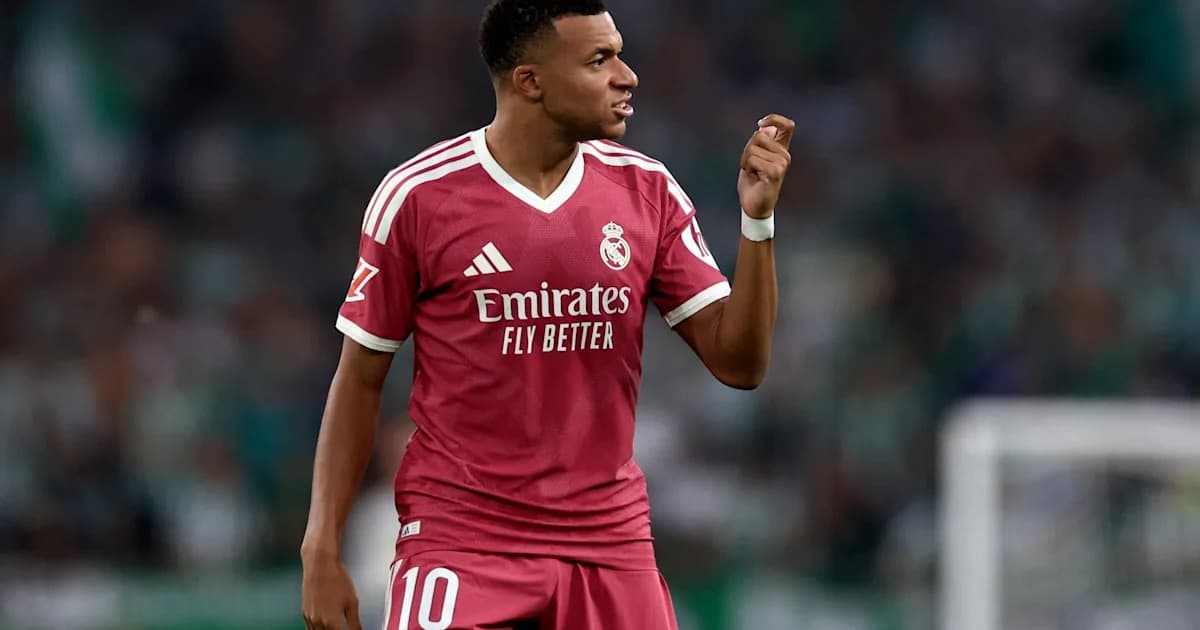
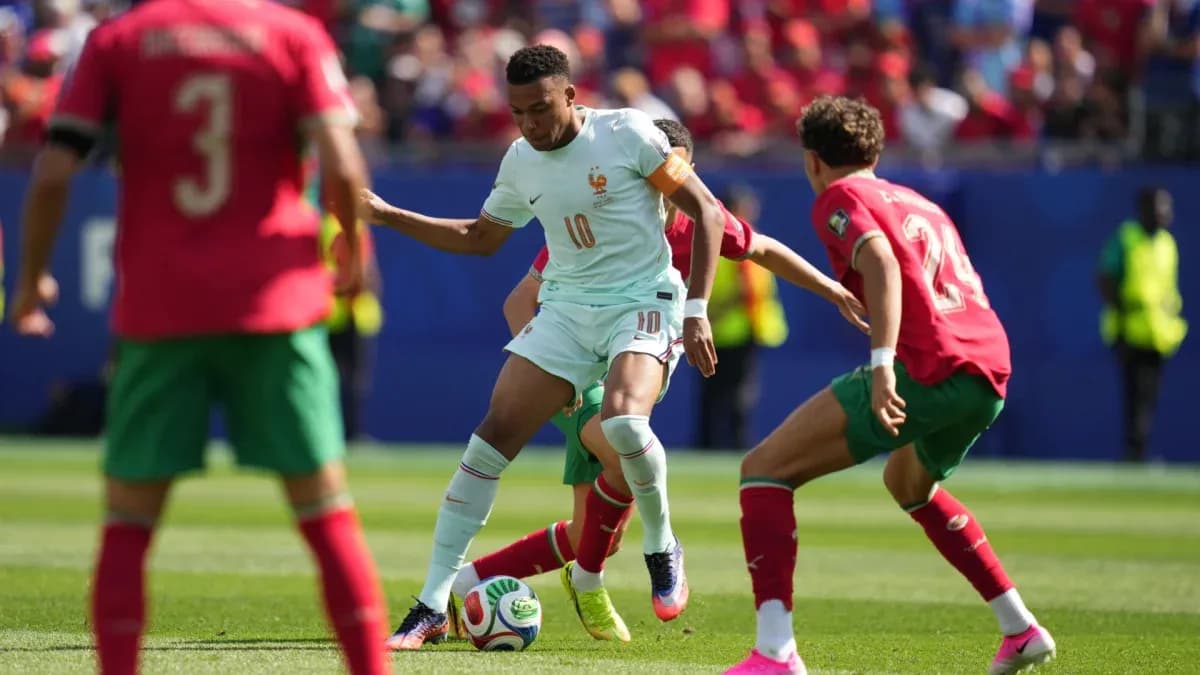
At the centre of it all, as always, Kylian Mbappé. Captain, talisman, France’s all-time top scorer, and the most feared forward at this World Cup. He still bows verbally to Lionel Messi and Cristiano Ronaldo, but on the pitch he is right on their heels, step for step. In this tournament he leads the scoring charts and has drawn level with Messi on 17 non-penalty World Cup goals across his career.
An ankle scare against Morocco sent a shiver through French hearts, but Mbappé has insisted he is “completely fine.” If that holds, France will walk into Dallas with their superstar ready to tilt the tournament again.
Spain: La Roja’s new era, Yamal’s stage
Spain arrive in Los Angeles with the look of a team that has rediscovered its edge. La Roja meet Belgium in the quarter-finals on Friday, July 10, at SoFi Stadium, hunting a return to the summit they last reached in 2010.
Their route has been steady, composed, occasionally explosive. A cagey 0-0 with Cabo Verde opened Group H, then came the authority: Saudi Arabia swept aside 4-0, Uruguay beaten 1-0. In the knockouts, Austria were outclassed 3-0, Portugal squeezed out 1-0 in a heavyweight Iberian clash.
Now comes Belgium, and with it the promise of a semi-final showdown with France.
Lamine Yamal is the name crackling through Spanish conversations. Just 18, the right winger came into the tournament still nursing a hamstring problem, openly admitting he was building back toward full 90-minute sharpness. Even at partial throttle, his previous performances for club and country have already marked him out as the next great Spanish attacking talent. Every minute he gets now feels like an investment in both this World Cup and the next decade.
Belgium: Lukaku against the noise
Belgium were supposed to be fading from the elite conversation. Then they walked into a hostile, expectant U.S. crowd and tore up the script.
The 4-1 demolition of Team USA on American soil shook the bracket. It came after FIFA suspended Folarin Balogun’s red card to allow the U.S. star to play, a decision Donald Trump publicly claimed a hand in. The narrative swirled around the hosts. Belgium ignored it, scored four, and sent the Americans home.
De Rode Duivels had warmed up slowly in Group E: a 1-1 draw with Egypt, a 0-0 stalemate with Iran, then a 5-1 thrashing of New Zealand that hinted at something sharper. In the knockouts they edged Senegal 3-2, then ripped through the U.S. 4-1, announcing themselves as more than just a nostalgia act.
Even after that, coach Rudi Garcia insisted “everyone thinks [they] are going home.” That skepticism has become fuel. At the heart of their response stands Romelu Lukaku, Belgium’s all-time top scorer, who has turned the role of substitute into a personal record book. A goal in each of his last three World Cup games, all off the bench, has made him the first player ever to score as a substitute in four separate World Cup matches.
He has carried that burden before. Now, one more surge from Lukaku could drag Belgium into a semi-final date with France and silence the doubters in one sweep.
Norway: Haaland and the dream run
For Norway, every step now is uncharted territory. Their quarter-final against England on Saturday, July 11, at Hard Rock Stadium in Miami is already the greatest World Cup moment in the nation’s history. They are not treating it as a ceiling.
Landslaget shared Group I with France and took a heavy 4-1 defeat in that meeting. It could have broken them. Instead, they responded. Iraq beaten 4-1, Senegal edged 3-2, and with it a place in the knockouts. There, they eliminated Côte d’Ivoire 2-1 and then stunned Brazil by the same scoreline, ripping open a path to Miami.
Erling Haaland is the obvious headline, but that does not make it any less true. Norway’s all-time top scorer has numbers that almost defy belief: 60 goals in 53 senior international games, the 60th coming in that win over Côte d’Ivoire. Messi and Ronaldo needed more than double the appearances to hit the same mark.
He shrugs off comparisons. The goals do not. With Haaland in this form, Norway walk into their biggest match in generations with genuine menace, not just hope.
England: Kane’s finishing line
England, The Three Lions, know this part of the script all too well: a talented squad, a deep run, the weight of a nation pressing on every pass. Norway await on Saturday, with a semi-final against Argentina or Switzerland the prize.
Their journey through Group L had its bumps but never truly threatened to derail them. Croatia were beaten 4-2 in a wild opener, Ghana held them to 0-0, Panama then dispatched 2-0. In the knockouts, England squeezed past the Democratic Republic of Congo 2-1 and edged Mexico 3-2 in a thriller.
Harry Kane remains the compass. Captain, England’s all-time top scorer, and still a relentless finisher at this level. Six goals so far at this World Cup put him fourth on the scoring list behind Mbappé, Messi, and Haaland – not bad company. He already owns a Golden Boot from 2018, and he has been on a staggering run this season, with 73 goals in the 2025-26 campaign to date, a tally bettered only by Messi’s legendary 2011-12 haul.
England are three wins from the trophy. Kane’s boot will decide whether that distance closes or stays tantalisingly out of reach yet again.
Argentina: Messi against the continent
Argentina walk into Arrowhead Stadium on Saturday as the last non-European team standing. No. 1 in the FIFA rankings, reigning powerhouse of the global game, and led by a figure who long ago crossed the line from star to symbol.
La Albiceleste have been relentless. Group J saw Algeria beaten 3-0, Austria 2-0, Jordan 3-1. In the knockouts, Cabo Verde fell 3-2, then Egypt by the same 3-2 scoreline. It has not all been serene, but Argentina have always found the extra gear when needed.
At the centre, as ever, Lionel Messi. Head coach, captain, Argentina’s all-time top scorer, and for many the greatest footballer the sport has ever seen. The records keep tumbling: first to win the World Cup’s Golden Ball twice, now the outright leading scorer in World Cup history with 21 goals, and the first player to score in eight consecutive World Cup matches.
He is 39 now, yet still bending tournaments to his will. With Europe closing in from every side, Messi stands as South America’s last answer.
Switzerland: Xhaka’s defiance
Switzerland know exactly what they are walking into. Argentina, Messi, the No. 1 team in the world, a quarter-final on American soil. Nati are ranked 19th. On paper, this is a mismatch.
The tournament itself tells a different story.
Group B began with a 1-1 draw against Qatar, then a 4-1 dismantling of Bosnia and Herzegovina, followed by a 2-1 win over Canada. In the knockouts, Switzerland handled Algeria 2-0 and then survived a nerve-shredding duel with Colombia, a 0-0 stalemate settled 4-3 on penalties.
Now comes the mountain.
Granit Xhaka will lead them up it. The captain and defensive midfielder has already driven Switzerland to their first World Cup quarter-final since 1954, dictating games from deep, breaking opposition lines, and feeding the attackers who finish the moves he starts. He is not in the team to score, but his influence on everything around the ball is unmistakable.
The Swiss players have been open about their excitement at facing Messi. That admiration will last only until the first whistle. After that, Xhaka and his teammates will try to turn the biggest name in football into the biggest scalp of their footballing lives.
Seven teams left. One trophy. The giants are circling, the underdogs are snarling, and the next 90 minutes for each of them could define a generation.