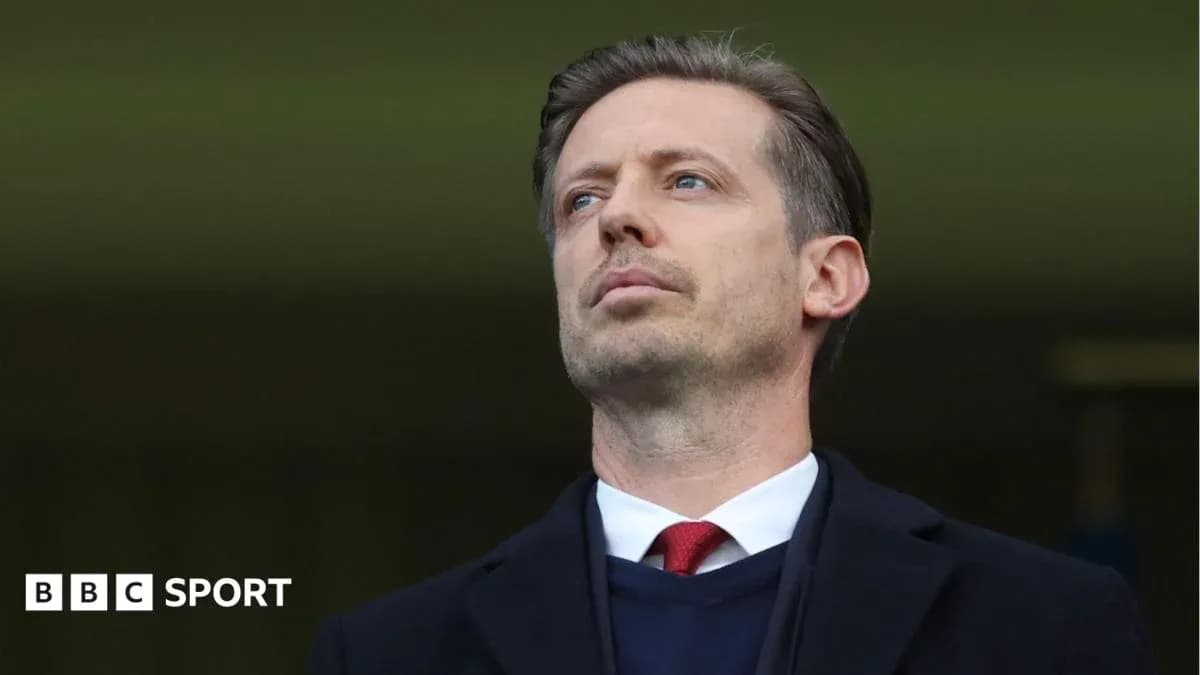
Michael Edwards Exits FSG Role as Liverpool Faces Crucial Transition
Michael Edwards, the architect behind much of Liverpool’s modern-era rebuild, has stepped away from his position as chief executive of football at Fenway Sports Group, drawing a sharp line under a second stint of influence at Anfield’s power base.
FSG framed the move as part of a “planned transition following the completion of key strategic priorities”, but group president Mike Gordon admitted the ownership are “naturally disappointed” to see him go. Disappointed is understandable. Edwards leaves two years into a three-year contract, at a time when Liverpool are already navigating life after Jurgen Klopp and now also without Mohamed Salah.
He had returned in March 2024, not to sit inside the club’s day‑to‑day structure, but to oversee the broader shift from the Klopp era and help shape FSG’s wider football portfolio. The idea was clear: Edwards would be the strategist, the long-term architect, the man who once again joined the dots between data, recruitment and identity.
This time, the project never quite became the one originally imagined.
In his statement, Edwards stressed that Liverpool remain “in a strong position, with outstanding people, a clear direction and the foundations in place for continued success.” He spoke of the excitement he felt at the chance to guide the club through “an important period of transition” and to influence FSG’s “wider football ambitions”. Then came the admission that matters had shifted. The broader project, he said, “ultimately evolved differently to how we had originally envisaged,” though he underlined his pride in the options presented to ownership for the future.
That line lingers. Something changed in the vision. The work, by his own account, was thorough; the path chosen by FSG appears to have moved away from the original blueprint.
For Liverpool, the timing tightens the pressure. Salah, the defining forward of the Klopp years, has gone at the end of the last campaign. Replacing his goals, his aura, and the certainty he brought on the right flank is already a daunting task. Now the club must also navigate that challenge without the man whose transfer acumen once underpinned their rise.
Speculation is growing around sporting director Richard Hughes, too. His future has become another question mark at a moment when clarity in recruitment and long-term planning is priceless. The possibility of change in that position only adds to the sense of a hierarchy in flux.
Edwards’ legacy at Liverpool is not built on statements but on signings. First arriving in 2011 and rising to sporting director in 2016, he became the quiet constant behind the scenes as Klopp’s side took shape. Salah, Roberto Firmino, Sadio Mane, Andy Robertson, Virgil van Dijk: those deals defined an era. They turned potential into a Champions League-winning, title-winning core and ended a 30-year wait for a top-flight crown in 2020.
Those years cemented Edwards’ reputation as one of the game’s sharpest operators in the market, a figure who married analytics with instinct and understood when to buy, when to sell, and when to walk away.
Now he walks away again, this time from the ownership’s top football role rather than the club itself. Liverpool stand at another turning point, with a new manager bedding in, their long-time talisman gone and the architect of their greatest modern rebuild stepping aside.
The foundations he talks about are there. The question is who will be trusted to build the next version on top of them.