Washington Spirit W Defeats Racing Louisville W 1–0 in NWSL Match
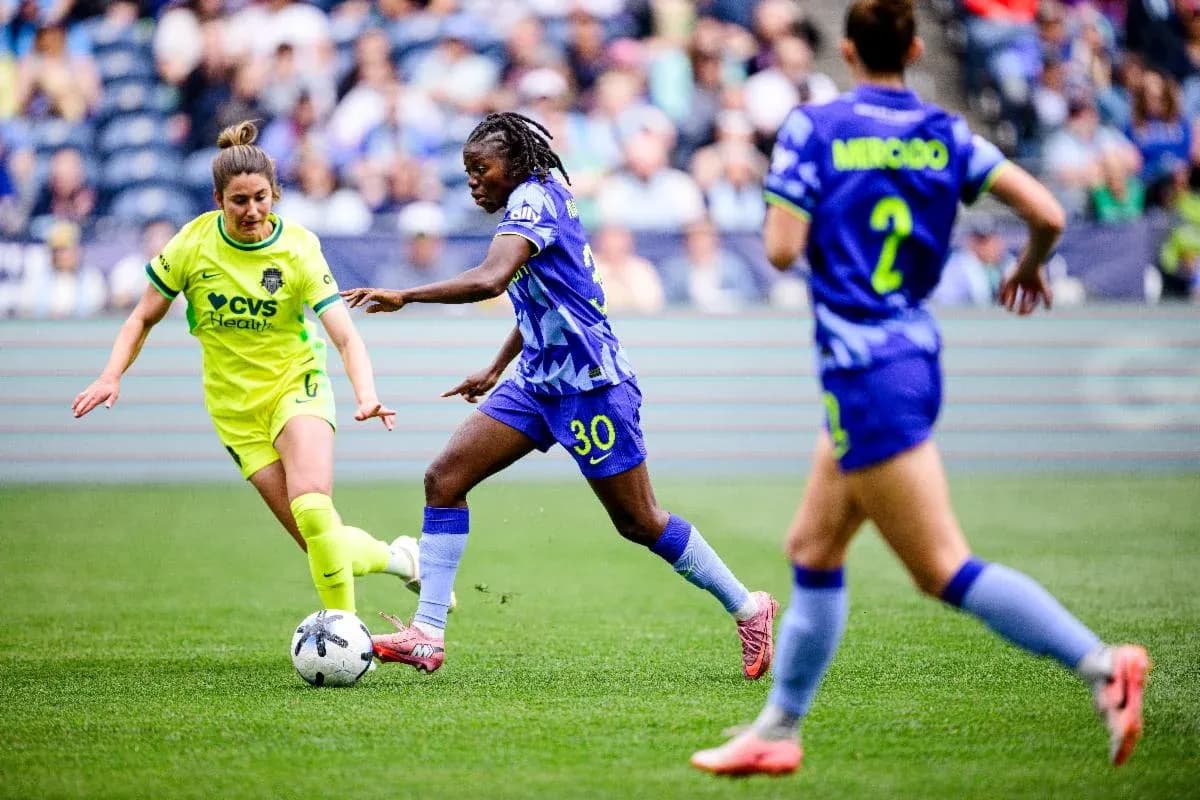
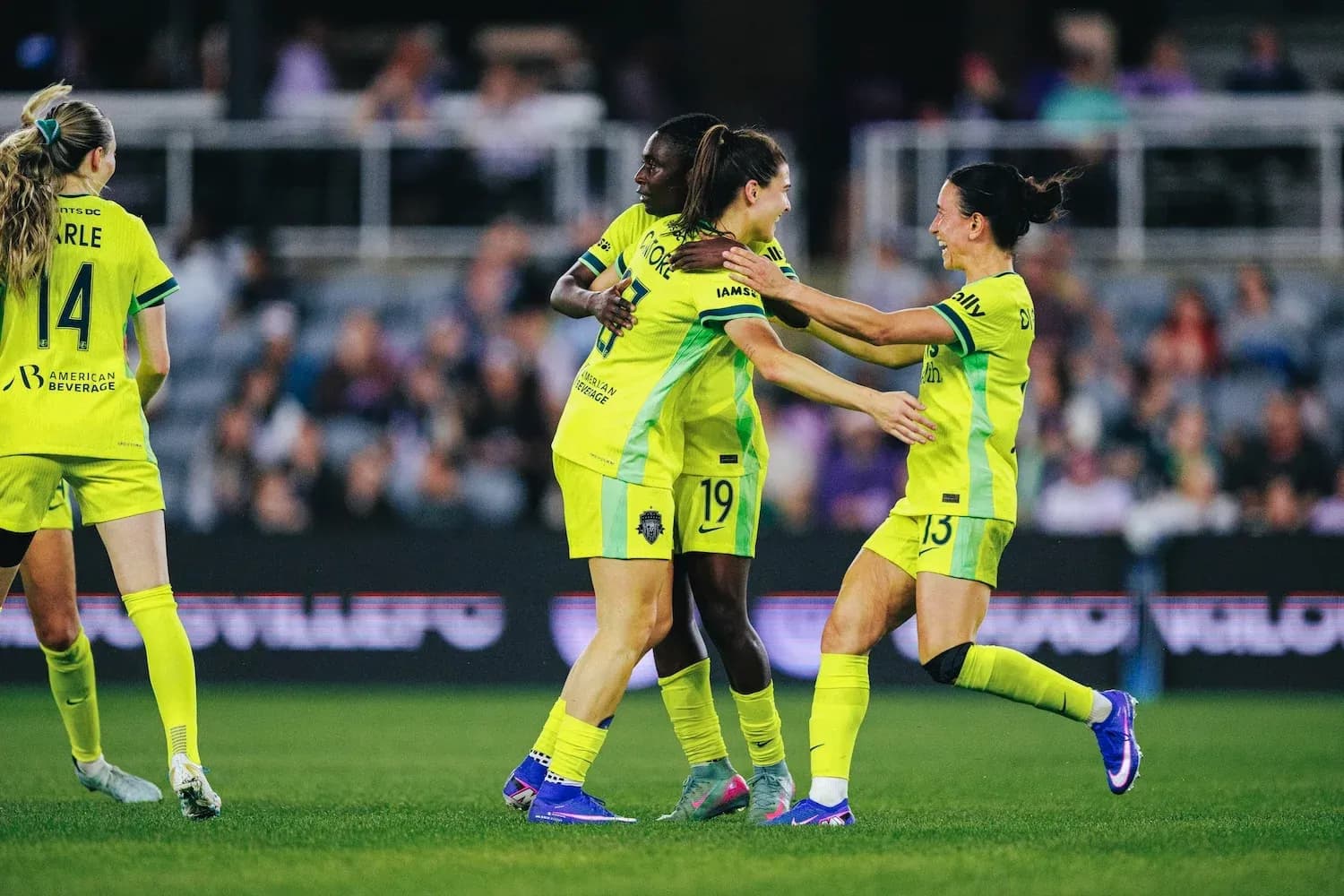
Washington Spirit W edged Racing Louisville W 1–0 at Audi Field in NWSL Group Stage play, a match defined more by Washington’s territorial dominance than by clear chances. With 66% possession and an 8–2 shot advantage, Adrian Gonzalez’s side controlled both the tempo and the geography of the game. Trinity Rodman’s 15' strike, assisted by Sofia Cantore, provided the only goal, and Spirit then managed the game with a compact 4-2-3-1 that denied Louisville counter-attacking space. Beverly Yanez’s Louisville never solved Washington’s press or found consistent progression, registering only two shots and no corners in 90 minutes.
I. Executive Summary
By halftime, Washington led 1–0 and had already imposed their structure: high possession, territorial control, and a clear right-sided threat via Rodman and Lucia Di Guglielmo. The second half became a management exercise, with Gonzalez turning to his bench early to lock down central spaces. Louisville’s response was to rotate their attacking line, but the visitors’ 4-2-3-1 remained sterile, struggling to connect midfield to Sarah Weber. The match finished 1–0, a scoreline that arguably flattered Louisville given the flow of play and shot volume, even if Washington rarely turned dominance into high-volume shots on target.
II. Scoring Sequence & Disciplinary Log
The disciplinary tone was set early. In the 10', Trinity Rodman (Washington Spirit W, shirt 2) received a yellow card for a foul, the only booking for the hosts. It did not blunt her attacking impact.
Five minutes later, Washington struck. At 15', Rodman converted the decisive goal for Washington Spirit W, finishing a move assisted by Sofia Cantore (shirt 27). With no VAR intervention listed, the goal stood immediately and shaped the tactical complexion: Washington could now control, Louisville had to chase.
Racing Louisville’s only card came in the 34', when Kayla Fischer (shirt 9) was booked for a foul, reflecting Louisville’s difficulty in containing Washington’s rotations between lines.
The second half was defined by substitutions rather than further disciplinary action. At 46', Louisville made their first adjustment: Katie O'Kane (IN, shirt 20) came on for Sarah Weber (OUT, shirt 42), a straight swap at centre-forward aimed at refreshing the pressing and hold-up play. Simultaneously, Washington reshaped their back line and midfield: Gabrielle Carle (IN, 14) came on for Lucia Di Guglielmo (OUT, 13), and Paige Metayer (IN, 26) replaced left-back Kate Wiesner (OUT, 6), signaling a shift towards more defensive solidity and flexibility in wide zones.
At 63', Washington introduced Andi Sullivan (IN, 12) for Rebeca Bernal (OUT, 4), adding a more natural holding midfielder to protect the lead. Louisville responded with a double change at 66': Ella Hase (IN, 6) came on for Makenna Morris (OUT, 4), and Courtney Petersen (IN, 8) replaced Quincy McMahon (OUT, 12), freshening both full-back and wide midfield roles.
Louisville’s final push came at 78', when Audrey McKeen (IN, 88) replaced Emma Sears (OUT, 13), and Taylor White (IN, 11) came on for Macey Hodge (OUT, 10), adding more attacking profiles but without changing the underlying structure. Washington’s last adjustments were offensive legs for defensive work: at 80', Claudia Martínez (IN, 11) replaced Rosemonde Kouassi (OUT, 19), and at 87', Gift Monday (IN, 21) came on for Cantore (OUT, 27), providing fresh pressing and counter outlets.
No further cards or goals followed, and the match closed at 1–0.
III. Tactical Breakdown & Personnel
Washington Spirit W lined up in a 4-2-3-1 with Sandy MacIver (18) in goal; a back four of Wiesner (6), Esme Morgan (24), Tara McKeown (9), and Di Guglielmo (13); a double pivot of Bernal (4) and Hal Hershfelt (17); Kouassi (19), Leicy Santos (10), and Rodman (2) supporting Cantore (27) up front. The structure was possession-oriented, reflected in 271 total passes and an 82% completion rate. The double pivot gave Washington a stable rest-defense platform, allowing full-backs to advance and wingers to occupy high, wide positions.
The key attacking pattern was right-sided: Rodman held wide or attacked the half-space, with Di Guglielmo overlapping and Santos drifting across to overload. The goal at 15' embodied this: Cantore’s movement and link play allowed Rodman to receive in an advanced area and finish. Washington’s 8 total shots, 3 on target, undersell the degree of territorial control; they spent long stretches circulating the ball in Louisville’s half, forcing the visitors into a low-to-mid block.
Defensively, Washington were largely untroubled. MacIver registered 0 saves, which speaks more to Louisville’s inability to generate shots (only 2 total, 1 on target) than to keeper involvement. Morgan and McKeown controlled central zones well, stepping into midfield when needed. After the break, the introduction of Carle and Metayer effectively converted the left side into a more conservative lane, with Metayer able to tuck inside as a third central midfielder in defensive phases. Sullivan’s arrival at 63' further solidified the spine, turning the double pivot into a more classic single holder with Hershfelt able to shuttle.
Racing Louisville W mirrored Washington’s 4-2-3-1: Jordyn Bloomer (24) in goal; a back four of McMahon (12), Arin Wright (3), Elisabeth Charlotte Jean (5), and Lauren Milliet (2); Hodge (10) and Taylor Flint (26) as the double pivot; Sears (13), Fischer (9), and Morris (4) supporting Weber (42). Louisville’s problem was progression. With only 141 passes at 67% accuracy and no corners, they struggled to exit their half cleanly. The double pivot was pinned deep, and Weber was often isolated against two centre-backs.
Bloomer’s 2 saves were important in keeping the scoreline narrow, especially given Washington’s shot advantage. However, Louisville’s defensive structure was largely reactive: the back four sat deep, the wingers were forced into long defensive runs, and pressing triggers were inconsistent. Yanez’s second-half substitutions aimed to inject energy and width (Hase, Petersen, McKeen, White), but the underlying issue—lack of central progression and inability to break Washington’s midfield line—remained unresolved.
IV. The Statistical Verdict
The raw numbers underline Washington’s control. Spirit’s 66% possession, 271 passes at 82% accuracy, and 8–2 shot advantage (3–1 shots on target) are consistent with a side dictating tempo and territory. Despite this, the margin remained a single goal, partly because Washington’s shot quality and final-third ruthlessness did not fully match their buildup dominance. With no expected goals data provided, we rely on volume and territorial indicators, which clearly favor the hosts.
Defensively, Washington’s index on the day was excellent: 0 saves required from MacIver, only 2 shots conceded, 0 corners against, and just 6 fouls committed despite sustained pressure in advanced areas. Louisville, by contrast, committed 7 fouls and took 1 yellow card, with 2 saves from Bloomer and no attacking set-piece platform. Card totals finished level at 1–1, but the match never tipped into ill-discipline; rather, it was a controlled, professional home performance where Washington’s structure and in-possession control comfortably outweighed Louisville’s sporadic, low-volume threat.