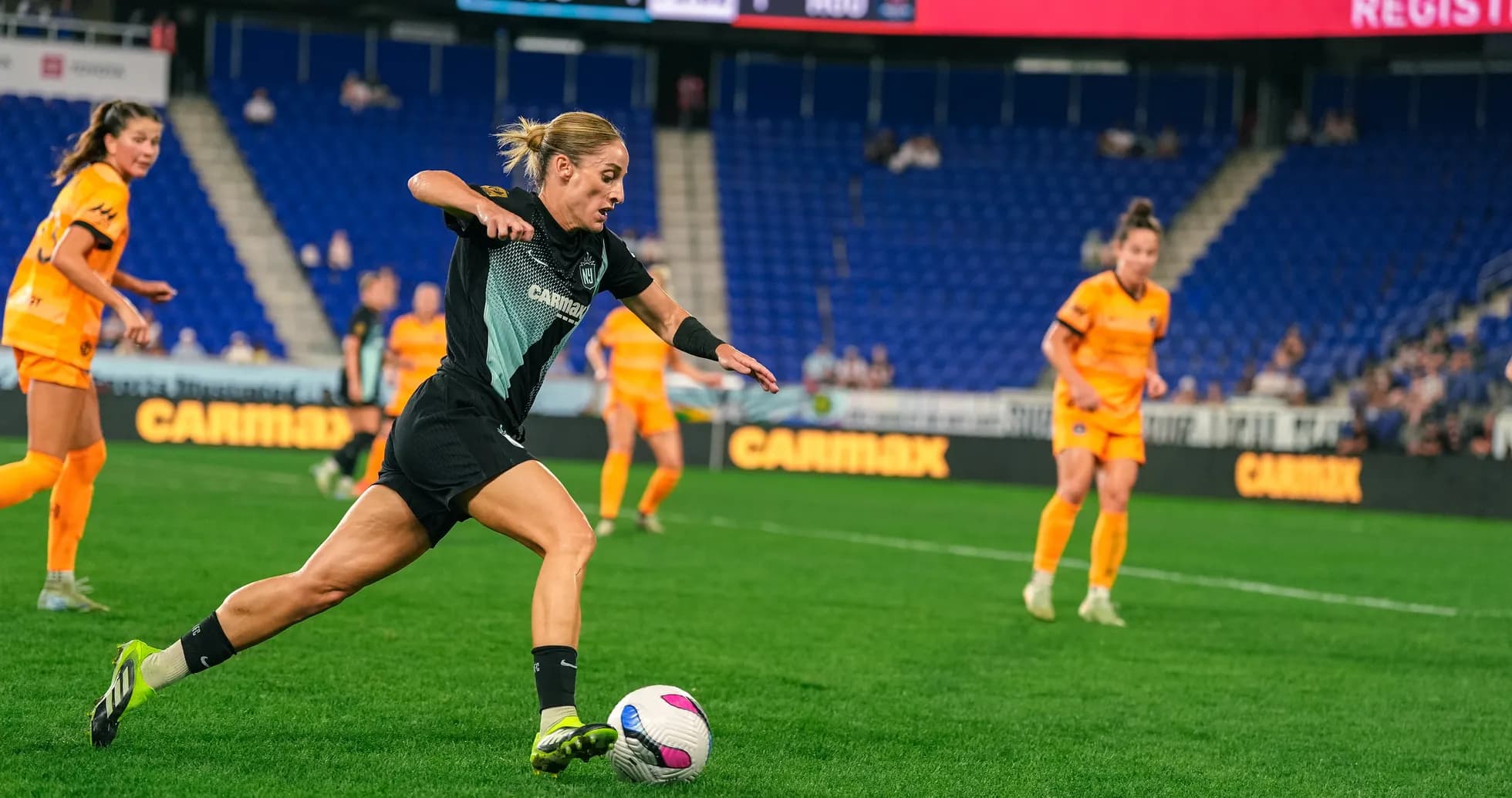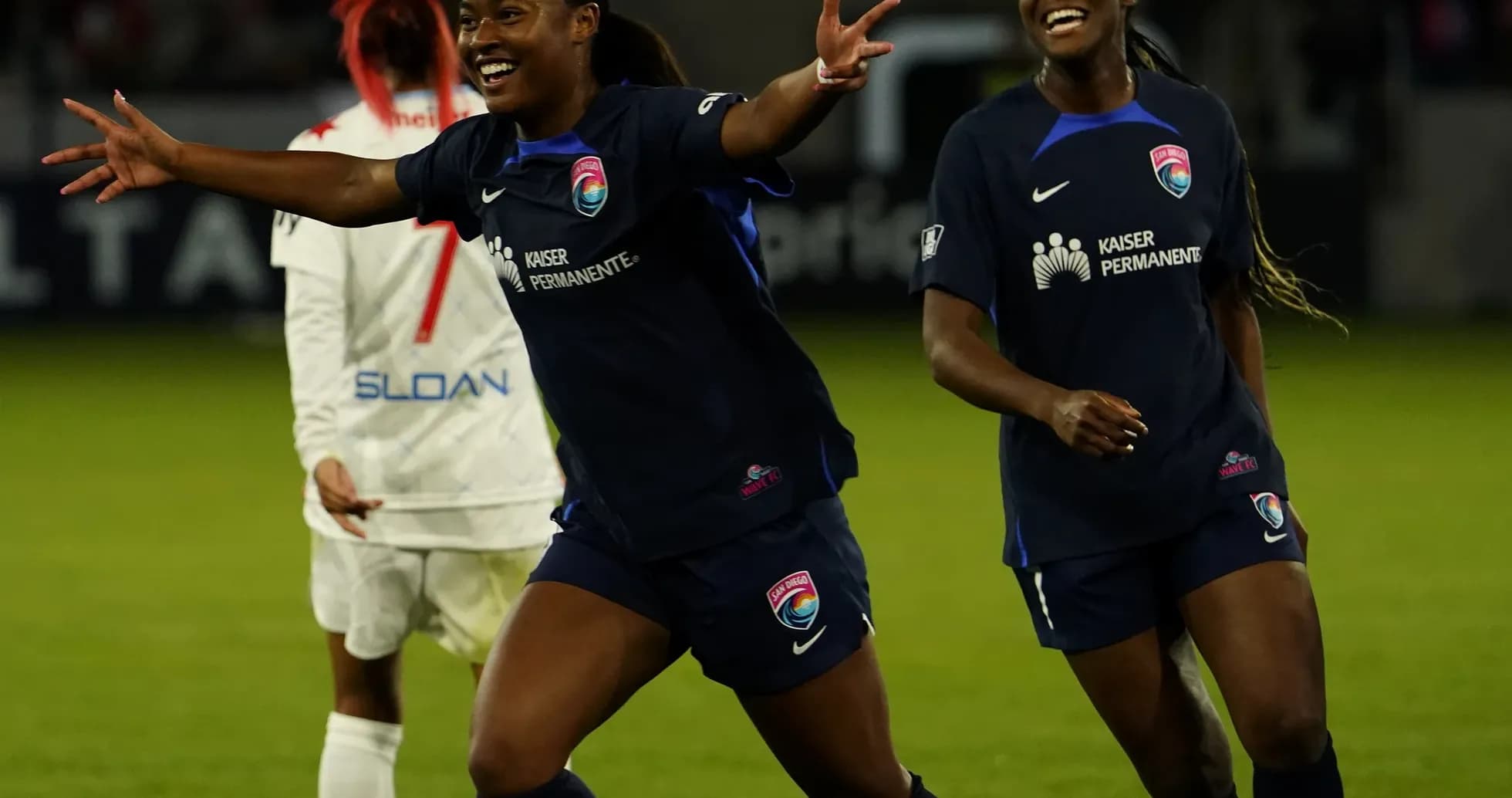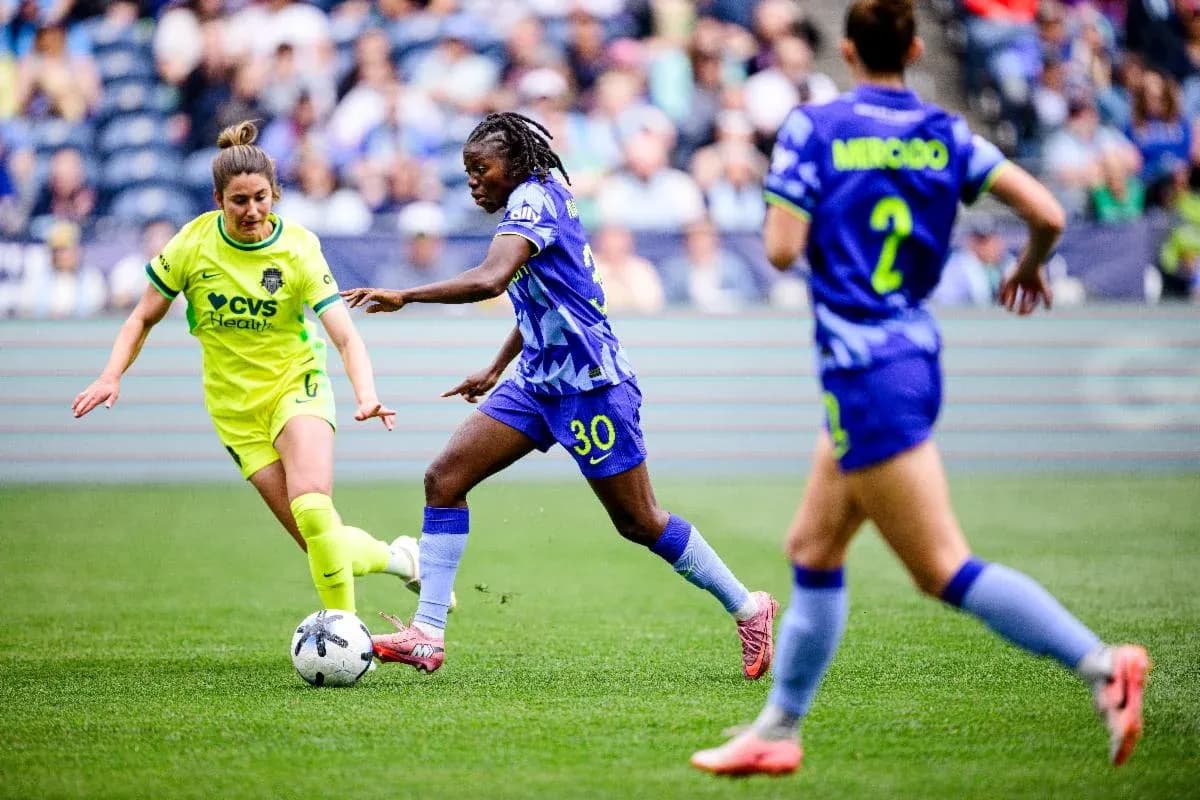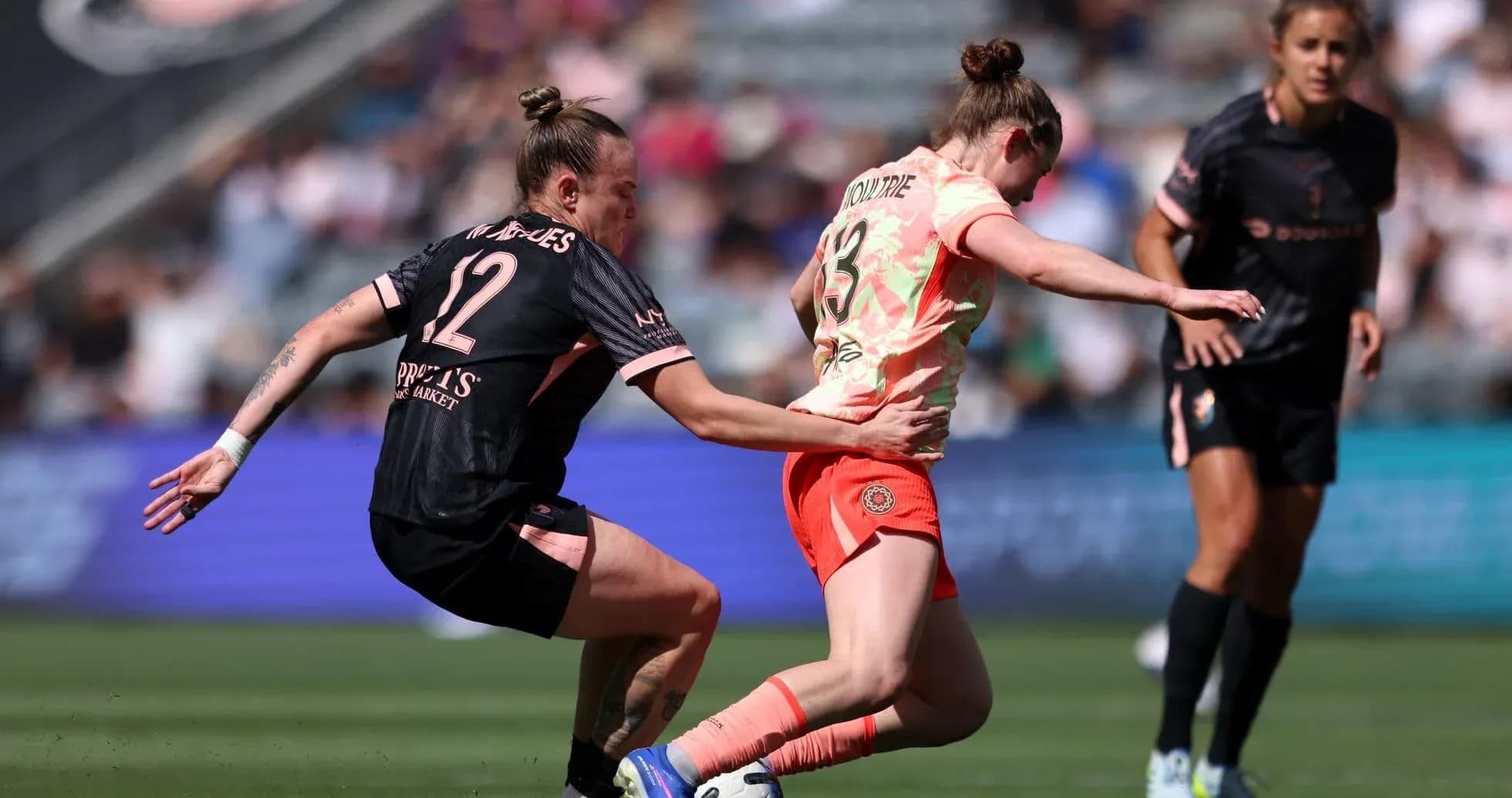
Boston Legacy W vs North Carolina Courage W: Tactical Analysis of 2–2 Draw
Boston Legacy W and North Carolina Courage W played out a 2–2 draw at Gillette Stadium in an NWSL Women group-stage fixture that split neatly into two distinct tactical phases. The hosts’ aggressive 3-4-3 and early verticality produced a 2–0 lead by the 13th minute, which they carried into halftime. After the interval, the Courage’s 4-3-3 finally translated their territorial edge into penetration, with two second-half goals restoring parity. Possession was narrowly in North Carolina’s favour (52–48), and their superior passing accuracy (82% to 76%) underpinned a methodical comeback against a Boston side that faded physically and structurally as the game progressed.
Boston’s scoring sequence was built on direct, early exploitation of wide channels. At 5', Alba Caño, starting as the right-sided midfielder in the 3-4-3, opened the scoring for Boston Legacy W, finishing a move assisted by right forward Nichelle Prince. The pattern repeated in principle if not in exact zone eight minutes later: at 13', Samantha Rose Smith struck Boston’s second, again with Prince providing the assist. Both goals reflected Boston’s intent to attack quickly into space, using Prince’s mobility to destabilise North Carolina’s back four before the midfield line could recover.
The disciplinary and event log then shifted momentum. The first card arrived at 49', when Cortnee Vine received a yellow card for a foul, signalling North Carolina’s higher pressing and increased physicality after the break. Just four minutes later, at 53', the Courage halved the deficit through Dani Weatherholt, who pushed forward from left-back to score unassisted, a clear indicator of the visitors’ fullbacks being released to overload Boston’s wide midfielders. The pressure continued, and at 55' Shinomi Koyama was booked for a foul, another by-product of North Carolina’s aggressive counter-press.
At 60', Mak Lind reshaped his front line: E. Ijeh (OUT) made way as Hannah Betfort (IN) came on, while Vine (OUT) was replaced by Chioma Okafor (IN). These twin substitutions freshened the Courage attack and set the stage for the equaliser. Boston responded at 65', when Amanda Gutierres (OUT) was replaced by Chloe Ricketts (IN), a move aimed at injecting energy into central midfield.
The hosts’ frustration surfaced at 69', with Aissata Traore booked for a foul, reflecting Boston’s increasing struggle to contain transitions. North Carolina’s pressure finally yielded the leveller at 76', when Ashley Sanchez converted from an assist by right-back Ryan Williams, who had advanced high to deliver from the flank. Boston then attempted to stabilise defensively: at 84', Laís Araújo (OUT) was replaced by Laurel Ansbrow (IN), and at 85' Traore (OUT) made way for Amanda Allen (IN), shifting the front line. In added time, at 90+3', Smith (OUT) was replaced by Bianca St Georges (IN), giving Boston fresh legs up front. The final card of the match came at 90+6', with Okafor booked for a foul, underlining how North Carolina’s late push remained on the edge of the referee’s tolerance. There were no red cards, and no VAR interventions are recorded.
Structural Overview
Structurally, Boston’s 3-4-3 was front-loaded for the first half. Casey Murphy operated behind a back three of Emerson Elgin (right), Laís Araújo (central), and Jorelyn Carabalí (left). The wide midfield pairing of Alba Caño (right) and Annie Karich (left) had dual roles: provide width in possession and track North Carolina’s advanced fullbacks. Inside them, Josefine Hasbo and Gutierres formed a central box pivot, tasked with connecting quickly to the front three of Prince (right), Traore (central), and Smith (left).
This setup worked early because Boston played vertically and avoided prolonged build-up. With only three total shots (all inside the box, two on target and both goals), their attack was ruthlessly efficient but also low-volume. Once the Courage adjusted their pressing angles, Boston’s limited passing volume (184 total passes, 139 accurate) and modest 76% completion rate meant they struggled to sustain possession, especially under the second-half press.
North Carolina’s Approach
North Carolina’s 4-3-3 was more possession-oriented from the outset. Kailen Sheridan, despite not registering a save in the data, functioned as a distributor behind a back four of Williams and Weatherholt as fullbacks, with Uno Shiragaki and Maycee Bell as the central pairing. The midfield three of Manaka Matsukubo, Koyama, and Riley Jackson sought to create triangles around Boston’s double pivot, gradually pulling the home side’s midfield out of shape.
The Courage’s front three—Vine, Ijeh, and Sanchez—initially struggled to generate clear chances, reflected in zero shots on target in the final stats despite scoring twice; this likely indicates data capture issues on the shot-on-goal metric rather than true on-pitch reality, but must be reported as is. However, their positional play improved markedly after halftime. Weatherholt’s goal at 53' came from her stepping into the half-space vacated by Boston’s wide midfielder, while Sanchez’s equaliser at 76' was the direct product of Williams’ overlapping run, facilitated by Boston’s tiring wing structure.
Substitutions further tilted the tactical balance. Betfort and Okafor gave North Carolina renewed vertical threat and physicality in the channels, pinning Boston’s wide defenders deeper. Boston’s own changes—Ricketts into midfield, then Ansbrow into the back line and Allen plus St Georges up front—were reactive, aimed at shoring up defensive zones and chasing transitional moments rather than reasserting control.
Statistical Summary
Statistically, the verdict underlines a game where North Carolina’s structure and ball circulation outlasted Boston’s early surge. The Courage edged possession 52–48 and attempted more passes (193 vs 184), with a clear advantage in passing accuracy (82% vs 76%). They also produced more total shots (5 vs 3) and more blocked efforts (2 vs 0), indicating sustained territorial pressure, even if the recorded “shots on goal” column (0–2) does not align intuitively with a 2–2 scoreline. Fouls were modest but telling: North Carolina committed 5 to Boston’s 3, aligning with their higher-intensity press and the three yellow cards they accumulated (Vine 49', Koyama 55', Okafor 90+6') compared with Boston’s single booking (Traore 69').
With no xG or goalkeeper save data provided, the clearest quantitative takeaway is efficiency versus control. Boston converted both of their recorded shots on target and all three of their shots came from inside the box, but their attacking volume collapsed after the early blitz. North Carolina, by contrast, used their superior Overall Form indicators—possession share, passing accuracy, and shot volume—to grind their way back, even as the Defensive Index in terms of disciplinary control tilted slightly against them. The 2–2 final score fairly reflects a match where Boston’s early tactical execution was matched, then neutralised, by North Carolina’s sustained structural superiority.