Vinicius Junior's Challenge After Real Madrid's European Exit
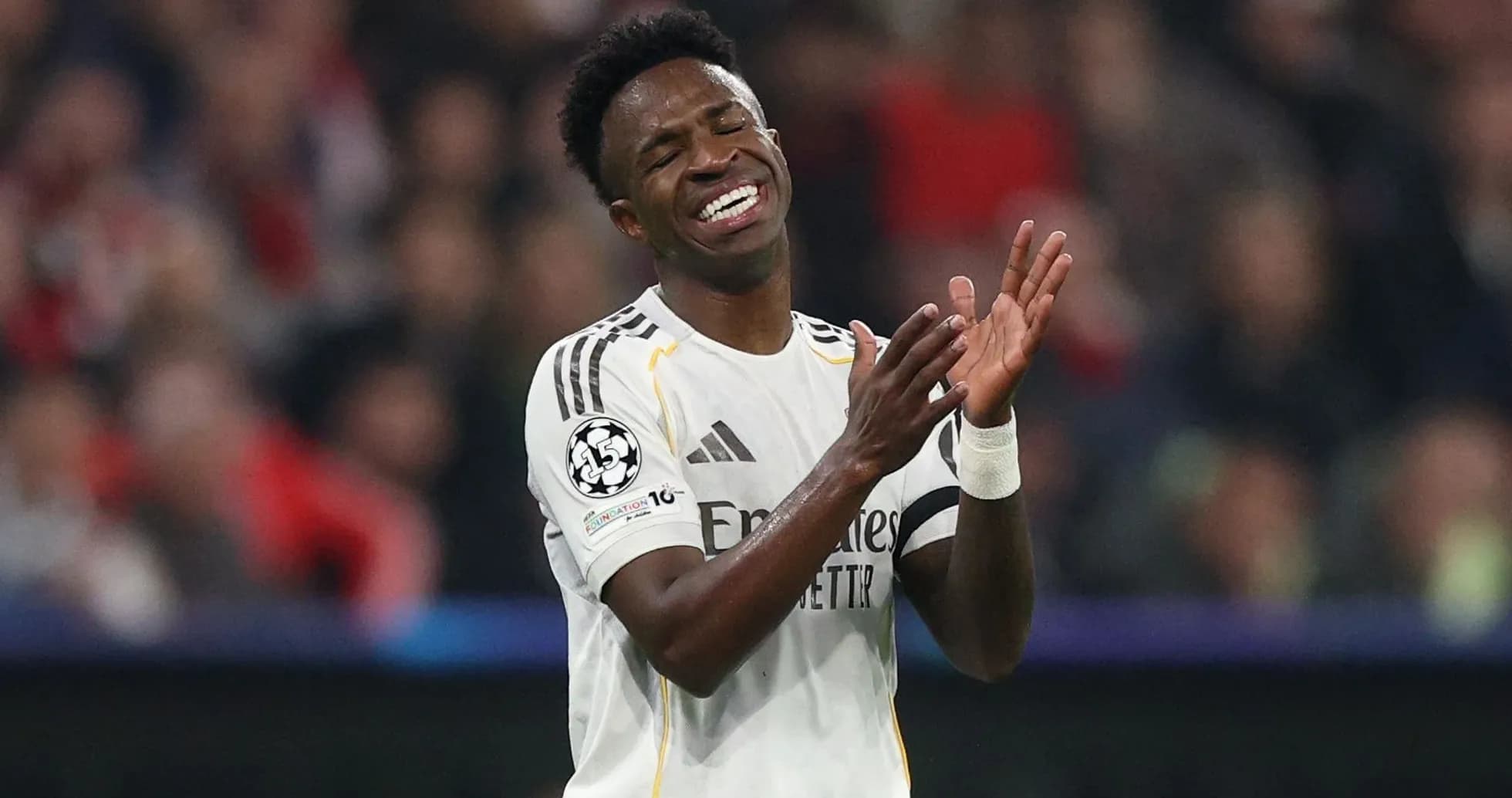
In the bowels of a German stadium, long after Real Madrid’s European dream had been ripped apart, Vinicius Junior was still there.
The 15-time European champions had just been knocked out in a wild 4-3 defeat, a result that sealed a 6-4 aggregate exit and left a stunned dressing room to file quietly onto the team bus. Most of the squad were already on their way to the airport, the night’s damage done, the inquest underway.
Vinicius couldn’t go with them.
Selected for a random anti-doping test after playing the full match, the Brazilian remained behind as officials followed protocol to the letter. What is usually a routine post-match obligation dragged on, the procedure taking longer than the club expected. At some point, the logistics team made the call: the main bus would leave. Their star forward would follow later by car.
No statements, no drama, just the cold machinery of football regulation moving into place on a night already heavy with frustration.
This is the other side of elite football. When the whistle goes, the spectacle ends, but the controls do not. Under FIFA’s strict anti-doping rules, no player can simply skip a test because the team schedule is tight or the mood is sour. The system is designed precisely to be non-negotiable.
The stakes are brutal. Athletes found guilty of using performance-enhancing drugs can be removed from the game for months, years, or for life. If a player is judged to have taken a banned substance deliberately to gain an advantage, a four-year suspension is the standard starting point. Even in cases ruled unintentional, a two-year ban from all football activities is a very real threat.
And it is not just about what is in a player’s system. The regulatory net is far wider.
A ban can arrive not only for a positive test, but for failing to comply with the process itself: ignoring a doping officer’s instructions, refusing to submit to control, or providing inaccurate whereabouts information. FIFA also targets the supply chain and the shadows around it – trafficking of substances, encouraging others to break the rules, or interfering with the administrative process. Those offences often attract the harshest punishment of all: lifetime exclusion.
On this night, there was no suggestion of wrongdoing, only the reminder that these controls sit permanently in the background of the modern game. Even for a player of Vinicius’s stature, there are no shortcuts out of that room.
Now his challenge shifts from a sterile testing area back to the pitch.
Madrid must turn their attention to La Liga, where the margin for error is shrinking fast. Deportivo Alaves visit the Spanish capital on Tuesday, and the league table leaves no room for self-pity. Seven games remain. The gap to leaders Barcelona stands at nine points. Every dropped point from here tightens the noose around their domestic ambitions.
In that context, Vinicius’s importance only grows. He remains the live wire in Madrid’s attack, the player who can change the rhythm of a match with a single surge, a feint, a finish. After the chaos and disappointment in Munich, the club needs his response as much as his talent.
The European campaign is over. The scrutiny isn’t. How Vinicius channels the frustration of that long night in Germany into Madrid’s run-in will help decide whether this season ends with a fight for the title – or with the unthinkable prospect of a trophyless year at the Bernabéu.