USA vs Belgium: World Cup 2026 Knockout Clash
Knockout tension returns as USA and Belgium step into the glare of World Cup elimination football at Lumen Field on 7 July 2026, a Round of 16 clash loaded with history and contrasting momentum. USA arrive buoyed by goals and belief after a free-scoring group stage, while Belgium carry the weight of expectation as group winners who have not yet tasted defeat. For both, the path to immortality in 2026 either opens here—or ends abruptly under the floodlights.
Season Context
For USA, the group phase was a statement of attacking intent: 8 goals scored and 4 conceded across 3 matches (goal difference +4) yielded 6 points and top spot in Group D. With 2 wins and 1 defeat from those 3 games, USA showed they can both blow teams away and survive defensive scares, underlining why they sit first in their group with such a healthy scoring record (8 goals in 3 matches).
Belgium’s route from Group G was more controlled but just as effective. Unbeaten with 1 win and 2 draws in 3 matches, they collected 5 points while scoring 6 and conceding only 2 (goal difference +4). That balance between productivity and defensive stability has them first in their group, suggesting a side that manages game states well and rarely loses control (only 2 goals conceded in 3 matches).
Form & Momentum
USA’s form line of WLWW paints the picture of a team that has responded impressively to setbacks. Over their 3 group matches, they averaged roughly 2.7 goals scored and 1.3 goals conceded per game (8 for, 4 against, 3 played), an aggressive profile that justifies calling them an adventurous attacking side (2.7 goals scored per match). The single defeat in that WLWW run hints at defensive vulnerability, but also at resilience, with USA bouncing back to win their next outings.
Belgium come in with the form string WWDD, a sequence that underlines both their threat and their resilience (unbeaten in 3 group matches with 6 goals scored and 2 conceded). Averaging about 2.0 goals scored and 0.7 conceded per game (6 for, 2 against, 3 played), Belgium look more controlled than explosive, but their ability to avoid defeat while maintaining a positive goal difference (+4) suggests a side comfortable in tight, tactical contests.
Head-to-Head Patterns
Recent history between these nations tilts towards Belgium, even if the sample is small and mixed across competitions. The most recent meeting came on 28 March 2026, when Belgium beat USA 5-2 in Atlanta in a match listed under Friendlies; as a Club Friendly-equivalent competition, it sits outside the competitive narrative but still lingers in the American memory as a defensive warning. In true tournament football, the last clash was on 1 July 2014, when Belgium edged USA 2-1 after extra time in the World Cup Round of 16, a night that etched this matchup into knockout folklore. Within the prediction data, the head-to-head model leans entirely towards Belgium, with a h2h index reading 0% for USA and 100% for Belgium, reinforcing the sense that the Europeans have historically had the upper hand.
Tactical Preview
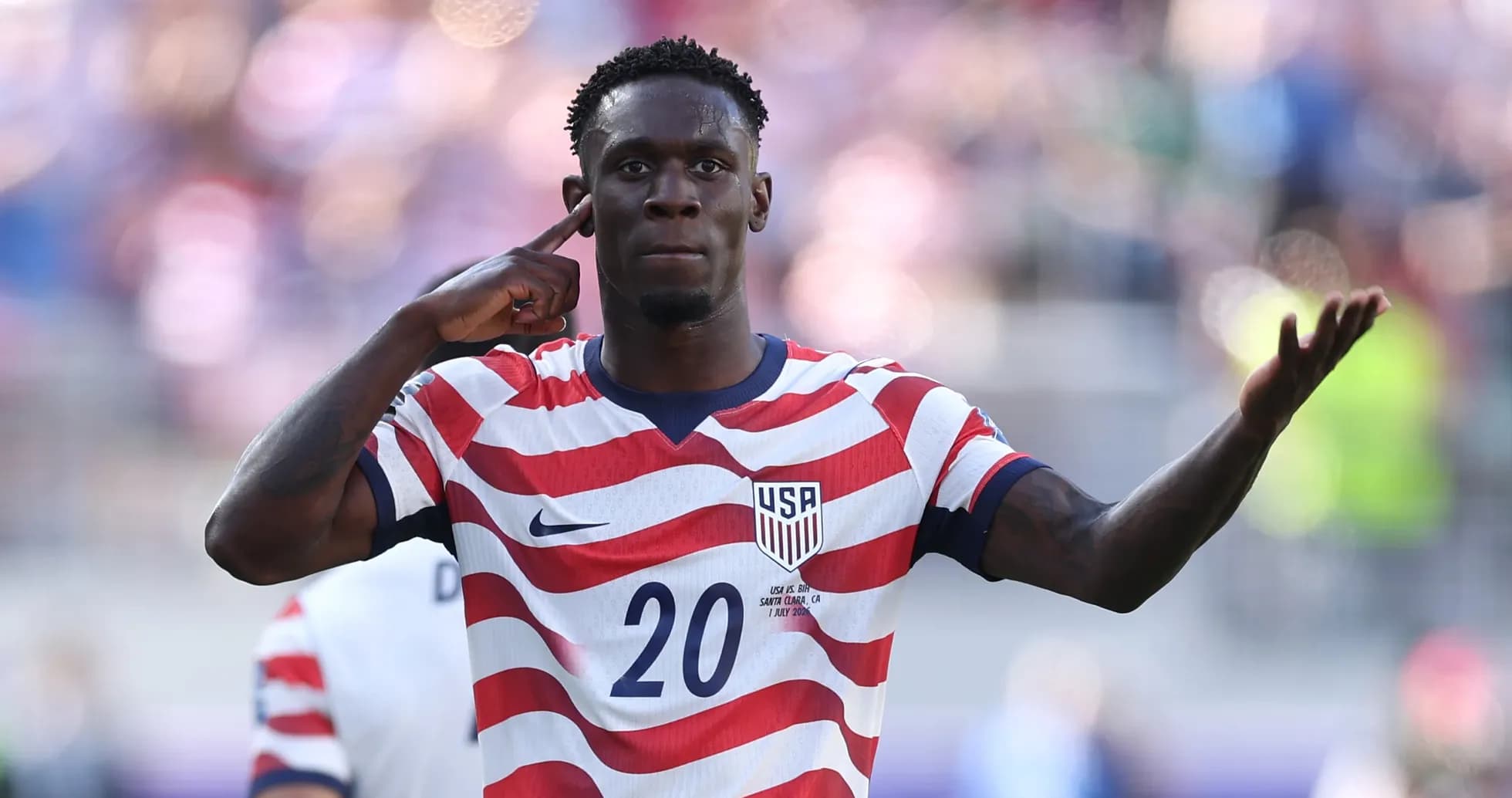
USA’s statistical profile suggests a bold, front-foot approach. Their team statistics show 10 goals scored and 4 conceded across 4 matches in the wider sample, but the locked standings numbers for this World Cup group stage—8 scored, 4 conceded in 3—confirm that high-tempo, high-risk identity (2.7 goals scored and 1.3 conceded per group game). USA have alternated between 4-3-3 (used 2 times), 4-2-3-1 (1 time), and 3-5-2 (1 time), hinting at tactical flexibility built around width and an aggressive front line. The presence of attackers like F. Balogun, who has 3 goals from 3 appearances and a 7.23 rating, adds a cutting edge, though his red card and missing-fixture status for this very tie removes a key weapon just when knockout margins are thinnest (F. Balogun: 3 goals, 8 shots, 4 on target, 7 fouls drawn, 1 red card).
Without F. Balogun, USA may lean more heavily on creative midfielders such as C. Pulisic and G. Reyna, supported by wide forwards like T. Weah and B. Aaronson. The 4-3-3 and 4-2-3-1 shapes both allow those profiles to combine between the lines, but also demand discipline from midfielders like W. McKennie and T. Adams to protect a back line that has already conceded 4 in 3 group matches (1.3 goals conceded per game).
Belgium, by contrast, have been structurally consistent, using 4-2-3-1 in all 4 matches in the broader statistical sample. That system is built to maximise the influence of creative midfielders such as K. De Bruyne and Y. Tielemans, with R. Lukaku as the focal point in attack. The data shows Belgium scoring 9 and conceding 4 across 4 matches in that wider frame, matching their group-stage defensive average (1.0 goal conceded per game) but with a slightly higher attacking output (2.3 goals scored per game across 4 matches). Defensively, players like N. Ngoy have combined solid passing (148 passes at 95% accuracy) with robust defending (4 tackles, 3 interceptions), though his red card in this World Cup underlines Belgium’s own disciplinary edge.
Tactically, the duel hinges on whether USA’s flexible, high-energy structures can disrupt Belgium’s more settled 4-2-3-1. USA’s comparison indices in the prediction model show a slight overall deficit—47.4% versus Belgium’s 52.6%—but a near-even Poisson index (51% vs 49%) suggests that chance creation profiles are close. If USA can harness their attacking rhythm without F. Balogun, they can trouble a Belgium side that prefers to control rather than chase games.
Statistical Snapshot
- Competition: World Cup, season 2026 — 7 July 2026.
- Venue: Lumen Field, null.
- Prediction: Win or draw — Double chance : draw or Belgium.
- Win Probabilities: Home 10% / Draw 45% / Away 45%.
- Model: USA 47.4% — Belgium 52.6%.
Betting Verdict
The prediction model leans towards Belgium avoiding defeat, with only a 10% win probability assigned to USA and a balanced 45%/45% split between draw and Belgium victory. The comparison indices also shade towards Belgium (overall comparison index 52.6 vs 47.4), and the historical pattern in competitive play supports the idea that Belgium handle this matchup well. Odds for the match winner market are tightly clustered, with home prices ranging roughly from 2.56 to 2.81 (implied probability around 35.6–39.1%) and away prices from about 2.50 to 2.70 (implied probability around 37.0–40.0%), underlining how evenly matched the market sees this tie. Given USA’s attacking loss in F. Balogun, Belgium’s unbeaten group record (6 scored, 2 conceded in 3), and the model’s double-chance recommendation, the most data-aligned angle is to follow “Double chance: draw or Belgium” rather than picking a single-outcome winner.