Jordan Henderson's Injury Overshadows England's Thrilling Win Over Mexico
Jordan Henderson’s World Cup night lurched from jubilation to jeopardy in a matter of seconds in Mexico City.
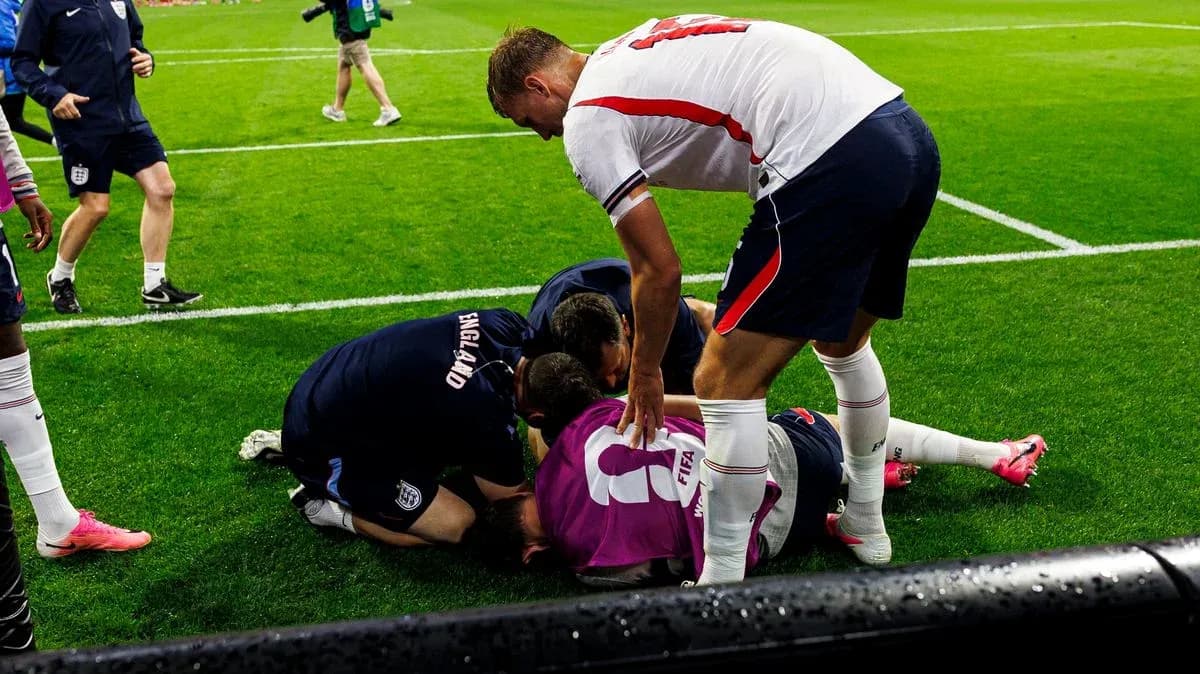
As England’s players sprinted towards the corner to celebrate a breathless 3-2 last‑16 win over Mexico, the veteran midfielder tumbled over the advertising hoardings. The mood changed instantly. Henderson stayed down, clutching his arm, and the noise inside Mexico City Stadium shifted from fury to a stunned, uneasy murmur.
Medical staff rushed to him. Oxygen was administered on the pitch. Moments later, he was lifted onto a stretcher and taken straight down the tunnel, his right arm carefully supported. For a player whose career has been built on durability and defiance, it was a brutal way to leave the stage.
Tuchel fears ‘really bad’ wrist injury
Initial whispers from the pitchside suggested it might be nothing more than a heavy fall. Thomas Tuchel quickly cut through that optimism.
The England head coach did not sugar-coat it in his post‑match interview with the BBC. The injury, he admitted, “looked really bad” and might require surgery. His tone matched the words: this was not a minor knock.
“Not good, not good,” Tuchel said. “Next thing is a right defender now with the red card, Jordan just fell over and injured his wrist, it looks really bad.”
Later, in his press conference, the German expanded slightly but stayed cautious. “He injured his wrist, he's gone to hospital, it's quite a serious injury. It doesn't fit with the night. I don't know if there will be a procedure.”
The phrase “doesn’t fit with the night” hung in the air. On a wild evening when England clung on with ten men to reach the quarter‑finals, Henderson’s injury felt like a cruel twist.
Mixed messages from the dressing room
In the immediate aftermath, even England’s players seemed unsure how serious the damage was.
Harry Kane, who had just buried what proved to be the decisive penalty, initially struck a more upbeat note. “Jordan just fell over there,” the captain said. “I think he's okay, just something to do with his arm.”
That sounded reassuring. It didn’t last.
Jude Bellingham, the driving force of England’s first‑half dominance, painted a more worrying picture. “He's in a bit bother,” the midfielder admitted, “but our medical team have it under control.”
The truth will emerge after scans and assessment at hospital, but the concern is clear. At 34, Henderson’s influence on this England squad runs far beyond his minutes on the pitch. Losing him for the rest of the tournament would strip Tuchel of one of his most trusted leaders at the very moment the stakes rise.
England bend, but refuse to break
Henderson’s injury almost overshadowed what had gone before: a chaotic, gripping World Cup tie that tested every fibre of England’s resolve.
For half an hour, they looked in complete command. Bellingham, gliding and snarling in equal measure, struck twice in quick succession to silence a ferocious Mexican crowd and put England 2-0 up. His first was all timing and technique, his second a ruthless finish that underlined why he has become the heartbeat of this side.
Mexico, though, refused to fold. Julian Quinonez slammed home from close range before the interval, and belief surged around the stands. Every England touch drew whistles. Every Mexican attack felt heavier, more urgent.
Then came the flashpoint. Early in the second half, right‑back Jarell Quansah flew into a reckless challenge. The referee went straight for red. No hesitation, no reprieve. England, already under pressure, now had to survive almost an entire half a man down in the most hostile of environments.
The response was immediate and cold‑blooded. Tuchel’s side surged forward, won a penalty, and Kane buried it with trademark certainty. A roar of defiance from the England end. A howl of fury from everywhere else.
The game refused to settle. Raul Jimenez converted a penalty of his own to drag Mexico back to 3-2 and crank English nerves to breaking point. The final minutes were a siege: crosses hurled into the box, tackles flying, bodies thrown in front of everything.
England did not buckle.
“With 10 men defending how we defended our box, being clinical how we were in their box,” Bellingham said afterwards, “big pressure moments in years gone by watching as a fan, as a kid, England probably would have crumbled but we stuck together until the last second.”
He was right. This was not a polished performance. It was something more primal: survival.
Bellingham revels in the cauldron
If the match demanded character, it also demanded composure, and Bellingham supplied both.
“The atmosphere was by far the best I have played against in international football,” he said. “This country as a footballing country is magnificent.”
He spoke with a kind of admiration for the hostility. From the moment England landed, the tone was set.
“The reception we had coming off the plane, although it was hostile, it was beautiful to see how passionate one country can be about their team.”
On the pitch, that passion boiled over at times, not least around the refereeing. England bristled at several decisions, but Bellingham refused to turn the night into a blame game.
“The refereeing decisions, it is what it is. It's the World Cup and they are human too. As easy as it is to say now, they are human, we made a lot more than they did, but no worries we got through.”
His words echoed the performance: no excuses, no distractions, just a ruthless focus on the result.
Norway next – and a cloud over a leader
England now march into a quarter‑final against Norway, battle‑hardened and emboldened by surviving a storm that might have sunk previous generations.
They travel with momentum, with belief, with a sense that this team can ride out chaos and still find a way. But they may do so without one of their most experienced voices.
Henderson left Mexico City not as a jubilant survivor of a classic World Cup tie, but as an injured bystander, his wrist in the hands of doctors and fate. As England regroup and prepare for Norway, one question lingers over their camp.
Can they navigate the rest of this World Cup without the man who so often holds them together when the noise is at its loudest?