
Uli Hoeness on the State of Modern Football
Uli Hoeness has never been shy of an opinion, but even by his standards this was a broadside. In a wide-ranging conversation with FAZ, Bayern Munich’s honorary president took aim at modern football’s place in society, its saturation in the media, and the way the game is being sold to the highest bidder.
At 72, he has seen the sport from every angle: player, general manager, president, lightning rod. What he sees now troubles him.
“Sometimes I think football is taken too seriously”
Hoeness bristled at how football now sits in the daily news agenda, wedged between stories of war and crisis yet treated with the same breathless urgency.
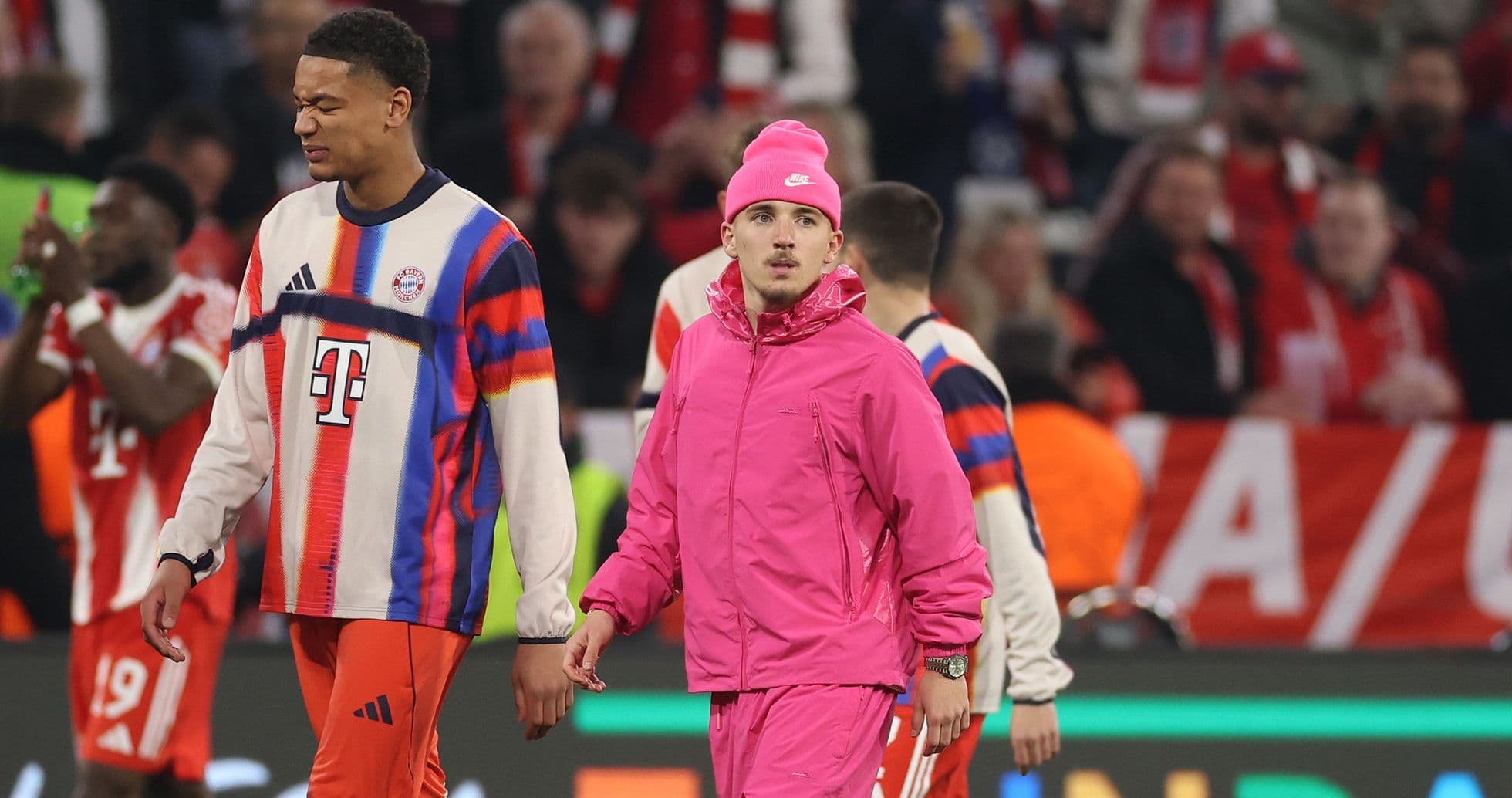
“Sometimes I think football is taken too seriously,” he said, before sketching a scene that has become all too familiar. “The news says: Iran did this, the Israelis did that, and by the way, Lennart Karl injured his muscle. All that's missing is for that to be in first place.”
For Hoeness, that juxtaposition is absurd. A muscle injury reported almost in the same tone as geopolitical flashpoints. The contrast underlines his central complaint: the game has swelled to a size that distorts its true weight in everyday life.
He links that inflation of importance to a culture in which every move, every gesture, every night out is captured, dissected, weaponised.
“You have to explain everything these days. You can hardly afford spontaneity anymore,” he said.
Then came the comparison with his own playing days, and with it a vivid snapshot of a different football world.
Oktoberfest, magic carpets and no camera phones
Hoeness’s story of Bayern’s Oktoberfest trips reads like a dispatch from another era. No social media. No camera phones. No PR plan.
“Take our Oktoberfest visit, for example. It's a publicity stunt now,” he said. “Back then, if we didn't have a game on Wednesday, we'd ask [Bayern coach] Udo Lattek if we could train on Tuesday morning so we could go to Oktoberfest on Tuesday afternoon. Then the whole team would march in.”
No curated photo ops, no club media team in tow. Just players in Munich, at Oktoberfest, staying until midnight.
“There were no mobile phone photos back then. We didn't just stay for three hours, no, we didn't go home until midnight, but before that, we'd been in almost every tent, ridden on every magic carpet. And sometimes one of us would throw up on the magic carpet.”
Today, that would be a scandal, a talking point, a viral clip.
“Today, that would be a news story,” he said. In his eyes, what used to be a harmless, human release has become a potential PR crisis. The freedom to be imperfect has been priced out of the modern game.
“I completely reject what FIFA is doing”
Hoeness’s frustration doesn’t stop with the media glare. It runs straight into the boardrooms and balance sheets shaping football’s future, and particularly into FIFA’s plans for the 2026 World Cup in the USA.
“I completely reject what FIFA is currently doing with the prices for the World Cup in the USA,” he said. “It has nothing to do with the football business as I envision it.”
For him, the danger is clear: the World Cup drifting towards the model of America’s biggest corporate spectacle.
“The World Cup final must not become like the Super Bowl,” he warned.
Hoeness then relayed a conversation that crystallised his fear. A contact told him about attending the Super Bowl as a guest in a billionaire’s box.
“He was invited to a billionaire's box. The box cost $1.5 million for that one day. For 20 people. That's $75,000 per person. Some of them didn't even watch the game. And the main attraction, of course, was the half-time show.”
In that anecdote lies his core objection. The game itself reduced to background noise, the event built around exclusivity and entertainment rather than sport. Hoeness sees FIFA nudging football down the same path with its pricing strategy for 2026.
Bayern’s cheap seats as a statement
The irony, of course, is that Bayern Munich are hardly a grassroots village club. The Allianz Arena is dotted with VIP boxes and corporate lounges, a modern cathedral to elite football. Hoeness doesn’t deny that.
Pressed on the presence of those boxes, he pushed back with one figure that, to him, still defines the club’s priorities.
“Yes, but there are also season tickets for €175. I'm very proud of that,” he said.
Those tickets, in his mind, are not a token gesture. They are a line in the sand.
“I don't want fans who don't have such high incomes to be unable to afford them. Football belongs to them too, or especially to them. It can't be that they can only afford to go to a football match if they cut back on food or holidays. A football match must always be possible.”
That is where Hoeness draws his distinction between Bayern and the direction he sees at global level. Corporate hospitality can exist, but not at the cost of the ordinary supporter. The billionaire’s box cannot swallow the cheap seat.
He knows the game has changed. He knows it will not go back to magic carpets at Oktoberfest and nights out without a single photo. But as FIFA lines up a World Cup built on American pricing and spectacle, and as news bulletins treat muscle strains like state affairs, Hoeness is asking a blunt question: who, and what, is football really for now?



