Tuchel’s England Squad for 2026 World Cup: Key Decisions and Changes
Thomas Tuchel has never been afraid of a hard decision. Now he has delivered a whole stack of them, ripping up reputations and recent history as he named his England squad for the 2026 World Cup.
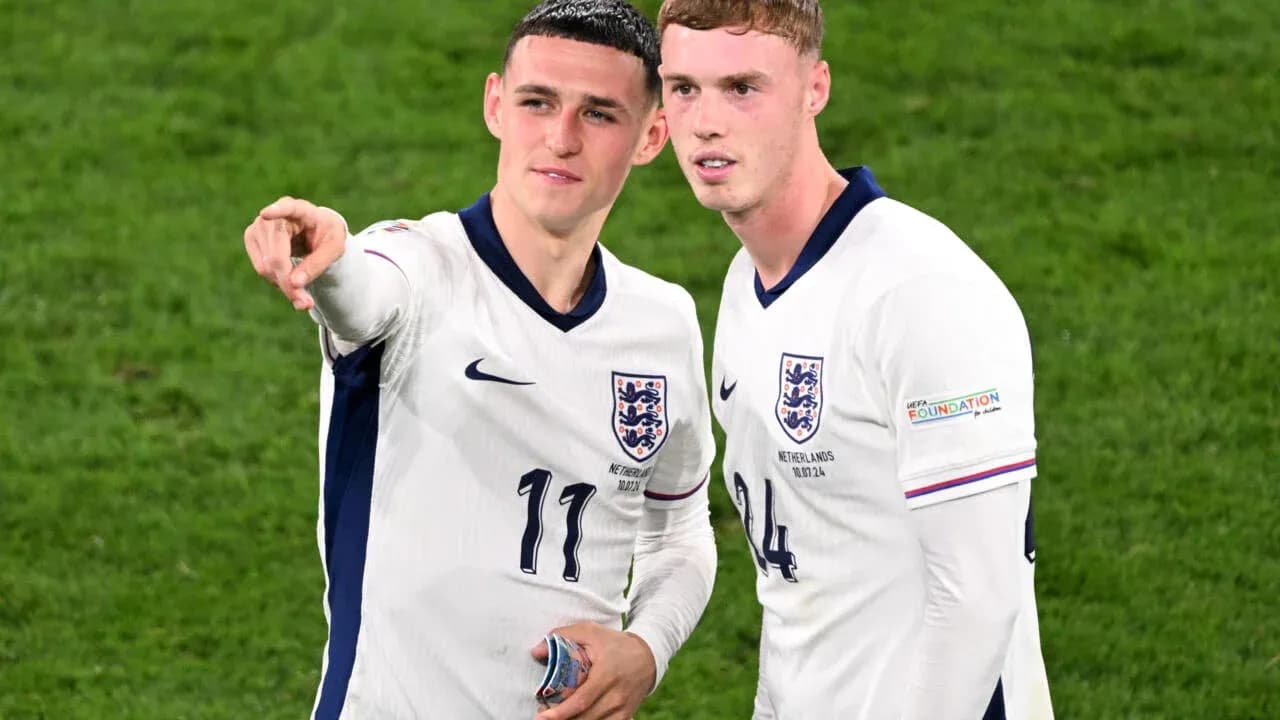
Trent Alexander-Arnold is out. So are Cole Palmer and Phil Foden, two of the creative sparks who helped carry England to the Euro 2024 final. Harry Maguire, a fixture at the heart of England’s defence for the best part of a decade, is staying at home as well.
And in their place? A bold, sometimes brutal, reshaping of the Three Lions.
Tuchel’s ruthless reset
Tuchel was hired for one reason: to end a 60‑year wait for a major trophy. A Champions League winner with Chelsea, and a veteran of Paris Saint‑Germain and Bayern Munich, he has built his career on clear ideas and cold-eyed calls. This squad is exactly that.
Palmer and Foden, once central to England’s attacking rhythm, have been cut after poor domestic seasons with Chelsea and Manchester City. Their form, not their talent, has cost them. For all they contributed on the road to the Euro 2024 final, Tuchel has drawn a hard line: past glories do not guarantee a seat on the plane to the United States, Mexico and Canada.
Maguire’s omission may be the most emotionally charged. The 33-year-old Manchester United defender admitted he was “shocked” at being left out, insisting he was confident he could have played “a major part” this summer after what he viewed as a strong season. His United team-mate Luke Shaw also misses out, another familiar face cut from a dressing room that has looked the same for too long.
Tuchel knows exactly how much that hurts. He spent the build-up to the announcement on the phone, delivering the bad news personally.
“It was difficult, sometimes painfully difficult and like even in the phone calls I felt the emotion,” he said. He made a point of speaking to every player who had been in camp. “I wanted to show at least the appreciation and the respect for what they have done.”
The calls were harsh. The logic behind them is even harsher.
Trust, edge and a new core
Tuchel has leaned heavily on what he calls his “blueprints” from the September, October and November camps. Those months, when the noise is lower and the work is quieter, shaped his view of who he can go to war with.
“I love the tough decisions because they bring in the end clarity, they bring a certain edge and it's what you need to go all the way,” he said.
That edge runs through the final list. Tuchel talked of trust, delivery, culture and standards. Who drove sessions. Who led. Who set the tone from September onwards. Those were the players he “heavily relied on”.
That thinking explains some of the more contentious calls. Jordan Henderson, now at Brentford and long past the peak of his Liverpool days, survives at the expense of Crystal Palace’s Adam Wharton. Nottingham Forest’s Morgan Gibbs-White and Leeds striker Dominic Calvert-Lewin, two of the Premier League’s most prolific English scorers this season, are also overlooked.
Tuchel has instead doubled down on a core he believes can handle the sharpest pressure. Declan Rice anchors the midfield, with Jude Bellingham again expected to be England’s driving force from the centre. Young talents such as Kobbie Mainoo and Eberechi Eze add a different type of craft and daring around them.
At the back, he has taken a calculated gamble on John Stones. The Manchester City defender has barely featured in an injury-hit campaign, yet Tuchel has decided his quality and experience outweigh the risk. Around him, there is a fresher feel: Reece James returns, Ezri Konsa and Marc Guehi step forward, and Jarell Quansah earns his place after impressing in Germany with Bayer Leverkusen.
Alexander-Arnold’s absence, given his reinvention as a hybrid midfielder at club level, underlines just how ruthless this reset has been.
Toney’s second chance
The most eye-catching inclusion sits at the other end of the pitch. Ivan Toney, now at Al-Ahli in Saudi Arabia, has forced his way back into the picture despite playing only two minutes of international football since his move in 2024.
Toney’s impact off the bench at Euro 2024 clearly stayed with Tuchel. With Harry Kane leading the line and Ollie Watkins also in the squad, England are not short of centre-forward options. Yet Toney offers something different: penalty authority, aerial presence, a streetwise edge that managers trust in tight knockout games.
It is a risk, given his lack of recent international involvement. Tuchel has taken it anyway.
Around Kane and Toney, the attacking group looks sharp and varied. Bukayo Saka and Noni Madueke bring width and direct running, Anthony Gordon offers relentless energy from the flanks, and Marcus Rashford arrives from Barcelona with a point to prove after an up-and-down club spell. Watkins, outstanding for Aston Villa, gives Tuchel a pressing forward at the peak of his powers.
Kane, now at Bayern Munich, remains the reference point. The captain called himself “extremely proud” to be heading to another World Cup, reminding supporters not to “take these moments for granted” and describing the tournament as what “you dream of as a kid”. His hunger has not dimmed.
The road through Dallas
England’s route is clear. Croatia in Dallas on June 17. Ghana on June 23. Panama four days later.
It is a group that looks manageable on paper, but Tuchel has built his squad as if expecting a storm, not a stroll. Three goalkeepers – Jordan Pickford, Dean Henderson and James Trafford – will battle for the gloves, with Pickford still the favourite. Behind Rice and Bellingham, a mix of youth and flexibility runs through the midfield: Elliot Anderson at Nottingham Forest, Mainoo at Manchester United, Morgan Rogers at Aston Villa, Eze now at Arsenal, and Henderson’s enduring voice in the dressing room.
In defence, there is height, pace and versatility: James and Djed Spence at full-back, Dan Burn’s size, the composure of Stones and Guehi, the adaptability of Konsa, the promise of Nico O’Reilly and Tino Livramento, and Quansah’s emergence on the continental stage.
Every line of the squad tells the same story. Tuchel has chosen players he believes he can trust when the games turn tight and the margins thin.
He has shut the door on some big names to do it. He has invited criticism if it all goes wrong.
But that is the job he signed up for. The wait for a trophy has stretched across generations. Tuchel has nailed his colours to this group of players.
Now the question is simple: will this new England be the one that finally ends 60 years of frustration?