Trabzonspor vs Ferencvarosi TC: Tactical Identities in UEFA Europa League
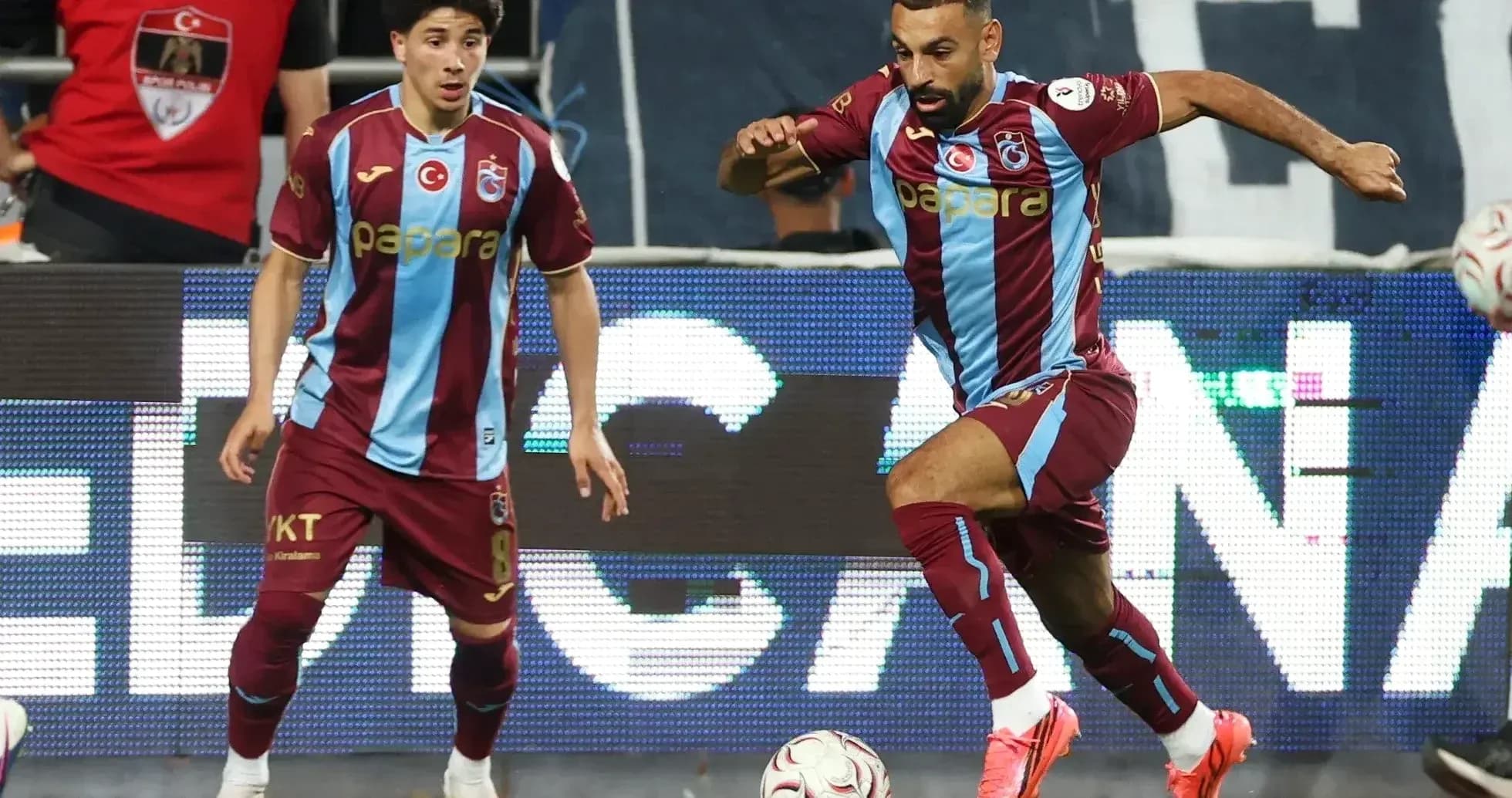
Trabzonspor’s 0-1 home defeat to Ferencvarosi TC at Papara Park was defined less by the scoreline than by contrasting tactical identities. The hosts imposed themselves territorially and with the ball, but Ferencvarosi TC controlled the critical spaces, the tempo of duels, and ultimately the scoreboard in this UEFA Europa League Play-offs tie. With 66% possession and a 4-2-3-1 designed to dominate, Trabzonspor spent long stretches camped in the visitors’ half, yet Ferencvarosi TC’s compact 4-4-2, heavy fouling profile, and ruthless exploitation of transitions turned the game into exactly the kind of contest they wanted.
The decisive moment came early and perfectly illustrated the tactical pattern. In the 17th minute, Ferencvarosi TC broke Trabzonspor’s structure with a direct, vertical action: K. Zachariassen burst from midfield to finish a move created by O. Nagy on the right. The goal exposed Trabzonspor’s high defensive line and the spacing between their double pivot and back four. With both full-backs pushed on in the 4-2-3-1, the central defenders were repeatedly asked to defend large spaces behind them; on this occasion, the visitors’ timing and movement punished that risk.
From that point, Ferencvarosi TC’s plan revolved around game-state management. The front pair, Dele and L. Joseph, worked more as first defenders than as constant attacking threats, screening passes into M. Kabasakal and B. Bouchouari and forcing Trabzonspor to build wide. The wide midfielders, M. Corbu and C. O’Dowda, dropped deep to form a narrow second line, inviting crosses and long shots rather than allowing vertical combinations through the half-spaces where M. Salah and N. Saviolo could hurt them.
Trabzonspor’s 4-2-3-1, on paper, had plenty of creative talent between the lines and aerial presence up front with P. Onuachu and U. Nayir. In practice, the structure became predictable. With 3 shots on goal but a remarkable 15 shots off goal and 6 blocked, the hosts were repeatedly forced into low-quality attempts from suboptimal angles. The double pivot of M. Kabasakal and B. Bouchouari (before his substitution at half-time) circulated possession but struggled to accelerate the tempo through central lanes. The ball was often recycled wide to S. Lopes Cabral and W. Pina, yet Ferencvarosi TC’s back four defended the box with discipline, keeping clearances central where their midfielders could contest second balls.
Halftime Changes
The halftime double change by Fatih Tekke — R. Malinovskyi (IN) came on for B. Bouchouari (OUT) and A. Simsir (IN) came on for U. Nayir (OUT) — was a clear attempt to inject more line-breaking passing and mobility into the final third. Malinovskyi’s presence should have added long-range threat and sharper vertical passes, while Simsir offered more fluid movement around Onuachu. However, Ferencvarosi TC’s response was to compress the middle of the pitch even further, happy to absorb pressure and foul aggressively when Trabzonspor’s combinations threatened to gain momentum.
The foul count tells the story: Trabzonspor committed only 3 fouls, Ferencvarosi TC 24. This was not simply ill-discipline; it was a tactical choice. The visitors accepted a high disciplinary risk to break rhythm and prevent clean progressions. Five yellow cards for Ferencvarosi TC underline how often they were willing to stop counters or disrupt overloads with contact. Yet crucially, they avoided the second yellow that would have tilted the balance, whereas Trabzonspor’s frustration eventually boiled over into a late red card for C. Nwaiwu, leaving them to finish the match a man down.
Territorial Structure
In terms of territorial structure, Trabzonspor’s back four of S. Lopes Cabral, C. Ozkacar, C. Nwaiwu, and W. Pina held an aggressive starting position, often inside Ferencvarosi TC’s half as the game wore on. This pinned the visitors back but also created vulnerability to direct balls into Dele and L. Joseph. Even when Ferencvarosi TC failed to convert these outlets into shots, they were effective in stretching the game and buying time for their block to reset.
Ferencvarosi TC’s substitutions were all about maintaining legs and defensive concentration. A. Nagy (IN) came on for Dele (OUT) at 61', and G. Kanichowsky (IN) came on for P. Rommens (OUT) at the same minute, reinforcing midfield energy as the pressure mounted. Later changes — A. Osvath (IN) for K. Zachariassen (OUT), K. Lisztes (IN) for L. Joseph (OUT), and N. Zohore (IN) for Cadu (OUT) — kept the defensive intensity high in wide areas and ensured fresh bodies to contest crosses and second balls in the closing stages.
Statistical Overview
Statistically, Trabzonspor’s dominance of the ball (66% possession to 34%) did not translate into control of the penalty area. Their 3 shots on goal from a large volume of attempts (15 off target, 6 blocked) indicate poor shot selection and a lack of clear-cut chances. Ferencvarosi TC, by contrast, produced 4 shots on goal and 3 off goal from a far smaller attacking volume, reflecting a more selective, transition-oriented approach. Corner kicks (7-5 in Trabzonspor’s favour) further underline the hosts’ territorial advantage, but the visitors’ compact 4-4-2 shape consistently protected the most valuable spaces.
Discipline was a decisive undercurrent. Ferencvarosi TC accumulated 5 yellow cards — all within a clear tactical framework of “Roughing”, “Holding”, and “Unsportsmanlike conduct” to break play — but never crossed the line into a dismissal. Trabzonspor, despite a much lower foul count, saw C. Nwaiwu sent off for “Roughing” in added time, a moment that encapsulated their frustration at being unable to convert dominance into goals.
Overall, this was a textbook away European performance from Ferencvarosi TC: concede territory, foul to disrupt, defend the box with numbers, and exploit key transition moments. Trabzonspor’s 4-2-3-1 had the ball and the territory, but without sharper central combinations or more varied movements around P. Onuachu, their possession became sterile, and the single first-half strike by K. Zachariassen proved enough to decide the tie.