AC Milan vs Benfica: Europa League Insights and Analysis
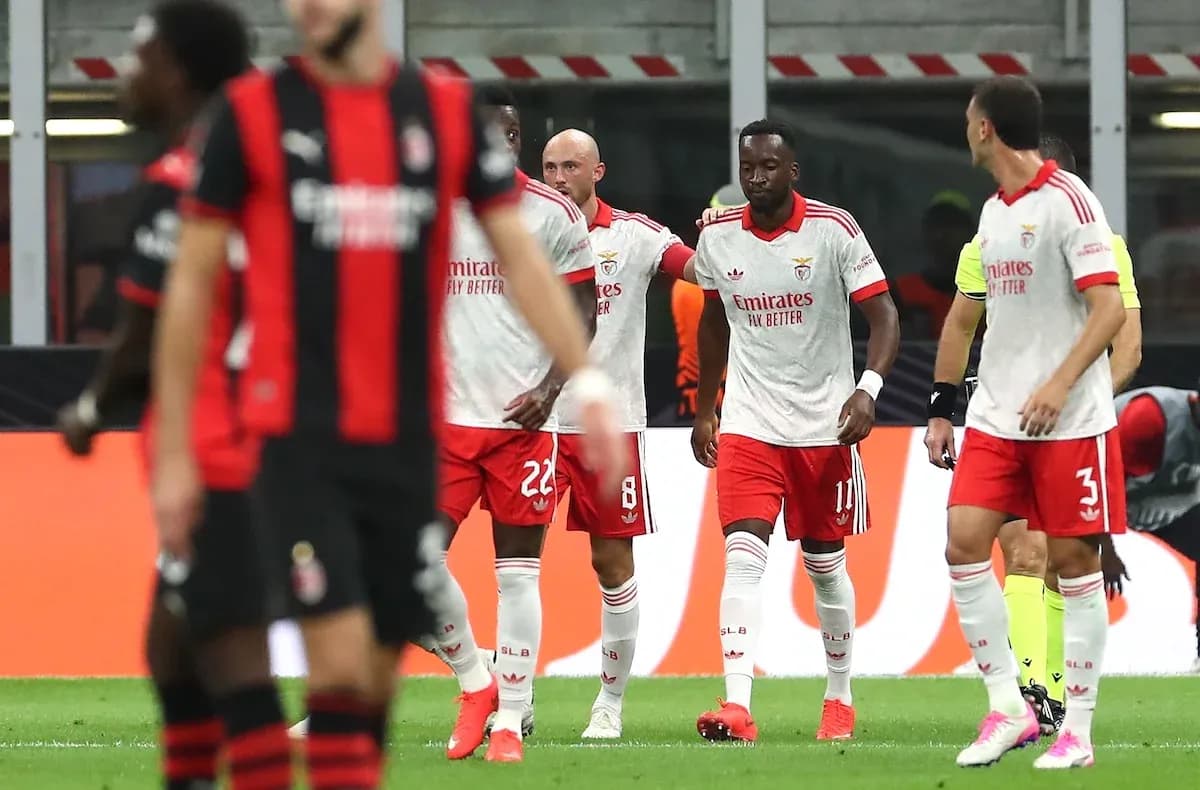
Under the San Siro lights, the Europa League’s new league stage opened with a jolt of reality for AC Milan. A 2–0 home defeat to Benfica not only set the tone of Group business but also crystallised the contrasting identities of these two squads.
I. The Big Picture – Two trajectories, one statement night
This was League Stage - 1, but it felt more advanced in its stakes. Milan, at home, arrived with a clean continental slate but no real margin for error in a compressed league-phase format. Benfica, already battle-hardened in Europe with seven matches played overall this campaign, carried the swagger of a side used to imposing themselves.
Following this result, the standings snapshot is stark. Milan sit 31st in the overall table, with 0 points, a goal difference of -2 and a home record of one defeat from one, having failed to score and conceded twice at San Siro. Benfica, by contrast, are 7th, on 3 points with a goal difference of +2, having won their only away outing so far 2–0.
The statistical DNA of both sides was visible in the scoreline. Milan’s Europa League season so far is brutally simple: one match, one loss, 0 goals for and 2 against, an average of 0.0 goals scored and 2.0 conceded at home. Benfica arrived with a far richer sample: seven matches overall, five wins, one draw, one defeat, 21 goals scored and only 6 conceded. On their travels they have played 4, won 2, drawn 1 and lost 1, with 7 goals scored and 4 conceded away, an average of 1.8 goals for and 1.0 against per away game. This is a side that travels with purpose and control.
II. Tactical Voids – Absences and discipline shaping the contest
Milan’s selection under Ruben Amorim leaned into a bold 3-4-2-1, but it also hinted at a squad still in flux. The back three of F. Terracciano, K. De Winter and S. Pavlovic was short on shared European mileage together, protected by a midfield line where S. Chukwueze and D. Bartesaghi operated as wide outlets rather than orthodox wing-backs. In front of them, A. Jashari and Y. Musah were tasked with being both shield and springboard, while O. Hutchinson and A. Cisse floated behind G. Ramos.
The bench revealed Milan’s latent experience: L. Modric, R. Loftus-Cheek, A. Rabiot and C. Pulisic all waited in reserve, but the starting XI spoke of a coach prioritising legs and energy over reputation. In Europe, that gamble can leave voids in game management and control between the lines.
Benfica’s only explicit absentee was A. Bah, listed as missing through injury. His absence at right-back or wing-back could have been a structural concern, but Marco Silva’s 4-2-3-1 absorbed the loss seamlessly. D. Banjaqui, A. Circati, T. Araujo and S. El Karouani formed a back four in front of A. Trubin, with F. Aursnes and J. Palhinha as the double pivot. Ahead of them, D. Lukebakio, G. Sudakov and J. Kaminski supported J. Duran.
Discipline tilted subtly in Benfica’s favour even before a ball was kicked. Milan’s Europa campaign so far shows a single yellow card, and it arrived early: 100.00% of their cautions have come in the 0–15 minute window. That suggests a side that can be over-aggressive in the opening exchanges, then forced to manage risk for the rest of the contest. Benfica, by contrast, spread their cautions across the match, with 10.00% of their yellows in 0–15, 20.00% between 16–30, 20.00% from 31–45, and a pronounced 30.00% spike in the 76–90 window. They are combative late on, but rarely destabilised by early indiscipline.
Crucially, neither team has seen a red card in this Europa League run, and Benfica’s penalty record is perfect: 4 penalties taken in total, all 4 scored, none missed. Milan, by contrast, have yet to win or take a penalty in the competition.
III. Key Matchups – Hunter vs Shield, and the battle for control
The “Hunter vs Shield” dynamic here centred less on a single striker and more on Benfica’s collective attacking ecosystem against Milan’s experimental back three.
Benfica’s offensive numbers overall are imposing: 21 goals across 7 games, with a total average of 3.0 goals per match. At home they have been devastating, averaging 4.7 goals per game, but even away they carry a clear punch with 1.8 goals per match on their travels. Milan’s defensive baseline in Europe is fragile: 2 goals conceded at home in their only match, with no clean sheets and an average of 2.0 goals against per home fixture.
Into that gap stepped J. Kaminski and D. Lukebakio. Kaminski arrives in this campaign as both scorer and provider for Benfica: 1 goal and 1 assist in 6 Europa League appearances, with a rating of 7.9, 30 passes completed at 76% accuracy and 3 key passes. He is listed among the competition’s top scorers and top assisters, a wide playmaker who can both finish and create. Lukebakio, rated 8.5 across 4 appearances, adds directness: 1 goal from 3 shots, all on target, 29 passes at 72% accuracy, and 2 successful dribbles from 2 attempts. Together, operating off the flanks and half-spaces, they target precisely the channels either side of Milan’s outside centre-backs.
For Milan, the “Shield” is collective rather than individual. S. Pavlovic’s presence on the left of the back three gives them aerial solidity, while K. De Winter in the middle is expected to marshal the line. But with no clean sheets, a failed-to-score rate of 100% overall so far, and a home goal difference of -2 (0 scored, 2 conceded), the burden on M. Maignan is immense. Without data on goals prevented, we cannot quantify his shot-stopping in this campaign, but the structure in front of him is clearly under strain.
In the “Engine Room”, the duel between Milan’s central pairing and Benfica’s double pivot is decisive. Y. Musah and A. Jashari must cope with the positional discipline of J. Palhinha and the multifunctional F. Aursnes. Palhinha’s presence allows Benfica’s attacking trio to remain high and aggressive, knowing the spaces behind are patrolled. Aursnes, comfortable stepping into the first line of build-up, gives Benfica numerical superiority against Milan’s front press of Hutchinson, Cisse and Ramos.
Further up, J. Duran’s role as reference point is less about raw numbers and more about movement. With Benfica having failed to score in none of their European matches so far and owning 2 clean sheets overall, their front line functions within a balanced, risk-managed structure. Duran’s job is to pin one of Milan’s centre-backs, creating the lanes Lukebakio and Kaminski exploit.
On the Benfica bench, V. Pavlidis and L. Barreiro loom as impactful options with an edge. Both have collected 2 yellow cards in this Europa League season, a sign of their combative approach. Pavlidis, an attacker, offers a more physical alternative to Duran, while Barreiro can stiffen midfield if Benfica need to protect a lead.
IV. Statistical Prognosis – Patterns that underpin the 2–0
Following this result, the numbers simply reinforce what the eye test at San Siro suggested. Milan’s Europa League profile is that of a side still searching for a coherent attacking pattern: 0 goals scored in total, 1 match played, 1 defeat, and 1 instance of failing to score. Their only lineup used has been the 3-4-2-1, and while it offers theoretical overloads in advanced zones, it currently exposes a back line that concedes 2.0 goals per home game.
Benfica, by contrast, carry the look and metrics of a complete European unit. Across 7 matches they have 5 wins, 1 draw and just 1 defeat, with a total goal difference of +15 (21 scored, 6 conceded). Their clean-sheet count of 2 suggests they can lock games down when required, and their failure-to-score tally of 0 underlines the reliability of their attack. The away record is particularly relevant: 2 wins, 1 draw, 1 defeat, with 7 goals scored and 4 conceded, a balanced but still assertive profile on foreign soil.
Disciplinary trends also intersect with tactical reality. Milan’s propensity to collect early yellows compresses their aggression as matches wear on, while Benfica’s late spike in cautions between 76–90 minutes (30.00% of their yellows) fits a team that is often defending a lead or contesting the result deep into games. Their perfect penalty record in Europe – 4 taken, 4 scored, 0 missed – further tilts tight scenarios in their favour.
In narrative terms, this 2–0 at San Siro feels less like an upset and more like the logical outcome of two squads at different stages of their European development. Milan’s bench hints at a higher ceiling if Amorim integrates the experience of Modric, Rabiot, Loftus-Cheek and Pulisic into a more stable structure. But for now, the numbers are unforgiving: they are a side with no goals, no points and no clean sheets in the competition.
Benfica leave Milan not just with three points, but with confirmation that their 4-2-3-1, powered by the creativity of Kaminski, the direct threat of Lukebakio and the control of Palhinha and Aursnes, can travel. Their statistical backbone – high scoring, low concessions, disciplined yet combative, ruthless from the spot – suggests this is not a one-off performance, but the early chapter of a deep Europa League run.