Levski Sofia's Tough Lesson Against Red Bull Salzburg in Europa League
Under the lights of Vasil Levski National Stadium, Levski Sofia’s return to the UEFA Europa League felt like a harsh lesson in European pragmatism. Red Bull Salzburg arrived with the calm of a side already moulded by continental campaigns, and they left with a 1–0 win that underlined the gap between a team still learning the level and one already fluent in it.
I. The Big Picture: contrasting European identities
Following this result, the table tells a stark story. Levski sit 27th in the league stage ranking with 0 points, a goal difference of -1 and a record of one defeat from one game. At home they have played 1, lost 1, scored 0 and conceded 1. Salzburg, by contrast, are up in 14th with 3 points, a goal difference of +1 and a perfect early record: one win from one, their away line reading 1 played, 1 win, 1 goal scored and none conceded.
The numbers mirror the broader seasonal DNA. Heading into this game Levski’s Europa League profile was blank: no goals scored in total, an overall average of 0.0 goals for and 1.0 against, and no clean sheets. Salzburg arrived with a far more defined identity: across all venues they had played 5 matches, unbeaten with 4 wins and 1 draw, scoring 9 goals in total (an average of 1.8 overall) and conceding only 3 (0.6 overall). On their travels specifically, they had 3 away games, 2 wins, 1 draw, 5 goals scored and 3 conceded, averaging 1.7 goals for and 1.0 against away. Four clean sheets overall – split evenly between home and away – underlined just how hard they are to break down.
Both coaches set up in a 4-2-3-1, but the systems told different stories. Julio Velázquez’s Levski looked like a side trying to graft control and structure onto a patched-together XI. D. Röhl’s Salzburg, meanwhile, played with the assurance of a team that knows exactly what its shape is supposed to produce.
II. Tactical Voids: absences and discipline
Levski’s squad sheet was scarred by absences. A cluster of defenders and midfielders were unavailable: A. Bouras (muscle injury), O. Kamdem and R. Kirilov (both knee injuries), M. Moubarik (injury), M. Sangare (off the roster) and N. Serafimov (elbow injury). That many missing options in the spine inevitably narrowed Velázquez’s choices, especially in how aggressively he could defend the wide areas and rotate in midfield.
For Salzburg, D. Röhl also had to navigate a thinned group. A. Chase and F. Matijasevic were listed as off the roster, while S. Diabate (injury), G. Diakite (inactive), J. Moser (muscle injury) and J. Omoregie (Achilles tendon injury) were all sidelined. Yet their depth and system continuity meant the absences felt less destabilising.
Disciplinary trends hinted at different temperaments. Levski’s Europa League yellow cards so far have come exclusively in the 46–60 minute window, with 100.00% of their cautions concentrated just after half-time. It suggests a team that returns from the break trying to raise intensity and sometimes overstepping. Salzburg’s bookings are more evenly spread: 28.57% of their yellows between 31–45 minutes, another 28.57% between 46–60, and the same 28.57% from 61–75, plus 14.29% in added time from 91–105. They are combative across the full 90, but rarely reckless enough to see red – they have no red cards in the competition.
One name embodies that edge without chaos: A. Barry. Across the Europa League season he has 2 yellow cards but no reds, and despite appearing in both the yellow and red card leaderboards, his actual disciplinary record is that of a controlled enforcer.
III. Key Matchups: Hunter vs Shield, Engine Room battles
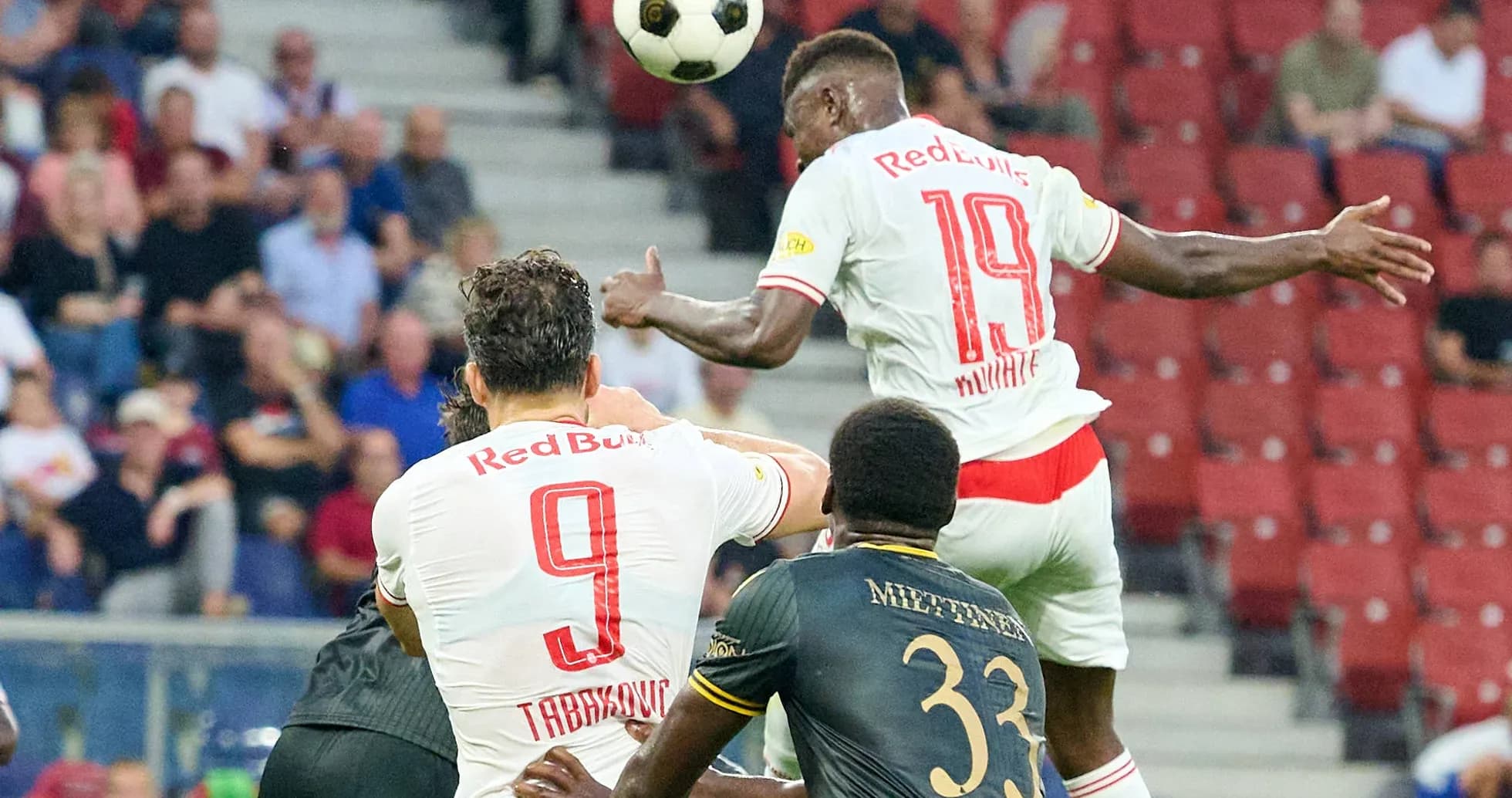
The clearest “Hunter vs Shield” storyline centred on Haris Tabaković. The tall Swiss forward, leading Salzburg’s line here, came in as one of the competition’s notable attacking figures. Across the Europa League he has 1 goal from 5 appearances, with 2 shots in total – both on target – and an attacking rating of 7.46. He is not a volume shooter, but he is ruthlessly efficient when chances arrive.
Levski’s defensive shield, by contrast, is more collective than star-driven. The back four of Maicon, C. Makoun, K. Dimitrov and Aldair sat in front of goalkeeper S. Vutsov, with Serginho and G. Trdin forming the double pivot. Heading into this game, Levski had conceded 1 goal at home and 1 overall, with an average of 1.0 goals against in total and at home. The defensive structure is not yet proven at this level, but the numbers suggest they can keep games tight if the midfield screen holds.
Tabaković’s movement between the lines and into the box tested that screen constantly. With Y. Vertessen and E. Baidoo drifting in from the flanks and S. Kitano operating between the lines, Salzburg repeatedly tried to drag Makoun and Dimitrov out of their comfort zones. For long spells, Levski’s centre-backs coped, but the decisive moment – Salzburg’s first-half goal – came from exactly the kind of compactness lapse that an elite away side waits for.
In the “Engine Room” duel, Serginho and G. Trdin were tasked with both protecting and progressing for Levski. Ahead of them, Everton Bala, A. Oko-Flex and Álex Centelles tried to knit transitions into service for lone forward Reinaldo. But they were up against Salzburg’s central duo led by A. Barry, whose season numbers underline his importance: 69 passes in Europa League play with a 94% accuracy, 1 key pass, 6 tackles and 6 duels won from 9. Barry is the metronome and the destroyer rolled into one, and his presence allowed Salzburg’s attacking midfield line to stay high and aggressive.
IV. Statistical Prognosis: what this result really says
Following this result, the trajectories of the two sides feel sharply defined. Levski’s Europa League story now reads: 1 match in total, 0 wins, 0 draws, 1 defeat, 0 goals scored, 1 conceded, no clean sheets and 1 game failed to score. At home, that same line – 1 played, 0 scored, 1 conceded – suggests that their margin for error in Sofia is already gone. They must turn their stadium into a source of points quickly, or the league stage will slip away from them.
Salzburg, on the other hand, extend an already impressive continental run. Across all venues they now stand at 5 played, 4 wins, 1 draw, 9 goals scored and 3 conceded. On their travels, their away line of 3 played, 2 wins, 1 draw, 5 goals for and 3 against reinforces the sense of a side comfortable in hostile environments. Their penalty record – 1 taken, 1 scored, 100.00% conversion with no misses – adds another layer of clinical edge in tight games.
Even without detailed xG values, the pattern is clear. Salzburg’s low goals-against averages (0.6 overall, 1.0 away) and four clean sheets in total point to a defensive structure that travels exceptionally well. Levski’s inability to generate goals – 0 in total so far, with 1.0 goal conceded overall and at home – suggests that in this league stage they will need to win with efficiency rather than volume.
The tactical verdict is simple but sobering for the Bulgarians: their 4-2-3-1 can compete territorially, but without sharper movements around Reinaldo and more risk from Everton Bala and A. Oko-Flex between the lines, they will struggle to turn possession into chances against elite defensive units like Salzburg’s. For Röhl’s side, this was exactly the kind of away performance that underpins deep European runs: compact, patient, and decided by a single, well-taken moment from a forward like Haris Tabaković, backed by an engine room anchored by Abubakr Barry.
In the narrative of this Europa League league stage, this 1–0 in Sofia may end up remembered less for its drama than for its clarity. It showed precisely where each club stands – and what must change if Levski are to turn nights like this into something more than a lesson.