Tottenham Secures Narrow Win Over Everton: A Tactical Analysis
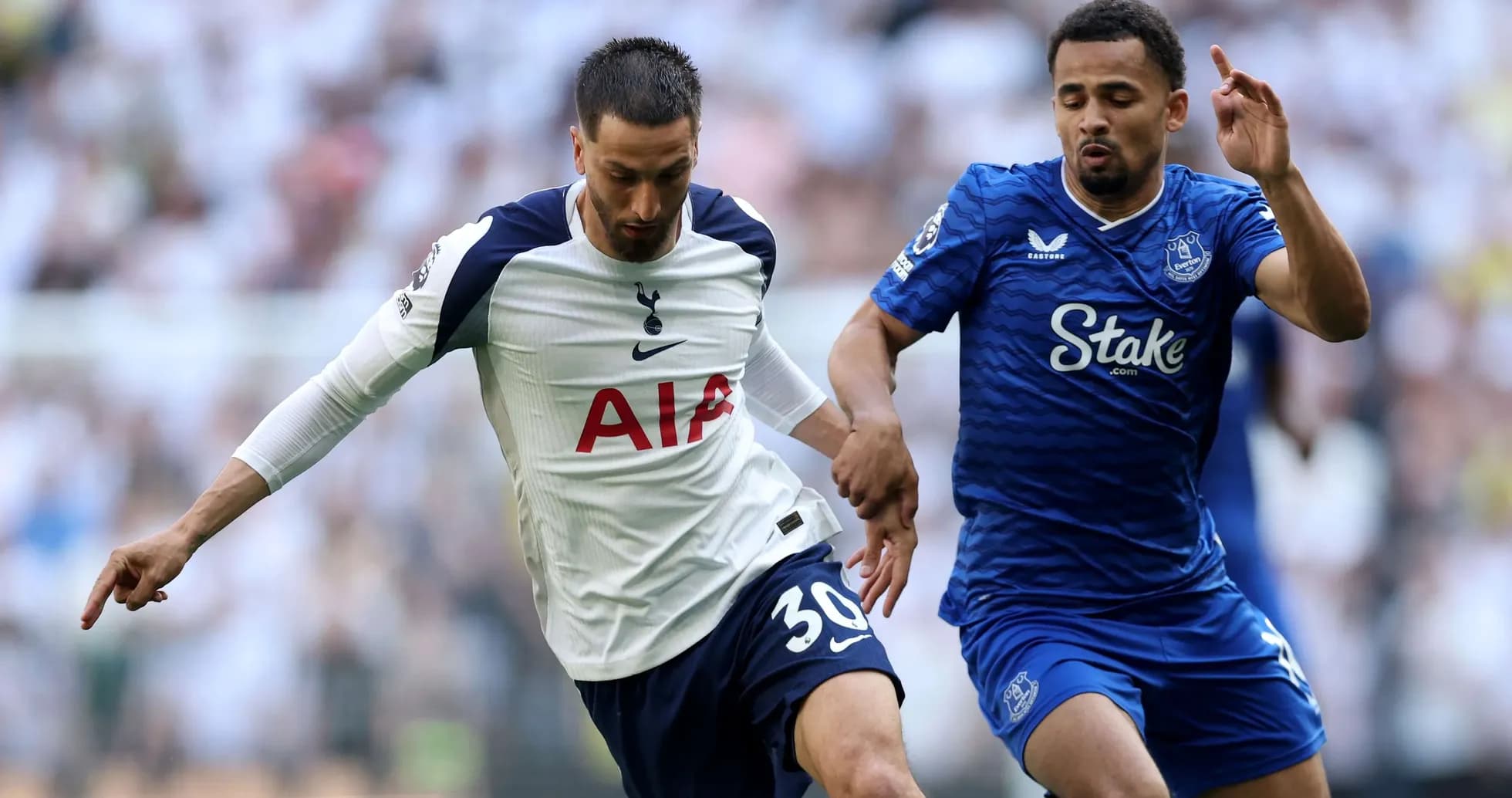
Under grey north London skies, the Premier League season closed at Tottenham Hotspur Stadium with a match that felt more like a referendum than a finale. Tottenham, finishing 17th with 41 points and a goal difference of -9 (48 scored, 57 conceded overall), edged Everton 1-0 to finally align a clean sheet with the kind of defensive structure Roberto De Zerbi has been chasing all year. Everton, 13th on 49 points with a goal difference of -3 (47 for, 50 against overall), arrived as the more stable mid-table outfit, but left with their form line extended to a worrying “LLDDL”.
Both sides mirrored each other on paper in a 4-2-3-1, but the story of the season framed this as fragile hosts versus hardened travellers. Heading into this game, Tottenham at home had been brittle: only 3 wins from 19, conceding 31 and scoring 22, an average of 1.2 goals for and 1.6 against at home. Everton, by contrast, had been a competent away side: 7 wins, 5 draws, 7 defeats on their travels, with 21 goals scored and 23 conceded, averaging 1.1 for and 1.2 against away.
Yet over 90 minutes, Tottenham’s reconfigured spine held. A 1-0 win, built on structure rather than chaos, offered a glimpse of what this squad might become if the tactical pieces finally settle.
Tactical Voids and Selection Choices
This was a match shaped by absences before a ball was kicked. Tottenham were stripped of a whole tier of personality and edge: C. Romero, M. Kudus, D. Kulusevski, W. Odobert, X. Simons and B. Davies all listed as Missing Fixture, most with knee or ankle issues. That is a significant chunk of their ball-carrying and backline aggression removed in one sweep.
In response, De Zerbi leaned into structure. A. Kinsky started in goal behind a back four of P. Porro, K. Danso, M. van de Ven and D. Udogie. The double pivot of R. Bentancur and J. Palhinha anchored everything, with a fluid line of three — D. Spence, C. Gallagher and M. Tel — working behind lone forward Richarlison. It was a lineup that traded some chaos and dribbling flair (no Simons, no Kulusevski) for vertical running and defensive coverage.
Everton’s voids were different, but just as defining. J. Branthwaite, J. Grealish and I. Gueye all missed out. Without Branthwaite, Leighton Baines had to trust the centre-back pairing of J. Tarkowski and M. Keane, flanked by V. Mykolenko and J. O’Brien. In midfield, the responsibility ballooned for J. Garner and T. Iroegbunam as the double pivot, with M. Rohl, I. Ndiaye and K. Dewsbury-Hall supporting young forward T. Barry.
Disciplinary risk was baked into both squads. Tottenham’s season card profile shows a yellow-card surge between 61-75 minutes (24.75% of their yellows) and a notable red-card spike in the 31-45 range (50% of their reds). Everton, meanwhile, concentrate yellow cards late — 21.62% between 76-90 minutes — and have a worrying red-card spread, with dismissals appearing early (0-15), mid (61-75) and very late (76-90). That backdrop made the control of tempo and emotion around the hour mark a clear tactical objective for both benches.
Key Matchups
Hunter vs Shield
At the sharp end, this was always going to be about Richarlison against Everton’s defensive frame. Overall this campaign, Tottenham averaged 1.3 goals per game, but at home only 1.2; Richarlison’s 11 league goals and 4 assists have effectively been the difference between survival and disaster. His season numbers — 47 shots, 26 on target, 20 key passes and 33 fouls drawn — paint him as a constant irritant, not just a finisher.
Everton’s shield on their travels has been quietly respectable: 23 goals conceded away, an average of 1.2 per away match. Tarkowski’s positioning, Keane’s aerial work and O’Brien’s aggression (he has already collected a red card this season and committed 23 fouls, with 317 duels and 194 won) formed the ring around J. Pickford. But without Branthwaite’s left-sided balance, Richarlison could attack the channels between Keane and Mykolenko, forcing Everton’s line to bend rather than hold.
Engine Room
The true battleground, though, lay in midfield. For Tottenham, J. Palhinha and R. Bentancur provided the platform. Palhinha’s role was to screen and destroy, allowing Bentancur to connect with C. Gallagher and M. Tel between the lines. Gallagher’s presence as a high-running No. 8/10 hybrid was crucial: his task was to press Garner’s first touch and disrupt Everton’s rhythm.
On the other side, J. Garner arrived as one of the league’s most influential deep playmakers this season. His numbers are elite: 38 appearances, 3426 minutes, 1792 passes with 56 key passes and 87% accuracy, plus 120 tackles, 10 blocked shots and 57 interceptions. He is simultaneously Everton’s metronome and their first defender. The fact he also leads the league for yellow cards with 12 underlines the edge he plays with.
Without Gueye beside him, Garner had to manage both build-up and fire-fighting. T. Iroegbunam’s energy helped, but Tottenham’s three-man line of Spence, Gallagher and Tel repeatedly tried to overload his zone, forcing him into either rushed passes or tactical fouls.
Statistical Prognosis and What the 1-0 Tells Us
Following this result, the numbers behind both clubs come into sharper focus. Tottenham end the season with 10 wins, 11 draws and 17 defeats overall, their negative goal difference of -9 a direct product of 48 scored and 57 conceded. The clean sheet here is a minor outlier against a home average of 1.6 goals conceded per match, but the structure of the back four — with van de Ven’s pace and 22 season blocks, and Porro’s aggression (75 tackles, 10 blocked shots, 29 interceptions) — hints at a defensive base that can be built upon if Romero returns fit and disciplined.
Everton’s campaign closes at 13th with 13 wins, 10 draws and 15 losses. Overall they average 1.2 goals scored and 1.3 conceded per match, and this 1-0 defeat fits that narrow-margin profile. Their away record — 7 wins, 5 draws, 7 losses, 21 scored and 23 conceded — speaks of a side that is competitive but rarely dominant. The absence of Grealish’s 6 assists and 40 key passes was evident; in his stead, creative burden fell onto Ndiaye and Dewsbury-Hall, but without the same incision.
From an xG lens — even without explicit figures — the patterns are clear. Tottenham’s home attack, averaging 1.2 goals, suggests a modest xG baseline that relies on Richarlison’s finishing and late surges from the No. 10 lane. Everton’s away defence, conceding 1.2 per game, is middling but not porous. A 1-0 outcome is the statistical midpoint of those trends rather than a shock.
Defensively, Everton’s season-long discipline profile — late yellow spikes and a scattering of reds — again hints at fatigue and pressure in the final quarter of matches. Tottenham’s own yellow-card peak between 61-75 minutes mirrors that vulnerability. The difference here was that De Zerbi’s side finally managed game-state: once ahead, the double pivot compressed space, the full-backs chose their moments more selectively, and the risk of late chaos was contained.
In narrative terms, this was not a transformative win for Tottenham, but it was a clarifying one. The squad, even shorn of Romero, Simons, Kulusevski and Kudus, showed it can execute a controlled 4-2-3-1 with Richarlison as the reference point and a disciplined back four behind. Everton, meanwhile, close the season as a team with a strong individual core — Garner, O’Brien, Tarkowski — but one that needs its missing creative stars back to turn narrow defeats like this into the kind of balanced away performances their numbers suggest they are capable of.