Tottenham's Tactical Control in 1-0 Victory Over Everton
Tottenham’s 1-0 win over Everton at Tottenham Hotspur Stadium was a controlled, system-driven performance rather than an attacking avalanche. Both sides finished with 50% possession and almost identical passing volumes (Tottenham 373 passes, Everton 377), but Roberto De Zerbi’s 4-2-3-1 imposed more territorial pressure and shot volume, while Leighton Baines’ Everton struggled to convert compact defending into genuine threat.
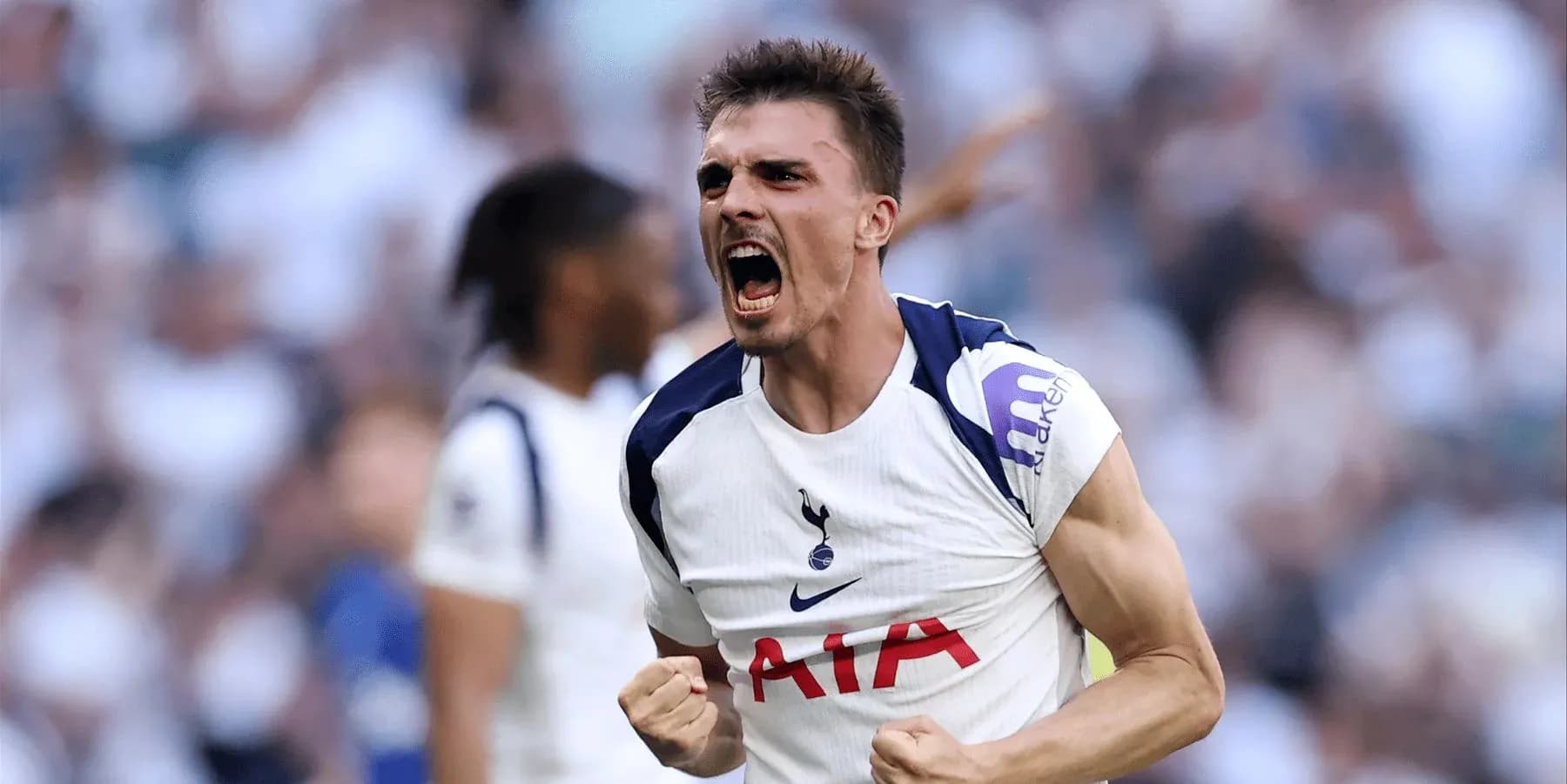
The match’s decisive moment came from midfield: João Palhinha’s 43rd-minute strike separated the sides, aligning with the underlying data. Tottenham generated 20 total shots to Everton’s 9, with a clear advantage in blocked efforts (9 vs 3) and efforts inside the box (15 vs 7), translating their structure into repeated final-third entries even if the final pass often lacked precision.
Defensive Structure
Defensively, Tottenham’s back four of Pedro Porro, Kevin Danso, Micky van de Ven and Destiny Udogie operated high and aggressively, supported by a double pivot of Rodrigo Bentancur and João Palhinha. That base allowed the three behind Richarlison — Djed Spence, Conor Gallagher and Mathys Tel — to press Everton’s first phase and lock them into longer, more speculative build-up patterns. Everton mirrored the 4-2-3-1 on paper, with James Garner and Tim Iroegbunam as the double pivot and a line of three (Maximilian Rohl, Iliman Ndiaye, Kiernan Dewsbury-Hall) behind Thomas Barry, but they rarely established stable possession between Tottenham’s lines.
Goalkeeping Performance
In goal, A. Kinsky (Tottenham) was largely untroubled, required for only 1 save. That figure matches Everton’s meagre 1 shot on target and underlines how well the home side protected their box despite conceding 7 shots inside it; Everton’s attempts were either rushed or from suboptimal angles, reflected in their modest 0.34 xG. At the other end, Jordan Pickford (Everton) also registered 1 save despite Tottenham’s 2 shots on target, with the data implying that one on-target effort resulted directly in Palhinha’s goal. Both goalkeepers posted negative goals prevented values (Tottenham -0.32, Everton -0.32), indicating each conceded roughly what the shot quality suggested rather than overperforming.
Tactical Approach
The tactical story is in how Tottenham turned their shape into sustained pressure. With 7 corner kicks and 15 fouls committed, they played assertively in Everton’s half, repeatedly regaining the ball quickly after loss. The 9 blocked shots highlight Everton’s last-ditch defending: Baines’ back line of Jake O’Brien, James Tarkowski, Michael Keane and Vitalii Mykolenko often held deep positions, sacrificing territory to keep central lanes crowded. That compactness forced Tottenham to shoot through traffic, which explains the high blocked-shot count and why an xG of 0.99 from 20 attempts still produced only one goal.
Everton’s own attacking pattern was more sporadic. Their 7 shots inside the box suggest they did reach dangerous zones occasionally, but the low total shots and single effort on target show how rarely they converted territory into clean looks. The equal number of corners (7 each) hints at some set-piece presence, yet Tottenham’s defensive structure around Kinsky limited second balls and rebounds, keeping Everton’s xG down.
Passing Statistics
Passing quality slightly favoured Tottenham: 373 passes, 317 accurate at 85% versus Everton’s 377 passes, 314 accurate at 83%. That 2% edge, small but consistent, reflects a home side more secure in circulation, especially through Bentancur and Palhinha in the pivot. Their ability to recycle possession meant Everton’s midfielders, particularly Garner and Iroegbunam, spent long stretches shuttling laterally rather than dictating tempo.
Disciplinary Actions
Discipline-wise, both teams finished with 2 yellow cards, but the profiles underline different tactical tensions. For Everton:
- 13' Jake O'Brien (Everton) — Foul
- 89' James Tarkowski (Everton) — Foul
For Tottenham:
- 80' Pape Matar Sarr (Tottenham) — Simulation
- 87' João Palhinha (Tottenham) — Handball
Everton’s cautions, both for “Foul”, align with a reactive defensive stance under pressure, often stepping late to disrupt Tottenham’s combinations. Tottenham’s bookings were more situational — one for “Simulation” and one for “Handball” — pointing to individual decisions rather than systemic ill-discipline. Overall foul counts (Tottenham 15, Everton 18) confirm a physically contested game but not an overly chaotic one.
Substitutions
Substitutions reinforced existing tactical ideas rather than transforming them. For Everton, the triple change on 84' — with Beto, Carlos Alcaraz and Seamus Coleman entering for Thomas Barry, Kiernan Dewsbury-Hall and Tim Iroegbunam via the defined substitution events — aimed to inject directness and fresh legs, but the underlying shot and xG profile suggests it did not materially shift their attacking output. Earlier, at 62', introducing T. George for Maximilian Rohl and H. Armstrong for Jake O'Brien signalled a push for more energy in wide and advanced areas, yet Tottenham’s structure remained intact.
De Zerbi’s changes at 73' and 82' — R. Kolo Muani for Richarlison, Pape Matar Sarr for Mathys Tel, then A. Gray for Bentancur and James Maddison for Gallagher — refreshed the press and ball retention without compromising the 4-2-3-1 skeleton. The late switch of Radu Drăgușin for Destiny Udogie at 90' added defensive security to close out the result.
Match Verdict
Statistically, the verdict is clear: Tottenham translated a slight edge in pass quality and a large edge in shot volume into a deserved narrow win, broadly in line with xG (0.99 vs 0.34). Everton’s disciplined, low-risk approach kept the scoreline tight but never generated the attacking momentum needed to overturn Palhinha’s first-half strike.