
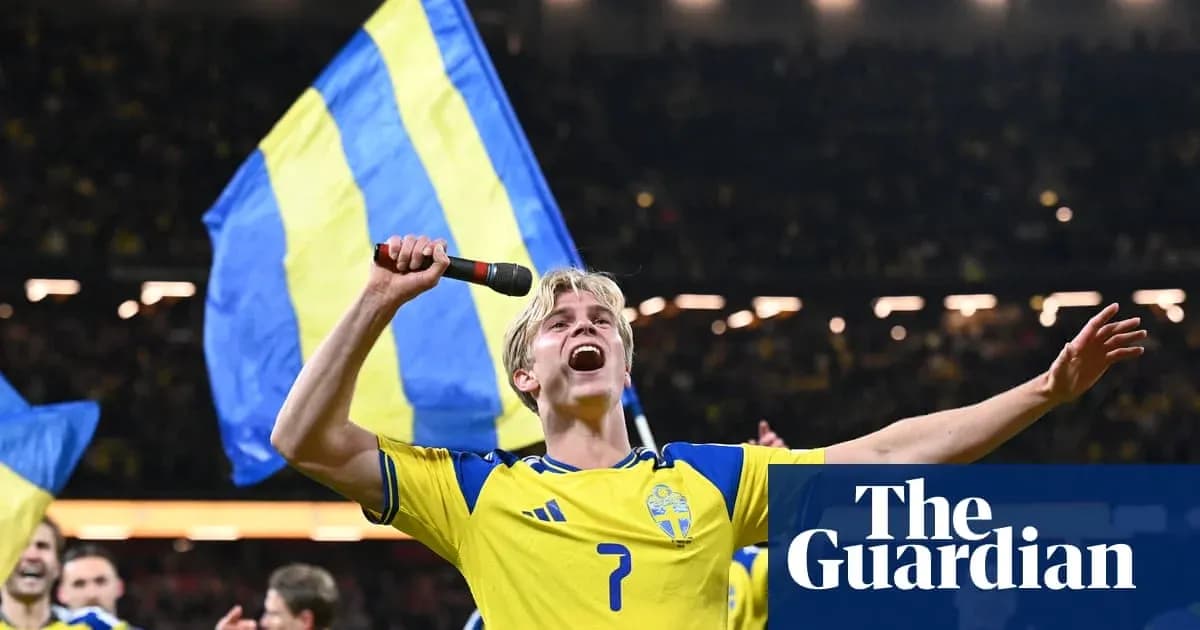
Sweden's Journey to the World Cup: From Chaos to Graham Potter's Revival
For a long stretch of this World Cup cycle, Sweden looked closer to a cautionary tale than a contender. One point from the first four qualifiers under Jon Dahl Tomasson, a flat 1-0 defeat away to Kosovo, and by October 2025 the Dane was gone. The campaign felt dead on its feet.
Then Graham Potter walked back into Swedish football and lit a fire under it.
Potter returns – and rewinds the identity
Potter’s name still carries weight in Sweden. At Östersund he built a fairytale: from the fourth tier to Allsvenskan, a cup win, and that surreal Europa League night when Arsenal were picked off in London. So when he gave an interview to Fotbollskanalen in October 2025 that sounded suspiciously like a public job application – “I have feelings for Sweden. I love the country and I love Swedish football” – it didn’t take long.
Within days he had the job. Within months, despite failing to win either of his first two games, he had a contract extension to 2030. The Swedish FA were sold.
Potter promised a back four. Pressure and circumstance pushed him towards something else. In the Nations League playoff run that salvaged this World Cup dream, Sweden leaned into a 5-3-2, a system built on the old national-team virtues: organisation, stubborn defending, and quick, ruthless counterattacks. No frills. No romance. Just survival.
It worked.
Gyökeres drags Sweden to the World Cup
The Nations League offered Sweden a back door into the qualifying process. They didn’t just squeeze through it. They kicked it open.
In the semi-final against Ukraine in Spain, Viktor Gyökeres produced the kind of performance that changes careers and rewrites hierarchies. A hat-trick, a 3-1 win, and suddenly a failing campaign had a heartbeat.
The final against Poland was uglier. Poland controlled long spells, looked sharper, more assured. Sweden clung on. Then the game broke into chaos and, again, Gyökeres stepped into the space.
At 2-2, with the clock draining away, he struck in the 88th minute to win a 3-2 thriller. Bedlam on the bench, disbelief in the technical area.
“It’s hard to explain, hard to describe,” Potter said afterwards, still somewhere between euphoria and shock. “Just an incredible evening, just so proud to be part of that… It was just the best night I’ve had in football.” He talked about an out-of-body experience as he watched the bench sprint past him, chasing the celebration.
From two points in six group games to a World Cup ticket via the Nations League playoffs. That’s the Potter effect in cold print.
A group full of traps
The reward is a place in North America and a group that offers both opportunity and danger: Tunisia, Netherlands and Japan.
On paper, Sweden can fight their way into the knockouts. On grass, it becomes more complicated. They arrive without their captain and most influential presence, Dejan Kulusevski. His absence cannot be dressed up; it rips a creative and emotional core out of this team.
There is also the question of Alexander Isak. Once the crown jewel of Sweden’s attack, he became the most expensive transfer in Premier League history when he swapped Newcastle for Liverpool for £125m. His first season at Anfield was hard going, his rhythm broken, his confidence tested. He did score after coming off the bench in a worrying 3-1 defeat to Norway on 1 June, but his form and fitness remain under the microscope.
So the spotlight falls even more heavily on Gyökeres. Now at Arsenal, he also needed time to settle in London but has found his range at just the right moment, scoring four of Sweden’s six goals across those two playoff ties. His Bane-inspired celebration, borrowed from Tom Hardy’s character in The Dark Knight Rises, has gone viral back home, with fans posting their own versions. He is no longer just the man in form. He is the face of this campaign.
The baron at the back and a midfield enforcer
Beyond the headline names, Potter’s Sweden has a spine that feels more rugged than refined.
One of the stories of the playoff final was Gustaf Lagerbielke. The Braga centre-back produced the kind of performance that turns heads in recruitment departments: a thunderous headed goal at one end, a near-flawless display against Robert Lewandowski at the other. As if that were not colourful enough, he is a baron and 254th in line to the Swedish throne. A noble title, a bruising defender, and a potential mover to a big-five league if he backs up his playoff heroics on the World Cup stage.
In midfield, Jesper Karlström is the glue. Now captain of Udinese, he took the long road to this point: slow to establish himself at Djurgården, then on to Lech Poznan, and an open battle with a gambling addiction that he has spoken about candidly. He credits his family and his former club with helping him through.
On the pitch he is exactly what this Sweden side needs against a technical Netherlands and an energetic, intricate Japan: a deep-lying midfielder who tackles cleanly, reads danger early and dictates the tempo. At 30, his calm will be vital as younger talents like Yasin Ayari and Lucas Bergvall swirl around him.
Celtic’s Benjamin Nygren adds another modern edge in attack, but it is Karlström and Lagerbielke who give this side its steel.
The stands: beer, banter and Blågult
Sweden rarely travel quietly. At major tournaments their supporters arrive in big numbers, dressed in yellow and blue, loud without being hostile. Blågult fans are known for their humour and their easy interaction with opposition supporters, a moving street party rather than a marching army.
Their unofficial soundtrack is “Kanna på”, a song about beer pitchers that never stop coming. The lyrics promise: “We are coming with 100,000 men.” That figure might be ambitious for a World Cup in the United States, Canada and Mexico, but a sizeable Swedish contingent will be there, singing about refills and revelling in the adventure.
A curious US connection
There is also a strange, lingering thread between Sweden and the United States in the political sphere. In 2017, then-president Donald Trump told a rally: “Look what happened in Sweden last night,” citing it as an example of problems linked to immigration and terrorism.
Nothing significant had happened the night before.
Trump later said he was referring to a Fox News segment, which did little to clear the fog. Swedish newspaper Aftonbladet responded by listing the actual events of that day: singer Owe Thörnqvist suffering technical issues in rehearsals, a man setting himself on fire in central Stockholm, and road closures in the north due to harsh weather. It was a snapshot of ordinary drama, not the chaos Trump had implied.
Now Sweden return to the US on their own terms, with a coach who rebuilt his reputation there in part by first conquering their own leagues, a squad patched together through adversity, and a style stripped back to essentials.
They have already survived one footballing near-death experience in this campaign. The question in North America is simple: can Potter’s hard-edged, counter-punching Sweden turn that escape act into something far bigger?



