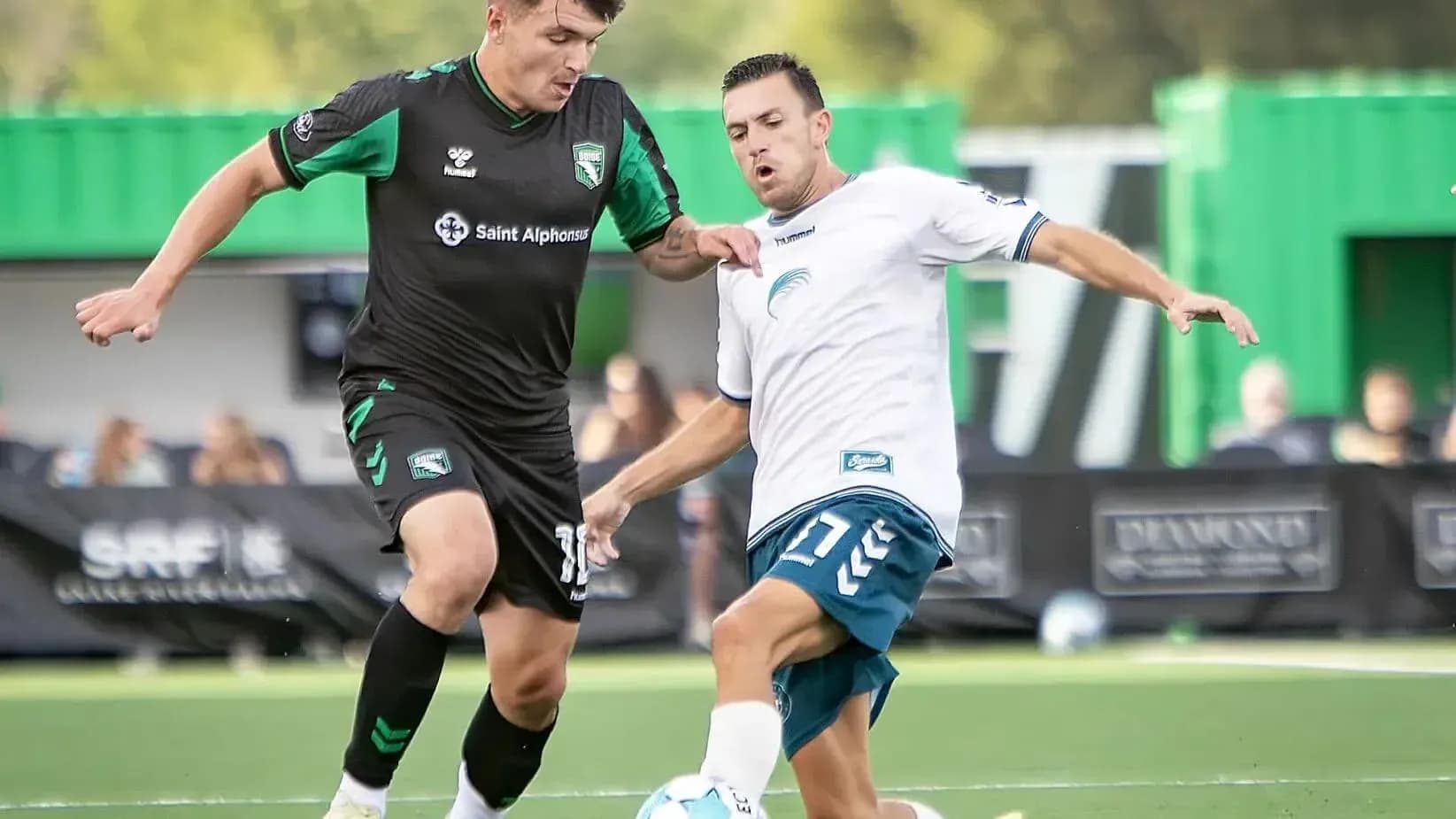
Spokane Velocity Edges Boise in USL League One Clash
On a cool night at One Spokane Stadium, Spokane Velocity and Boise met in a Group 1 clash that felt more like a knockout rehearsal than a routine pool match. By full time, Spokane had edged a 2–1 victory, reshaping the narrative of this USL League One Cup campaign and underlining the contrasting identities of two emerging sides.
Heading into this game, Spokane’s season had been defined by a stark split between home comfort and away vulnerability. Overall they had played 3 matches, winning 2 and losing 1, with 3 goals scored and 5 conceded for a total goal difference of -2. At home, though, they were perfect: 2 wins from 2, 3 goals for and just 1 against, an average of 1.5 goals scored and 0.5 conceded. On their travels they had been thrashed 4–0, failing to score and conceding at an average of 4.0. Boise arrived as a more chaotic proposition: 3 matches played, 2 wins and 1 loss, with 7 goals for and 6 against, a total goal difference of 1. They carried an attacking swagger, averaging 2.3 goals overall (4.0 at home, 1.5 away), but conceding 2.0 per match across the campaign.
That clash of identities framed the evening: Spokane the home specialist trying to keep a perfect record in front of their own support, Boise the free-scoring newcomer willing to trade blows.
Spokane’s Lineup
Spokane’s XI told a story of continuity and balance. In goal, S. Lewis wore the number 1 shirt, anchoring a back line that leaned on the presence of S. Fitch and G. Margvelashvili, with C. Miller and D. Waldeck likely completing the defensive unit. Ahead of them, the spine of C. Fernandez and A. Lewis provided structure, freeing the creative and transitional threats of S. John-Brown, L. Gil and J. Gallardo to feed the number 9, N. Brett.
From the bench, Leigh Veidman had a varied toolbox: the control of N. Vinyals, the energy of M. Hernandez and L. Opara, and the defensive insurance of N. Spielman. Further forward, I. Covi and M. Mensah offered fresh legs in the attacking lanes, while J. Buck and R. Wells provided late-game flexibility across the pitch. It is a squad built to protect a lead at home, but also to chase if needed.
Boise’s Lineup
Boise’s lineup, by contrast, leaned into aggression. J. Mazzola started in goal, shielded by a back line that included J. Ricketts, J. Yaro, J. Crull and N. Moon. In midfield, the presence of D. Kostyshyn, M. Ndiaye and P. Mayaka suggested a blend of ball-winning and forward thrust, with B. Bodily, T. Amang and T. Moshobane forming a front trio capable of stretching any defensive block.
On the bench, Boise had options to change the tone of the game: Luan Brito and J. Hanson as attacking injections, H. Sargis and K. Oyler as defensive reinforcements, and J. Stephens plus O. Yehya to adjust the midfield picture. J. Kliewer offered the alternative in goal. This is a squad constructed for volatility: they had yet to keep a clean sheet in total this campaign, but they had also failed to draw a single match, winning twice and losing once.
Disciplinary Trends
Disciplinary trends added another layer. Spokane’s yellow-card distribution showed a clear spike between 61–75 minutes, with 42.86% of their cautions arriving in that window. They also carried a red card earlier in the campaign, shown between 46–60 minutes, a reminder that their intensity can spill over just after half-time. Boise, meanwhile, spread their bookings more evenly, but with a concentration before the break: 33.33% of their yellows arrived between 31–45 minutes, and another 16.67% in each of the 0–15, 46–60, 61–75 and 76–90 minute bands. Both sides had yet to attempt a penalty in total, with zero taken and therefore no conversion rate to speak of.
Within that disciplinary landscape, the “Hunter vs Shield” dynamic was clear. Boise, with 7 goals in total, averaging 1.5 on their travels, represented the hunter: a front line built to ask constant questions. Spokane, at home, were the shield: conceding just 1 goal in 2 home fixtures, an average of 0.5, and already logging 1 clean sheet. Forwards like T. Amang and T. Moshobane were always going to test the concentration of Fitch, Margvelashvili and the composure of S. Lewis, especially in the frantic final quarter-hour when Boise’s willingness to push forward often brings both goals and cards.
Engine Room Battle
In the “Engine Room” battle, Spokane’s midfield trio of Fernandez, A. Lewis and Gil had to navigate Boise’s more direct and vertical central unit of Kostyshyn, Ndiaye and Mayaka. Spokane’s home numbers suggested a controlled tempo: 3 goals scored and 1 conceded at One Spokane Stadium in the group, with an overall average of 1.0 goals for and 1.7 against across all venues. Boise’s profile, by contrast, screamed end-to-end football: 4–3 and 1–2 scorelines among their biggest results, 6 goals conceded in total, and no clean sheets home or away.
Following this result, the statistical prognosis begins to tilt further toward Spokane’s home-centric model. While xG figures are not provided, the patterns are clear enough: Spokane’s defensive solidity at home, combined with their ability to edge tight matches (a biggest home win of 2–1), gives them a platform that can withstand even Boise’s high-output attack. Boise’s 2.0 average goals conceded overall, and 1.5 away, continue to undermine their own offensive brilliance.
Narratively, this 2–1 win feels like a crystallisation of both teams’ identities. Spokane remain a side whose ceiling is defined by their performances at One Spokane Stadium, where their structure, discipline and game management shine. Boise, even in defeat, reaffirm themselves as entertainers: always capable of scoring, never entirely secure at the back, and destined to turn every group-stage night into a drama.
If this was a dress rehearsal for knockout football, Spokane showed they can manage margins; Boise showed they will always chase moments. Over a long campaign, that contrast may decide who survives when the stakes rise beyond the group.